


Indexing


Journal Cover

Unveiling the Hidden Threat: An Epidemiological Study of Tick Infestation in Ruminants Across Khyber Pakhtunkhwa and FATA, Pakistan
Abstract
This work was aimed to determine the infestation of ruminants by ticks in different agro-geo climatic zones of Khyber Pakhtunkhwa (KPK) and FATA in Pakistan. The investigation was carried out from May 2019 to August 2020 in different districts of KPK (Banu, Peshawar, Swat and Mansehra) and FATA (Khyber Agency). A total of 526 cattle, 397 buffalo, 760 goats and 316 sheep were observed in ten different tehsils of the selected study areas. Ticks were collected from different body parts of animals. Current study results revealed highest prevalence was recorded in Banu (51%) followed by Peshawar (44%), Khyber Agency (34%), Swat (29%) and Mansehra (22%). Five tick genera (Hyalomma, Rhipicephalus, Dermacenter, Haemaphsylis and Ixodes) were identified from the selected study districts. H. anatolicum and R. microplus were the most prevalent tick species infesting different livestock species including cattle, buffalo, sheep and goats. Differences in prevalence percentage might be due various intrinsic factors including (sex, breed, age, immune response and physical appearance etc.) and extrinsic factors including (climatic conditions, farm structure, hygienic measures, farm management, housing structure, floor pattern and farm system etc.). Among all screened animal species cattle were highly infested followed by goats, sheep and buffaloes.
Keywords: Ruminants; Khyber Pakhtunkhwa; Ticks; Infestation
Unveiling the Hidden Threat: An Epidemiological Study of Tick Infestation in Ruminants Across Khyber Pakhtunkhwa and FATA, Pakistan
Waqas Ahmad1*, Muhammad Sohail Sajid1, Zia-ud-Din Sindhu1 and Muhammad Saqib2
1Department of Parasitology, Faculty of Veterinary Science, University of Agriculture, Faisalabad 38000, Pakistan
2Department of Clinical Medicine and Surgery, Faculty of Veterinary Science, University of Agriculture, Faisalabad 38000, Pakistan
*For correspondence: waqasahmad73@gmail.com
Received 30 May 2025; Accepted 05 July 2025; Published online 22 September 2025
Editor: Zafar Iqbal
Abstract
This work was aimed to determine the infestation of ruminants by ticks in different agro-geo climatic zones of Khyber Pakhtunkhwa (KPK) and FATA in Pakistan. The investigation was carried out from May 2019 to August 2020 in different districts of KPK (Banu, Peshawar, Swat and Mansehra) and FATA (Khyber Agency). A total of 526 cattle, 397 buffalo, 760 goats and 316 sheep were observed in ten different tehsils of the selected study areas. Ticks were collected from different body parts of animals. Current study results revealed highest prevalence was recorded in Banu (51%) followed by Peshawar (44%), Khyber Agency (34%), Swat (29%) and Mansehra (22%). Five tick genera (Hyalomma, Rhipicephalus, Dermacenter, Haemaphsylis and Ixodes) were identified from the selected study districts. H. anatolicum and R. microplus were the most prevalent tick species infesting different livestock species including cattle, buffalo, sheep and goats. Differences in prevalence percentage might be due various intrinsic factors including (sex, breed, age, immune response and physical appearance etc.) and extrinsic factors including (climatic conditions, farm structure, hygienic measures, farm management, housing structure, floor pattern and farm system etc.). Among all screened animal species cattle were highly infested followed by goats, sheep and buffaloes.
Keywords: Ruminants; Khyber Pakhtunkhwa; Ticks; Infestation
Introduction
Ticks are hematophagous ectoparasites that act as a significant vector for both veterinary and zoonotic illnesses. They can convey a diverse array of diseases, including bacteria, viruses and protozoa to both animals and humans. In veterinary contexts, ticks are implicated in diseases such as babesiosis, anaplasmosis and theileriosis which considerably affect animal health and productivity. Ticks in humans transmit zoonotic diseases such as Lyme disease, Rocky Mountain spotted fever and Crimean-Congo hemorrhagic fever. Ticks are a significant concern for both animal and public health due to their function in transmitting illnesses between species (Carmichael 2019).
Ticks and tick-borne diseases result in significant economic losses in livestock by diminishing productivity and fertility, and occasionally leading to mortality, notably in bovines such as cattle and buffaloes, especially in the tropical and subtropical parts of Pakistan. Ticks and tick-borne diseases adversely impact the lives of impoverished rural communities by reducing the productivity of dairy and meat cattle in Pakistan. The impact of ticks on livestock is significant, resulting in substantial economic losses and posing a grave risk to cattle. Approximately 80% of the worldwide cow population is vulnerable to diseases spread by ticks. In addition to disease transmission, these parasites lead to decreased milk and meat output, skin damage, inferior hide quality, and reproduction issues in animals. The economic costs caused by ticks on animals are significant, adversely affecting hosts in multiple ways (Siraj et al. 2024).
Notwithstanding the acknowledged importance of ticks as vectors for veterinary and zoonotic diseases, a substantial deficiency persists in thorough epidemiological investigations concerning tick species distribution, host affiliations and pathogen prevalence in critical areas of KPK, such as Banu, Swat, Mansehra, Peshawar and the former Federally Administered Tribal Areas (FATA).
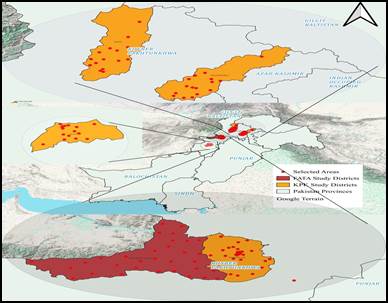
Fig. 1: Map of KPK and FATA showing the studied districts
Current research is predominantly limited, antiquated or geographically constrained lacking a comprehensive grasp of the tick burden in these regions.
The selected study regions of KPK and FATA, Pakistan, hold strategic importance owing to their geographic position, livestock commerce and susceptibility to trans-boundary animal diseases (TADs), notably tick-borne illnesses such as Crimean-Congo Hemorrhagic Fever (CCHF), theileriosis, babesiosis and anaplasmosis. Peshawar and Jamrud are located on the Pak-Afghan border and function as significant transit hubs for cattle transportation. Fauna from Afghanistan and Central Asia infiltrate Pakistan via these pathways, heightening the danger of trans-boundary tick-borne illnesses. Mansehra and Swat function as livestock supply hubs for the nation and link to Gilgit-Baltistan and China through trade routes, whereas Banu is situated near the border and serves as a crucial node for livestock commerce and informal animal transit between Waziristan, Afghanistan and other tribal areas thereby facilitating the transmission of diseases.
In Pakistan, with special reference to KPK, data on the prevalence, epidemiology, and distribution of infected tick species in areas of high endemicity are required, and the implementation of effective prophylactic and control measures is needed in such regions. These conclusions led to hypothesize that diversified tick fauna is prevalent in selected study areas. The present study's objective was to determine the diversity of tick fauna of different agro-geo climatic areas of KPK and FATA.
Materials and Methods
Study area
Fig. 1 shows the physical map of the study areas including different districts of KPK and FATA. Tick samples were collected from Peshawar (34°00′28″ N, 71°34′42″ E), Swat (35°23′ N, 72°11′ E), Banu (3.06048° N, 70.552176o E), Mansehra (34°9′21″ N, 73°13′10″ E) and Khyber (34.07570° N, 71.20394° E).
Seasonal variation
There are four seasons in study areas i.e., summer (May to July), autumn (August to October), winter (November to January) and spring (February to April). Peshawar experiences sweltering summers with average temperatures of 40°C and mild winters ranging from 7°C to 10°C. The mean annual precipitation ranges from 400 to 500 mm, accompanied by a relative humidity of 50 to 60%. Banu experiences temperatures exceeding 42°C, while winters are mild averaging approximately 10°C. Annual precipitation is limited to 300 mm with humidity levels averaging between 40% and 50%. Swat experiences over 1000 mm of precipitation and 60–70% humidity with summer temperatures ranging from 25 to 30°C and winter temperatures falling below 0°C. Mansehra experiences an average annual precipitation of 1200 mm, winter temperature averaging 3°C, summer temperature reaching 30°C and relative humidity consistently above 65%. Jamrud Summer temperatures may attain 41°C while winter temperatures can drop to 5°C. Annual precipitation ranges from 200 to 300 mm with humidity levels between 30 and 40%.
Study population and sampling
A total of 526 cattle, 397 buffalo, 760 goats and 316 sheep were observed in ten different tehsils of the selected study areas. Animals have been selected for the study district using simple random sampling with the map grid method. For randomization, further tehsils were selected from each respective district in order to avoid variability. As far as the sampling frame is concerned, the criteria used for the sampling were: (a) screened farm must have at least 10 animals and (b) a distance of 05 km between the two screened farms should be there.
Questionnaire-based surveillance
An epidemiological survey was conducted from May 2019 to August 2020. The selected areas were visited four times (seasonal) in a yea to collect all the relevant information including age, sex and species of host, infested number of animals, type of housing, seasonal variation and farm structure on a pre-designed questionnaire. All the probable associated risk factors with respect to host (age, species, sex) and environment (geographical area, climate, and husbandry) that may influence the presence of ticks were included in the questionnaire (Thrusfield et al. 2018).
Collection, preservation, transportation and identification of tick specimens
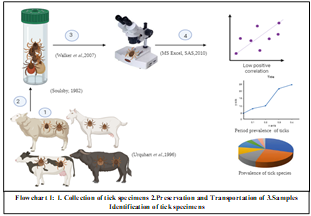
Flow chart 1 shows the collection of ticks from hosts or the environment by using forceps ensuring minimal harm to the specimens. Upon collection, appropriate preservation and transportation are essential to retain the integrity of the samples. Specimens were stored in 70% ethanol to inhibit decomposition in leak-proof containers to the laboratory. Upon arrival, tick specimens are identified using morphological keys under a stereomicroscope, emphasizing characteristics such as scutum form, mouthparts and leg segmentation to precisely ascertain the genus and species.
Statistical analysis
Epidemiological data (prevalence and associated determinants) were subjected to Chi-square analyses. P-value was calculated (95% confidence level (CI), level of significance 5%) with upper and lower limits through SPSS (SPSS for Windows (IBM), Version 22; SPSS; Inc., Chicago, USA).
Results
In district Banu following tick species were found prevalent; H. anatolicum (23%), H. marginatum (22%), H. dromedarii (7%), H. marginatum turanicum (0.51%), R. microplus (33%), R. sanguineus (5%), R. annulatus (3%) and H. montgomery (4%). R. microplus was found to be high prevalent followed by H. anatolicum and H. marginatum. In district Swat following tick species was found more prevalent H. anatolicum (33%), H. marginatum (29%), H. marginatum (2%), R. microplus (13%), H. deuterium (4%), R. sanguineus (13%) and R. haemphysaloides (6%). In district Peshawar the most prevalent tick specie was H. anatolicum (25%) and H. marginatum (19%) followed by H. impeltatum (16%), I. ricinus (12%), R. microplus (11%), R. appendiculatus (11%) and R. simus (7%). In district Khyber Agency H. anatolicum (37%) were found highly prevalent followed by H. excavatum (16%), R. microplus (13%), R. sanguineus (12%), H. deuterium (9%), H. sulcata (5%), H. punctata (5%) and H. suspense (2%) were found prevalent. Prevalent tick species present in district Mansehra were H. anatolicum (24%) followed by R. microplus (22%), H. sulcata (21%), R. sanguineus (19%), R. turanicum (8%) and R. haemaphysalis (6%). Fig. 2-3 representing district-based epidemiology of tick species prevalent in various districts of Khyber Pakhtunkhwa and FATA.
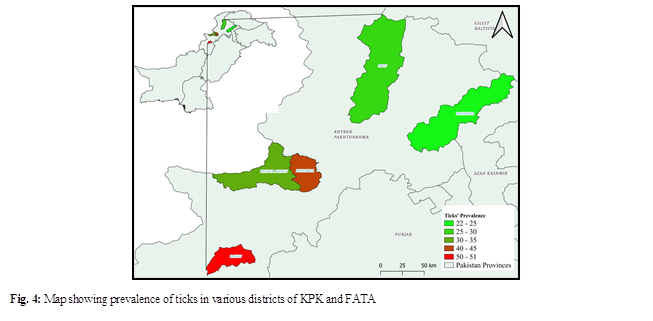
Table 1 indicates each district exhibited a significant interconnection with one another. Banu (51%) exhibited the highest frequency according to the statistics, followed by Peshawar (44%), Khyber Agency (34%), Swat (29%) and Mansehra (22%). Diverse factors may account for alterations in the prevalence of tick dispersal. These elements encompass a diverse array of factors. Examples of these elements include weather, humidity, management strategies and acaricides application.
Fig. 4 shows the prevalence of tick species in various districts of KPK and FATA. A significant association was found among all the selected districts. The highest prevalence was recorded in Banu (51%), followed by Peshawar (44%), Khyber Agency (34%), Swat (29%) and Mansehra (22%). Variations in the prevalence of tick distribution might be due to various factors including climate, humidity, managemental practices and applications of acaricides.
Discussion
Table 1: Prevalence of tick species at various Agro-Geo Climatic Zones of KPK and FATA
|
District |
Prevalence |
P Value |
Odd’s Ratio |
95% CI |
|
|
lower |
upper |
||||
|
Banu |
51 |
0.000 |
2.28 |
1.71 |
3.05 |
|
Swat |
29 |
||||
|
Peshawar |
44 |
||||
|
Khyber Agency |
34 |
||||
|
Mansehra |
22 |
||||
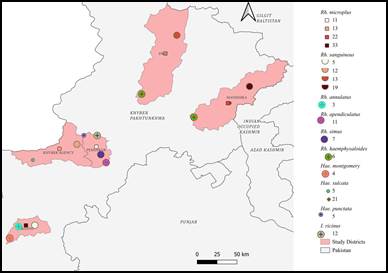
Fig. 2: Map showing prevalent tick genera (Rhipicephalus, Haemaphysalis and Ixodes) and their species in different districts of the study areas
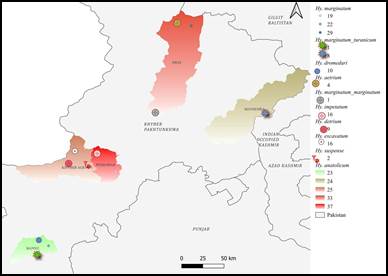
Fig. 3: Map showing prevalent tick genera (Hyalomma) and its species in different districts of the study areas
The taxonomic identification of the collected ticks showed that the following genera were more prevalent: Hyalomma, Riphicephalus, Haemaphysalis, Dermacentor and Ixodes. The current study aligns with the findings of prior investigations conducted by Irshad et al. (2010), Sultana et al. (2017), Ramzan et al. (2020) and Shoaib et al. (2022) which corroborate these results. The prominent tick species were H. anatolicum and H. marginatum followed by R. microplus. Various species of Hyalomma have been reported in previous studies including H. marginatum (Chaudhry et al. 2006; Kaiser at al. 2018; Aktas et al. 2020). H. dromedarii, H. detrium (Aktas 2004; Bouattour et al. 2020). H. truncatum (Berggren 2018; Carmichael 2019). H. anatolicum (Drerup-Eilker 2000; Aktas 2004; Misra 2014). Various species of the genus Rhipicephalus include R. appendiculatus (Zumpt 2008; Jooste 2017; Kaiser et al. 2018; Hassan et al. 2022). R. sanguineus (Drerup-Eilker 2000; Misra 2014; Saxena et al. 2014). R. punctatus (Berggren 2018). R. simus (Zumpt 2008; Jooste 2017; Kaiser et al. 2018; Carmichael 2019). R. turanicus and R. hemaphysaloides (Saxena et al. 2014).
 Numerous researches have showed that tick prevalence differs among
diverse livestock species (Ramzan et al. 2020). Ticks are universally acknowledged as the foremost difficulty confronting the
livestock industry and the primary cause of economic losses. The thinner pelage
of cattle, relative to the denser coat of buffalo, is a contributing cause to
the increased prevalence of ticks. Moreover, changes in their natural habitat also contribute to this phenomenon (Sajid et
al. 2007).
Numerous researches have showed that tick prevalence differs among
diverse livestock species (Ramzan et al. 2020). Ticks are universally acknowledged as the foremost difficulty confronting the
livestock industry and the primary cause of economic losses. The thinner pelage
of cattle, relative to the denser coat of buffalo, is a contributing cause to
the increased prevalence of ticks. Moreover, changes in their natural habitat also contribute to this phenomenon (Sajid et
al. 2007).
The current investigation could not reach any findings regarding the connection between the quantity of rainfall and humidity and the number of times that ticks were found to be associated with the environment. As the summer season comes to a close, Pakistan enters its rainy season, which occurs between August and September. Because the temperatures and humidity levels during these months are higher in contrast to those during other months, it is difficult to draw a judgment on the isolated association between temperature and humidity and the prevalence of tick infestation. This is because the temperature and humidity levels during these months are higher.
Conclusion
This study was conducted in four districts of KPK, including Peshawar, Banu, Swat and Mansehra and FATA including Khyber. Among screened districts, Banu showed high prevalence (51.04%) followed by Peshawar (43.75%), Khyber (33.85%), Swat (29.16%) and Mansehra (22.39%). H. anatolicum and R. microplus were the most prevalent tick species infesting different livestock species including cattle, buffalo, sheep and goats. Differences in prevalence percentage might be due various intrinsic factors including (sex, breed, age, immune response and physical appearance etc.) and extrinsic factors including (climatic conditions, farm structure, hygienic measures, farm management, housing structure, floor pattern and farm system etc.). Among all screened animal species cattle were highly infested followed by goats, sheep and buffaloes.
Acknowledgements
We acknowledge the Livestock Department, Government of Khyber Pakhtunkhwa, for their collaboration, logistic support and access to field resources which greatly facilitated the data collection and fieldwork across various districts of Khyber Pakhtunkhwa and the Federally Administered Tribal Areas (FATA).
Author Contribution
WA designed the study and wrote the manuscript. MSS supervised the study and reviewed the manuscript. ZDS and MS contributed to data collection and processing. All authors contributed to and approved the final version of the submitted manuscript.
Conflict of Interest
The authors declare no conflict of interest concerning this study.
Data Availability
Data presented in this study will be available on a fair request to the corresponding author.
Ethics Approval
Not applicable to this study.
References
Aktas M (2004). A survey of ixodid tick species and molecular identification of tick-borne pathogens. Vet Parasitol 200:276–283
Aktas M, N Dumanli, M Angin (2020). Cattle infestation by Hyalomma ticks and prevalence of Theileria in Hyalomma species in the east of Turkey. Vet Parasitol 119:1–8
Berggren SA (2018). Cattle ticks in Malawi. Vet Parasitol 4:289–297
Bouattour A, MA Darghouth LB Miled (2020). Cattle infestation by Hyalomma ticks and prevalence of Theileria in H. detritum species in Tunisia. Vet Parasitol 65:233–245
Carmichael IH (2019). Ticks from the African buffaloe (Syncerus caffer) in Ngamiland, Botswana. Onderstepoort. J Vet Res 43:27–29
Chaudhry MA, SA Sheikh, MZ Hussain (2006). Studies on the taxonomy of Ixodidae of livestock in Lahore, Pakistan. Pak J Sci 21:18–23
Drerup-Eilker K (2000). Investigations into tick infestation of farm animals in Egypt. Ph.D. Dissertation, pp:1–90. Untersuchungen zum Befall landwirtschaftlicher Nutztiere mit Zecken (Ixodoidea: Ixodidae) in Agypten
Hassan SM, OO Dipeolu, DM Munyinyi (2022). Influence of exposure period and management methods on the effectiveness of Chicken as predator of ticks infesting cattle. Vet Parasitol 43:301–309
Irshad N, M Qayyum, M Hussain, MQ Khan (2010). Prevalence of tick infestation and theileriosis in sheep and goats. Pak Vet J 30:178–180
Jooste KF (2017). A two year study of the seasonal occurrence of adult ticks on a herd of red poll cows. Rhod Agric J 63:97–99
Kaiser MN, RW Sutherst, AS Bourne (2018). Relationship between ticks and zebu cattle in Southern Uganda. Trop Anim Health Prod 14:63–74
Misra SC (2014). A note on the incidence and control of Ixodid ticks at Bhubaneswar, Cheiron. Vet Parasitol 13:5–8
Ramzan M, U Naeem-Ullah, S Saba, N Iqbal, S Saeed (2020). Prevalence and identification of tick species (Ixodidae) on domestic animals in district Multan, Punjab Pakistan. Intl J Acarol 46:83–87
Sajid MS, Z Iqbal, MN Khan, G Muhamamd, MU Iqbal (2007). Effect of Hyalomma ticks (Acari: Ixodidae) on milk production of dairy buffaloes (Bos Bubalus Bubalis) of Punjab (Pakistan). Ital J Anim Sci 6:939–941
Saxena VK, K Kumar, R Rajagopal (2014). Vertical distribution of ticks of domestic animals in Nilgiri Hills (Tamil Nadu). J Commun Dis 16: 323–325
Shoaib M, I Rashid, H Akbar, AA Sheikh, SH Farooqi, MA Khan, S Mahmood, FA Khan (2022). Prevalence of Ixodidae ticks and their association with different risk factors in Khyber Pakhtunkhwa, Pakistan. J Anim Plant Sci 32:1518–1524
Siraj UD, A Majid, HU Rehman, SM Awais (2024). Diversity and distribution patterns of tick fauna in Bannu and Lakki Marwat, Khyber Pakhtunkhwa. Asian J Res 7:76–89
Sultana A, S Hasan, M Hossain, A Alim, MA Mamun, K Bashar (2017). Larval breeding habitats and ecological factors influence the species composition of mosquito (Diptera: Culicidae) in the parks of Dhaka city, Bangladesh. Bangl J Zool 45:111–122
Thrusfield M, R Christley, H Brown, PJ Diggle, N French, K Howe, L Kelly, A Connor, J Sergeant, H Wood (2018). Veterinary Epidemiology, 4th Ed. John Wiley and Sons, Edinburg, UK
Zumpt F (2008). A preliminary survey of the distribution of host specificity of ticks (Ixodidae) in the Bechuanaland Protechtorate. Bull Entomol Res 49:201–223
Online : 1814-9596
Print : 1560-8530