


Indexing


Journal Cover

Bed Sowing Improved Wheat Yield and Net Returns under Different Seed Types in Semi-arid Conditions of Pakistan
Abstract
The agricultural productivity frequently suffers from ineffective farming practices in Pakistan. The traditional sowing methods such as broadcasting are significant barriers for getting higher wheat yield in Pakistan. Therefore, this field study was conducted to explore the effects of sowing methods (broadcasting, drill sowing and bed sowing) using different seed types (domestic and certified seed) on wheat productivity and net benefits. The design used for this study was randomized complete block design with factorial arrangements. The results showed that bed sown wheat observed higher growth and all yield-related traits as compared to wheat sown using drill and broadcast methods. The bed sown wheat had 47% higher yield compared with broadcasted wheat and 9% higher grain yield compared with drill-sown wheat. Likewise, the bed-sown wheat using certified seed had almost double net returns compared with broadcasted wheat using domestic seed and 9% more net returns compared with drill-sown wheat by using even certified seed. Moreover, the broadcasting resulted in the lowest wheat yield due to notable decline in crop growth and yield-related traits. In crux, bed-sown and drill-sown wheat seemed a viable option to get higher wheat yield compared with the wheat sown by conventional broadcasting method. Therefore, the bed sowing and drill sowing methods are recommended to maximize wheat yield and net returns.
Keywords: Sowing methods; Broadcasting; Drill sowing; Bed sowing; Wheat production
Bed Sowing Improved Wheat Yield and Net Returns under Different Seed Types in Semi-arid Conditions of Pakistan
Mubshar Hussain1*, Muhammad Bahram Khan1, Muhammad Sajjad1, Muhammad Uzair Khalid1, Muhammad Shahzad2 and Abdul Majeed3
1Institute of Agronomy, Bahauddin Zakariya University, Multan 60800, Pakistan
2Department of Agronomy, Faculty of Agriculture & Environment, The Islamia University of Bahawalpur, Bahawalpur 63100, Pakistan
3Department of Agronomy, MNS University of Agriculture, Multan 60800, Pakistan
*For correspondence: mubashiragr@gmail.com; mubashir.hussain@bzu.edu.pk
Received 29 April 2025; Accepted 23 July 2025; Published online 22 September 2025
Editor: Muhammad Farooq
Abstract
The agricultural productivity frequently suffers from ineffective farming practices in Pakistan. The traditional sowing methods such as broadcasting are significant barriers for getting higher wheat yield in Pakistan. Therefore, this field study was conducted to explore the effects of sowing methods (broadcasting, drill sowing and bed sowing) using different seed types (domestic and certified seed) on wheat productivity and net benefits. The design used for this study was randomized complete block design with factorial arrangements. The results showed that bed sown wheat observed higher growth and all yield-related traits as compared to wheat sown using drill and broadcast methods. The bed sown wheat had 47% higher yield compared with broadcasted wheat and 9% higher grain yield compared with drill-sown wheat. Likewise, the bed-sown wheat using certified seed had almost double net returns compared with broadcasted wheat using domestic seed and 9% more net returns compared with drill-sown wheat by using even certified seed. Moreover, the broadcasting resulted in the lowest wheat yield due to notable decline in crop growth and yield-related traits. In crux, bed-sown and drill-sown wheat seemed a viable option to get higher wheat yield compared with the wheat sown by conventional broadcasting method. Therefore, the bed sowing and drill sowing methods are recommended to maximize wheat yield and net returns.
Keywords: Sowing methods; Broadcasting; Drill sowing; Bed sowing; Wheat production
Introduction
Wheat (Triticum aestivum L.) crop is a fundamental food source in Pakistan. During 2023-24, wheat crop contributed 2.2% and 9.1% to GDP and value addition in Pakistan economy, respectively. Wheat was sown over an area of 9.6 million ha, yielding 31.4 million tons (GOP 2023-24). The area under wheat cultivation is decreasing and population is increasing; therefore, vertical expansion in wheat yield is needed to meet the consumption needs of large population (Erenstein et al. 2022). The vertical wheat expansion requires an increase in grain yield per unit area, which is significantly influenced by planting methods. The choice of planting techniques plays a crucial role in improving wheat yield along with water, nitrogen, and phosphorus utilization efficiency (Shahzad et al. 2016; Tahir et al. 2024). Effective planting practices impact key agronomic factors, including seedling emergence, tiller development, grains per spike, 1000-grain weight, fertilizer efficiency and overall crop yields (Shahzad et al. 2016; Naeem et al. 2021; Minhas et al. 2023).
In Pakistan, the predominant method of wheat sowing is broadcasting, where seeds are scattered over a flat field (Asif et al. 2019). Although, the broadcasting is relatively simple, it presents several agronomic challenges, including suboptimal plant density, crop lodging, and excessive seed usage. Conversely, drill sowing offers more uniform seed distribution, promotes rapid emergence, and reduces crop lodging (Wato et al. 2020). This method involves placing seeds into the soil through a seed drill after proper seedbed preparation. However, drill sowing has a higher water requirement compared to resource-conserving methods. Traditional sowing techniques often limit wheat yield potential due to weaker root development and inefficient resource utilization (Fahong et al. 2014).
The adoption of non-conventional sowing techniques like bed sowing has demonstrated superior agronomic and economic benefits for wheat production (Zawar et al. 2024). These methods contribute to an increase in plant population, 1000-grain weight, grains plant-1, and leaf area index (Tanveer et al. 2003). Research indicates that bed-sown wheat resulted higher yields compared to broadcasting (Shahzad et al. 2016). Additionally, furrow fertilization in combination with bed planting has been shown to enhance wheat productivity (Zawar et al. 2024). The accumulation of more fertile topsoil and elevated moisture level in bed sowing significantly enhanced grain yield and productivity of wheat (Majeed et al. 2015). The resource-conserving bed sowing approach reduces water loss during irrigation and rainfall, thereby improving irrigation efficiency and grain yield (Asif et al. 2019). Similarly, bed sowing also recorded 15% more nitrogen use efficiency as compared to flat sowing in wheat crop (Majeed et al. 2015). On fertile soils with adequate moisture availability, resource-conserving planting techniques can enhance wheat production by approximately 10% (David et al. 2003). Raised-bed planting involves sowing wheat in multiple rows while directing irrigation water through furrows, facilitating lateral water absorption by plant roots. This method enhances resource use efficiency, conserves agricultural inputs, and ultimately increases wheat yield (Du et al. 2022).
Non-conventional sowing techniques optimize the utilization of sunlight, irrigation water, and soil nutrients, leading to improved irrigation management, fertilizer application, and seed rate efficiency by 40-50% (Singh et al. 2009). These techniques also reduce crop lodging, facilitating better irrigation practices during the grain-filling stage. In South Asia countries, resource-conserving bed planting is widely recognized as an optimal method for maximizing wheat yield (Gathala et al. 2015). Although these methods benefit various crops, they are particularly advantageous for wheat production, reducing irrigation water consumption by up to 30%, increasing fertilizer use efficiency, minimizing crop lodging, and suppressing weed infestation (Hobbs and Gupta 2003). Seed quality is another fundamental factor influencing wheat productivity. Several seed attributes, including genetic purity, viability, germination potential, vigor, health status, and moisture content which directly affect plant development (Sundareswaran et al. 2021). The use of high-quality seeds ensures optimal germination and robust seedling establishment, which are critical for achieving higher yields (Mondo et al. 2013). High-quality seeds are essential for ensuring better stand establishment, uniform crop growth, and increased productivity (Finch-Savage and Bassel 2016).
In Pakistan, most of the farmers cultivate wheat by broadcasting, which is one of the main reasons for the overall low average wheat yield in the country. It was hypothesized that wheat cultivation with improved sowing methods like bed sowing or drill sowing can enhance wheat yield and net returns. Therefore, this field study was designed to evaluate the effects of divergent sowing methods on yield-related attributes and net economic returns of wheat.
Materials and Methods
Field trial location
This field trial was carried out at the Agronomic Research Farm of the Institute of Agronomy, Bahauddin Zakariya University, Multan, Pakistan to evaluate the effects of domestic and certified wheat seeds under different planting techniques. The study was conducted on November 25, 2021, in a region located at 30.31° North latitude, 71.42° East longitude, and an elevation of 217 meters above sea level. The experimental site is located in a semi-arid region. Additional details regarding the weather conditions and soil status at the experimental location are provided in Fig. 1 and Table 1, respectively.
Treatments details and trial layout
The current study had two factors (A and B) i.e., sowing methods and cultivars. In factor A there were three sowing methods viz., broadcast sowing, bed sowing and drill sowing while factor B was consisted of seed types viz., government certified seed and domestic seed obtained from farmers’ previous year crop. The trial was designed using randomized complete block design (RCBD) through factorial arrangements with three replications. Two seed types of Johar-16 cultivar viz., domestic seed and certified seed were used in this trial. The certified seed of variety Johar-16 was obtained from Regional Agricultural Research Institute, Bahawalpur, Pakistan while domestic seed was obtained from local farmer. There was total 18 experimental units with net plot size of 1.8 m × 4 m, width and length, respectively. Each experimental unit have 8 lines of wheat at 22.5 cm spacing.
Crop husbandry
A pre-soaking irrigation was applied before sowing. Once the soil attained the optimal field capacity for seedbed preparation, it was tilled twice using a tractor-driven cultivator, followed by two to three passes with a planker. Wheat was planted using three different methods viz., broadcast, line sowing, and bed sowing, arranged in three main plots. Each plot consisted of eight rows. In case of broadcasting, same plot size was used and wheat was sown manually broadcasted by using the same seed rate. In case of drill sowing, wheat was drilled by using hand drill in 22.5 cm spaced rows. For the bed sowing method, the beds were manually prepared before seeding after seedbed preparation. The dimensions of the bed were 60 cm in width, 15 cm in depth, and featured furrows measuring 30 cm. In case of bed sowing, sowing was done with hand drill on beds. There were 4 rows on each bed spaced 15 cm apart. Table 1: Pre-sowing physical and chemical properties of the experimental field
|
Determination |
Units |
Values |
Status |
|
Soil Physical Properties |
|||
|
Sand |
% |
27 |
- |
|
Silt |
% |
53 |
- |
|
Clay |
% |
20 |
- |
|
Texture of the soil |
Silty clay loam |
||
|
Soil Chemical Properties |
|||
|
pH |
|
8.80 |
- |
|
EC |
dS m-1 |
3.49 |
- |
|
Organic matter of soil |
% |
0.70 |
Very low |
|
Total nitrogen |
% |
0.05 |
Very low |
|
Available phosphorus |
mg kg-1 |
5.50 |
Low |
|
Available potassium |
mg kg-1 |
180 |
Medium |
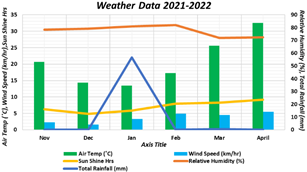
Fig. 1: Climatic data of experimental area during Rabi season 2021 – 2022
Courtesy: Pakistan central cotton committee (PCCC), Multan, Pakistan
In that way, same number of rows (08) were maintained in drill sown and bed sown wheat. Wheat seeds were sown at a rate of 125 kg. ha-1 on 25 November 2021. In total, four irrigations were applied according to the crop's requirements at varying time intervals to avoid moisture stress. Fertilizers were applied at recommended rates of 115 kg ha-1 nitrogen, 75 kg. ha-1 phosphorus, and 60 kg. ha-1 potassium. Phosphorus and potassium were applied as a basal dose during sowing, whereas nitrogen was applied in two split applications, 50% at sowing and the remaining 50% with the first irrigation. Weed control was achieved through manual hand weeding to minimize competition. Standard agronomic and cultural practices were rigorously followed throughout the growing season to mitigate disease incidence and pest infestations, ensuring optimal crop health and yield potential. The crop was harvested on April 12, 2022, upon reaching harvest maturity.
Determination of agronomic or yield-related parameters
To measure plant height, 10 plants were selected at random for each treatment, and their height was measured using a measuring scale in centimeters. Spike length of the same ten plants was also measured and average data were recorded. The number of spikelets spike-1 and the number of grains spike-1 were measured by manually counting 10 plants that were selected at random from the experimental units. In a similar manner, ten distinct plant samples were used to determine the weight of 1000 grains from each plot by physically counting the seeds, followed by weighing 1000 grains using an electric weighing balance, after that their average was computed. The total number of tillers was quantified by sampling a 1 m² area from three randomly selected locations within each treatment, with the mean value representing the tiller population per unit area. Following harvest, the plants were field-dried for 75 h to determine biological yield (tons ha-1). Grain yield was assessed by manual threshing and subsequent weighing using a digital scale. Straw yield was derived by subtracting grain yield from the total biological yield. The harvest index (%) for wheat was determined as the percentage ratio of grain yield to biological yield.

Statistical and economic analysis
Before conducting statistical analysis, the collected data were tested for normality using Arcsine transformation technique. All of the data were recorded by using the standard methods. Fisher's type of analysis of variance (ANOVA) and the least significant difference (LSD) test at a 5% probability was used to compare the means of the treatments in the research trial (Steel et al. 1997) by using Statistics 8.1 Software. Canva online website was used for graphical presentation of weather data and other parameters.
An economic analysis was conducted to assess the economic efficiency of different combinations of seed types and sowing methods. Production costs involved determining the expenses associated with land rent, seedbed preparation, crop sowing, and harvesting, as well as the acquisition of inputs such as seed, fertilizer, pesticides, and irrigation. Net income was computed by deducting all expenses from the gross income. The benefit-cost ratio (BCR) was calculated dividing the gross income by the production cost.
Results
Statistical analysis demonstrated significant effects (P < 0.05) of seed type (S), sowing method (M) and their interaction (S × M) on wheat plant height. Mean comparisons revealed that crops established with certified seed produced significantly taller plants compared to other seed types. Similarly, drill and bed sowing methods resulted taller plants compared to the broadcast method. Among the interactions, wheat sown on beds with certified seed had the highest plant height, whereas wheat broadcasted with domestic seed had the lowest (Table 2).
Sowing methods, seed types and their interaction had significantly affected the number of tillers and straw yield, whereas it had non-significant effect on spike length.
Table 2: Interactive effects of sowing methods and seed types on plant height, tillers population, spike length and number of grains spike-1 of wheat
|
Sowing Methods |
Plant height (cm) |
Number of productive tillers (m-2) |
Spike length (cm) |
Number of grains (spike-1) |
||||
|
CS |
DS |
CS |
DS |
CS |
DS |
CS |
DS |
|
|
Broadcast |
65.8 d |
62.7 d |
244.8 ab |
231.1 b |
10.64NS |
10.18 |
45.0 b |
42.4 b |
|
Bed sowing |
96.4 a |
76.2 c |
278.9 a |
261.2 ab |
12.60 |
11.30 |
58.2 a |
53.3 ab |
|
Drill sowing |
87.6 b |
72.1 c |
263.0 ab |
254.0 ab |
12.14 |
11.02 |
51.1 ab |
46.0 ab |
|
LSD at 5% |
6.09 |
44.50 |
NS |
7.06 |
||||
Here, CS = Certified seed; DS = Domestic seed; NS = Non-significant
Table 3: Interactive effect of different sowing methods and seed types on 1000-grain weight, and grain, straw and biological yields of wheat
|
Sowing Methods |
1000-grain weight (g) |
Grain yield (tons ha-1) |
Biological yield (tons ha-1) |
Straw yield (tons ha-1) |
||||
|
CS |
DS |
CS |
DS |
CS |
DS |
CS |
DS |
|
|
Broadcast |
30.1 cd |
27.4 d |
2.92 cd |
2.68 d |
9.43 cd |
8.0 6d |
6.50 cd |
5.38 d |
|
Bed sowing |
39.5 a |
33.1 b |
4.07 a |
3.50 a-c |
12.18 a |
11.01 ab |
8.11 a |
7.52 ab |
|
Drill sowing |
37.8 a |
32.3 bc |
3.89 ab |
3.27 bc |
11.74 ab |
10.23 bc |
7.84 ab |
6.95 bc |
|
LSD at 5% |
3.43 |
0.62 |
2.02 |
1.03 |
||||
Means with different letters, within a column or row for each trait, differ significantly from each other at P ≤ 0.05; Here, CS = Certified seed; DS = Domestic seed
Table 4: Correlation analysis of grain yield with other yield related traits of wheat under various sowing methods and seed types (n-2 = 7 for seed types; n-2 = 4 for sowing methods)
|
Variables |
Grain yield (tons ha-1) |
||||
|
Seed types |
Sowing methods |
||||
|
Certified seed |
Domestic seed |
Broadcasting |
Bed sowing |
Drill sowing |
|
|
Number of productive tillers (mˉ²) |
0.705* |
0.440NS |
0.201NS |
0.460NS |
0.297NS |
|
Number of grains spikeˉ¹ |
0.657* |
0.761** |
0.509 NS |
0.673NS |
0.411NS |
|
1000- grain weight (g) |
0.878** |
0.644 NS |
0.273 NS |
0.871* |
0.803* |
**= Significant at P ≤ 0.001, *= Significant at P ≤ 0.01, NS= Non-significant
Table 5: Effect of sowing methods on net income and benefit: cost ration of wheat under different seed types
|
Sowing Methods/Seed Types |
Broadcasting |
Bed Sowing |
Drill Sowing |
|||
|
CS |
DS |
CS |
DS |
CS |
DS |
|
|
Gross Income (Rs. ha-1) |
128629 |
115320 |
174850 |
152500 |
167510 |
142250 |
|
Total Expenses (Rs. ha-1) |
84793 |
82343 |
86793 |
84343 |
86793 |
84343 |
|
Net Income (Rs. ha-1) |
43836 |
32977 |
88057 |
68157 |
80717 |
57907 |
|
Benefit: Cost Ratio (BCR) |
1.52 |
1.4 |
2.01 |
1.81 |
1.93 |
1.69 |
Here, CS = Certified seed; DS = Domestic seed
Here, CS= Certified seed; DS= Domestic seed
Table 4: Correlation analysis of grain yield with other yield related traits of wheat under various sowing methods and seed types (n-2 = 7 for seed types; n-2 = 4 for sowing methods)
|
Variables |
Grain yield (tons ha-1) |
||||
|
Seed types |
Sowing methods |
||||
|
Certified seed |
Domestic seed |
Broadcasting |
Bed sowing |
Drill sowing |
|
|
Number of productive tillers (mˉ²) |
0.705* |
0.440NS |
0.201NS |
0.460NS |
0.297NS |
|
Number of grains spikeˉ¹ |
0.657* |
0.761** |
0.509 NS |
0.673NS |
0.411NS |
|
1000- grain weight (g) |
0.878** |
0.644 NS |
0.273 NS |
0.871* |
0.803* |
**= Significant at p≤0.001, *= Significant at p≤0.01, NS= Non-significant
However, wheat sown with certified seed produced more tillers and higher straw yield. Drill and bed sowing methods also led to increased tillers population and straw yield compared to broadcasting (Table 2 and 3). The data further indicated that seed type and sowing method significantly influenced grains spike-1, 1000-grain weight, grain yield, and biological yield. Drill and bed-sown wheat had long spikes, more grains spike-1, greater 1000-grain weight, and higher grain and biological yields while broadcast method exhibited lower in this regard (Table 2 and 3). The number of spikelets spike-1 was significantly influenced by seed type, sowing method, and their interaction (S × M). Certified seed increased spikelet numbers, while drill and bed sowing methods produced more spikelets spike-1 compared to the broadcast method (Table 2).
Correlation and regression
Data presented in Table 4 about the correlation of grain yield with the yield attributes indicates that the number of tillers m-2 (r = 0.705), number of grains spike-1 (r = 0.657), and thousand-grain weight (g) (r = 0.878) were significantly and positively correlated with the grain yield in case of certified seeds. Number of grains spike-1 (r = 0.761) was also found highly significant for domestic seeds. Whereas, the grain yield was non-significantly correlated with number of tillers and number of grains spike-1 in sowing methods treatments. However, one thousand grain weight was significantly correlated to grain yield in bed sowing (r = 0.871) and drill sowing (r = 0.803) treatments (Table 4). Based on this one-year study it can be concluded that wheat can perform well when certified seed is used in conjunction with bed sowing and drill sowing methods (Table 4).
Economic analysis
Economic analysis revealed that certified seed in combination with bed sowing proved more profitable than the rest of the treatments. Furthermore, certified seed resulted in higher benefit cost ratio (BCR) than domestic seed (Table 5). The highest and the lowest net incomes were recorded under bed sowing and broadcasting, respectively. Similarly, higher, and lower net incomes were recorded for certified seed and domestic seed, respectively. The bed sowing combination with certified seed resulted in the highest benefit-cost ratio. Conversely, the lowest benefit-cost ratio was recorded for broadcast sowing combined with domestic seeds.
Discussion
The findings of this study demonstrated that sowing techniques significantly enhanced wheat grain yield by improving key yield components, such as the tiller’s population, number of grains per spike and 1000-grain weight. Optimal spacing in drill and bed sowing methods facilitated greater tiller production and biomass accumulation. Increased leaf area in these methods enhanced sunlight absorption, promoting photosynthesis, which contributed to longer spikes, higher grain counts per spike, and greater grain weight, ultimately leading to increased yield (Table 2 and 3).
The bed sown wheat had 47% higher yield compared with broadcasted wheat, and 9% higher grain yield compared with drill-sown wheat. Likewise, the bed-sown had almost double net returns compared with broadcasted wheat, and 9% more net returns compared with drill-sown wheat (Table 2, 3). The accumulation of more fertile topsoil with low compaction, and elevated moisture level in bed sowing significantly enhanced grain yield and productivity of wheat (Majeed et al. 2015). Availability of top fertile top soil and low compaction might facilitate the development of better root system resulting in more water and nutrient uptake, and resultantly leading to a better crop growth (Shahzad et al. 2016). The resource-conserving bed sowing approach reduces water loss during irrigation and rainfall, thereby improving irrigation efficiency and grain yield (Asif et al. 2019).
Higher yield of bed-sown wheat in this study was the direct impact of notable increase in entire yield related traits i.e., higher tillers population, number of grains per spike and 1000-grain weight (Table 2, 3). There is a positive correlation among yield related traits i.e., tillers population, number of grains per spike and 1000-grain weight with grain yield of bed-sown wheat (Table 4; Shahzad et al. 2016). The better soil conditions (accumulated top fertile soil with low compaction) in case of bed sowing might enable the plants to develop better root system to uptake more water and nutrients (Mohiy and Salous 2022). The higher uptake of water and nutrients in bed-sown wheat led to better growth and ultimately notable improvement in entire yield related traits including yield (Majeed et al. 2015; Meleha et al. 2020). The bed sowing promoted growth and reduced water logging condition in wheat crop. Additionally, bed sowing promotes tiller development due to enhanced solar energy availability, improving wheat productivity (Du et al. 2021). The improvement of tillers under bed planting resulted in more yield of wheat crop. Moreover, bed sowing technique saved water as compared to flat and ridge sowing in this study. Moreover, the bed and ridge sowing techniques aid drainage, reducing waterlogging and lodging risks (Kumar et al. 2002). The heavier grains were recorded in bed sowing as compared to flat and drill sowing, which may be due to more sunlight capturing and equal distribution of nutrients (Chauhdary et al. 2015; Shailendra et al. 2021). In another study, the wheat sowing in Yangtze River Plain showed that bed sowing increased the wheat grain yields by 11.3–14.1% (Du et al. 2021). Research indicates that ridge–furrow planting enhances dry matter accumulation and facilitates its translocation from vegetative parts to reproductive organs, ultimately boosting grain yield (Du et al. 2022; Fang et al. 2022). The certified seed had better vigor because it is produced from known genetic origin and its genetic purity and physical purity is controlled under seed laws (Baglan et al. 2020). The higher yield under bed sowing using certified seed was due to increased yield related traits. The 1000-grain weight, number of grains per spike were increased which supported higher yield. The raised bed method outperformed conventional drilling and broadcasting in grain production (Mohiy and Salous 2022).
Conclusion
Bed sowing and drill sowing of wheat can increase grain yield compared with broadcasting which is important for food security. The government should ensure that the farmers have access to the necessary equipment for bed sowing and certified seeds. This ensures better germination rates and disease resistance, improving overall crop yield and quality. The primary purpose is to enhance the yield of wheat to meet the growing demand for the crop. The findings of the present study suggest that planting method is the key driver of yield gains in wheat. The bed sowing using certified seed was the most effective sowing method with 47% more grain yield as compared to broadcasting. Consequently, it is recommended that bed and drill sowing should be adopted for optimal wheat crop productivity. The future focus should be on educating the farmers about the benefits of improved sowing methods, and training them and providing necessary equipments for the wider adoption of bed and drill sowing of wheat.
Acknowledgement
All the authors express their sincere gratitude to the Institute of Agronomy, Bahauddin Zakariya University, Multan, Pakistan for their invaluable assistance in current research.
Author Contributions
Conceptualization, Mubshar Hussain; Formal analysis, Muhammad Bahram Khan; Investigation, Muhammad Bahram Khan, Muhammad Sajjad and Abdul Majeed; Methodology, Muhammad Sajjad, Muhammad Uzair Khalid and Muhammad Shahzad; Project administration, Mubshar Hussain; Supervision, Mubshar Hussain; Validation, Mubshar Hussain; Writing – review & editing, Mubshar Muhammad, Muhammad Bahram Khan, Muhammad Shahzad and Muhammad Uzair Khalid. All authors have read and approved the final version of the manuscript.
Conflicts of Interest
There is no conflict of interest.
Data Availability
All data is presented in the manuscript.
Ethics Approval
Not applicable to this paper.
Funding Source
This project is not funded by any agency.
References
Asif M, G Akbar, SK Khalil, Z Islam, SA Kalwar (2019). Effect of sowing methods on wheat production in Potohar, Pakistan. Adv Agric Anim Sci 35:98–104
Baglan M, GE Mwalupaso, X Zhou, X Geng (2020). Towards cleaner production: Certified seed adoption and its effect on technical efficiency. Sustainability 12:1-17
Chauhdary JN, UD Khan, SHH Shah, MA Shahid, M Arsalan (2015). Effect of sowing methods and seed rates on wheat yield and water productivity. Qual Assur Saf Crops Foods 8:267–272
David JC, T Jagadish, H Elizabeth (2003). Prospects for permanent beds for the rice-wheat system. In: Improving productivity and sustainability of rice-wheat systems: issues and impact. Amer Soc Agron Spec Publ 65:197–210
Du X, Z Wei, L Kong, L Zhang (2022). Optimal bed width for wheat following rice production with raised-bed planting in the Yangtze River Plain of China. Agric Water Manage 269:107676
Du XB, WC He, Z Wang, M Xi, YZ Xu, WG Wu, SQ Gao, D Liu, WX Lei, LC Kong (2021). Raised bed planting reduces waterlogging and increases yield in wheat following rice. Field Crops Res 265:108119
Erenstein O, M Jaleta, KA Mottaleb, K Sonder, J Donovan, HJ Braun (2022). Global trends in wheat production, consumption, and trade. In: Wheat improvement: food security in a changing climate, pp:47–66. Cham: Springer International Publishing
Fahong W, W Xuqing, K Sayre (2014). Comparison of conventional, flood irrigated, flat planting with furrow irrigated, raised bed planting for winter wheat in China. Field Crops Res 87:35–42
Fang H, FL Liu, XB Gu, PP Chen, YP Li, YN Li (2022). The effect of source-sink on yield and water use of winter wheat under ridge-furrow with film mulching and nitrogen fertilization. Agric Water Manage 267:107616
Finch-Savage WE, GW Bassel (2016). Seed vigour and crop establishment: extending performance beyond adaptation. J Exp Bot 67:567–591
Gathala MK, J Timsina, MS Islam, MM Rahman, MI Hossain, M Harun-Ar-Rashid, AK Ghosh, TJ Krupnik, TP Tiwari, A McDonald (2015). Conservation agriculture based tillage and crop establishment options can maintain farmers’ yields and increase profits in South Asia’s rice–maize systems: evidence from Bangladesh. Field Crops Res 172:85–98
GOP - Government of Pakistan (2023-24). Economic Survey of Pakistan 2023-24. Ministry of Food, Agriculture and Livestock, Finance Division, Economic Advisor Wing, Islamabad, Pakistan
Hobbs PR, RK Gupta (2003). Rice-wheat cropping systems in the Indo-Gangetic plains: Issues of water productivity in relation to new resource-conserving technologies. In: Water productivity in agriculture: Limits and opportunities for improvement, pp:239–253. Kijne JW, R Barker, D Molden (Eds.). CABI Publishing, Wallingford, UK
Kumar VD, N Sharma, PK Sardana (2002). Techno-economic evaluation of bed seeding technique in wheat crop. J Agric Eng 39:32–43
Majeed A, A Muhmood, A Niaz, S Javid, ZA Ahmad, SSH Shah, AH Shah (2015). Bed planting of wheat (Triticum aestivum L.) improves nitrogen use efficiency and grain yield compared to flat planting. Crop J 3:118–124
Meleha AMI, AF Hassan, MA El-Bialy, MAM El-Mansoury (2020). Effect of planting dates and planting methods on water relations of wheat. Intl J Agron 2020:8864143
Minhas WA, N Mumtaz, HU Rehman, S Farooq, M Farooq, HM Ali, M Hussain (2023). Weed infestation and productivity of wheat crop sown in various cropping systems under conventional and conservation tillage. Front Plant Sci 4:1-14
Mohiy M, MS Salous (2022). Comparison between wheat conventional planting methods and raised beds method using three seeding rates under Up-1 Egypt conditions. SVU Intl J Agric Sci 4:34–40
Mondo VHV, SM Cicero, D Douradoneto, TL Pupim, MAN Dias (2013). Seed vigor and initial growth of corn crop. J Seed Sci 35:64–69
Naeem M, M Farooq, S Farooq, S Ul-Allah, S Alfarraj, M Hussain (2021). The impact of different crop sequences on weed infestation and productivity of barley (Hordeum vulgare L.) under different tillage systems. Crop Prot 149:105759
Shahzad M, M Farooq, K Jabran, M Hussain (2016). Impact of different crop rotations and tillage systems on weed infestation and productivity of bread wheat. Crop Prot 89:161–169
Shailendra KS, PJ George, AK Singh, D Kumar, AK Singh (2021). Productivity and profitability of wheat (Triticum aestivum L.) as influenced by planting methods and nutrient resources under Eastern Uttar Pradesh. Intl J Curr Microbiol Appl Sci 10:616–626
Singh Y, E Humphreys, SS Kukal, B Singh, A Kaur, S Thaman, A Prashar, S Yadav, J Timsina, SS Dhillon, N Kaur, DJ Smith, PR Gajri (2009). Crop performance in permanent raised bed rice-wheat cropping system in Punjab, India. Field Crops Res 110:1–20
Steel RG, JH Torrie, DA Dicky (1997). Principles and Procedures of Statistics: A Biometrical Approach. McGraw-Hill, Inc., New York, USA
Sundareswaran S, C Vanitha, K Raja (2021). Seed quality – an overview. In: Seed Quality Enhancement, 1st edn., pp:1–16. Sundareswaran S, K Raja, R Jerlin (Eds.). TNAU Press, Coimbatore
Tahir M, MA Arshad, BA Akbar, A Bibi, AQ Ain, A Bilal, SM Arqam, M Asif, MH Ishtiaq, HU Rasheed, R Pervaiz (2024). Integrated nitrogen and irrigation management strategies for sustainable wheat production: Enhancing yield and environmental efficiency. J Pharm Phytochem 13:209–222
Tanveer SK, I Hussain, M Sohail, NS Kissana, SG Abbas (2003). Effect of different planting methods on yield and yield components of wheat. Asian J Plant Sci 2:811–813
Wato T, M Amare, E Bonga (2020). Review on the response of wheat (Triticum aestivum L.) grain yield to different planting methods in Ethiopia. Food Sci Qual Manage 101:1–8
Zawar S, MW Yonas, MM Akbar, A Ahmad (2024). Enhancing wheat yield through optimal sowing techniques in arid region of Pakistan. Sarhad J Agric 40:672–679
Online : 1814-9596
Print : 1560-8530