


Indexing


Journal Cover

Age-Stage Two-sex Life Table Study of Bemisia tabaci (Gennadius) (Hemiptera: Aleyrodidae) on Three Brinjal Varieties in Pakistan
Abstract
Brinjal whitefly is one of the most serious insect pests of fruits and vegetables in Asia including Pakistan. To control this pest, various control measures including chemical control have been practiced but remain unsuccessful. Therefore, this work was designed to study the age stage two sex-life table parameters of the brinjal whitefly, Bemisia tabaci on three brinjal varieties including Black Nagina, Shamli and Twinkle star. This research was conducted using potted plants of each brinjal variety in cages under controlled experimental conditions of 24 ± 2ºC temperature, 55 ± 3% relative humidity and a 16:8 (L: D) hour photoperiod. The data revealed shorter egg incubation periods of B. tabaci (5.38 and 5.69 days) respectively and significantly reduced nymphal durations of 12.19 and 13.3 days on Twinkle Star and Shamli, respectively. In contrast, a significantly longer nymphal developmental period of B. tabaci (14.29 days) was recorded when the whiteflies were reared on the Black Nagina brinjal variety. Notably, the study highlighted significant variations in the net reproductive rate (R0) of whiteflies across different brinjal varieties. A significantly lower mean net reproductive rate of B. tabaci (55.90 offspring) were recorded on brinjal variety Twinkle Star as compared to brinjal varieties Shamli and Black Nagina. The data further showed no significant differences among the brinjal varieties in terms of the mean finite rates of increase (λ), intrinsic rate of increase (r) and gross reproductive rate (GRR) i.e., P ≥ 0.005. However, the mean generation time (T) of whitefly reared on different brinjal varieties varied significantly. The highest mean generation time of brinjal whitefly was recorded for the population reared on brinjal variety Black Nagina (27.20 days), followed by whitefly population reared on Shamli variety (25.75 days), while significantly lower mean generation time of whitefly population was recorded on brinjal variety Twinkle Star (24.17 days). The study concluded that whitefly has shown a greater host preference for brinjal variety Black Nagina as compared to Shamli and Twinkle Star with a short life span and comparative lower mortality rate. Hence, integrated pest management strategies should focus on closely monitoring Black Nagina variety, incorporating biological control agents, and using resistant brinjal varieties like Twinkle Star to reduce whitefly populations effectively and sustainably.
Keywords: Whitefly; Brinjal; Host plant resistance; Two-sex; Life table
Muhammad Nadeem, Ahmad Ur Rahman Saljoqi and Muhammad Salim*
Department of Plant protection, Faculty of Crop Protection Sciences, The University of Agriculture, Peshawar, Pakistan
*For correspondence: muhammadsalim@aup.edu.pk; Cell No: +92-333-0917001
Received 19 May 2025; Accepted 09 August 2025; Published online 22 September 2025
Editor: Javaid Iqbal
Abstract
Brinjal whitefly is one of the most serious insect pests of fruits and vegetables in Asia including Pakistan. To control this pest, various control measures including chemical control have been practiced but remain unsuccessful. Therefore, this work was designed to study the age stage two sex-life table parameters of the brinjal whitefly, Bemisia tabaci on three brinjal varieties including Black Nagina, Shamli and Twinkle star. This research was conducted using potted plants of each brinjal variety in cages under controlled experimental conditions of 24 ± 2ºC temperature, 55 ± 3% relative humidity and a 16:8 (L: D) hour photoperiod. The data revealed shorter egg incubation periods of B. tabaci (5.38 and 5.69 days) respectively and significantly reduced nymphal durations of 12.19 and 13.3 days on Twinkle Star and Shamli, respectively. In contrast, a significantly longer nymphal developmental period of B. tabaci (14.29 days) was recorded when the whiteflies were reared on the Black Nagina brinjal variety. Notably, the study highlighted significant variations in the net reproductive rate (R0) of whiteflies across different brinjal varieties. A significantly lower mean net reproductive rate of B. tabaci (55.90 offspring) were recorded on brinjal variety Twinkle Star as compared to brinjal varieties Shamli and Black Nagina. The data further showed no significant differences among the brinjal varieties in terms of the mean finite rates of increase (λ), intrinsic rate of increase (r) and gross reproductive rate (GRR) i.e., P ≥ 0.005. However, the mean generation time (T) of whitefly reared on different brinjal varieties varied significantly. The highest mean generation time of brinjal whitefly was recorded for the population reared on brinjal variety Black Nagina (27.20 days), followed by whitefly population reared on Shamli variety (25.75 days), while significantly lower mean generation time of whitefly population was recorded on brinjal variety Twinkle Star (24.17 days). The study concluded that whitefly has shown a greater host preference for brinjal variety Black Nagina as compared to Shamli and Twinkle Star with a short life span and comparative lower mortality rate. Hence, integrated pest management strategies should focus on closely monitoring Black Nagina variety, incorporating biological control agents, and using resistant brinjal varieties like Twinkle Star to reduce whitefly populations effectively and sustainably.
Keywords: Whitefly; Brinjal; Host plant resistance; Two-sex; Life table
Introduction
Brinjal (Solanum melongena L.), commonly known as eggplant, is an important vegetable crop extensively grown across tropical and subtropical regions. It holds an important position as a staple food in Asia, Africa, and Mediterranean countries. Besides, brinjal crop is ranked fourth among fruit vegetables (Collonier et al. 2001) and serving as main component of local diets and a source of income for people living in rural areas (Thapa 2010). Despite its significance, the brinjal’s production is harmed by several biotic factors, with insect pests causing the most serious threats (Saljoqi et al. 2023). Among these pests, the whitefly (Bemisia tabaci Gennadius), belonging to the family Aleyrodidae (order Hemiptera), has emerged as a particularly destructive species of economic concern (Li et al. 2021).
Bemisia tabaci is a sap feeding highly destructive insect pest, feeding on over 600 plant species. The whitefly damages the crops either directly through phloem sap extraction or indirectly by transferring various plant viruses including those in the Begomovirus group (Saljoqi et al. 2021). As a result of the B. tabaci attacks, the affected plants show physiological disorders including stunted growth, leaf chlorosis and leaf curling. In severe cases, death of the whole plants occurs. Furthermore, the excretion of honeydew encourages the sooty mold growth which further hinders the photosynthesis process and reduces crop yield (Syed et al. 2016). One of the most serious indirect impacts of B. tabaci is its role as a vector of Tomato Leaf Curl Virus (ToLCV), a virus that inflicts heavy losses on brinjal and other solanaceous crops. The cryptic behaviour of the B. tabaci, rapid reproductive rate, and ability to develop resistance to commonly used insecticides make its management mostly difficult (Salim et al. 2022).
Given the agricultural significance of the brinjal and the continuing danger posed by B. tabaci, it is crucial to study the pest’s biological performance on different host plant species. The interactions between insect pests and host plants can significantly influence pest establishment, development, fecundity and survival (Salim et al. 2023). Brinjal varieties may vary in their susceptibility to whitefly infestation due to factors such as leaf morphology (e.g., pubescence, surface texture), nutritional composition and defensive secondary metabolites. Identifying varieties that are less prone to insect pest development can be useful technique for reducing infestation levels.
A detail and comprehensive method for measuring the biological parameter of insect pests is through life table analysis. Traditional female life tables, however, are constrained by their focus on females and the hypothesis of uniform stage development rates among individuals (Leslie 1945). These disadvantages are overcome by the age-stage, two-sex life table approach, which accounts for the differences in development across both sexes and different life stages (Chi 1988). This method offers a detailed understanding of population dynamics by estimating key parameters like the intrinsic rate of increase (r), net reproductive rate (R0), finite rate of increase (λ), mean generation time (T) and survival and fecundity schedules. Such detailed demographic insights are essentials for predicting pest outbreaks and designing effective long-term pest management strategies.
Over the last decade, the age-stage two-sex life table has received significant acceptance in entomology due to its dependability and applicability in studying a diverse range of pest species. Applying this analytical approach to B. tabaci populations reared on different brinjal varieties offers valuable insight into how host plant traits affect pest development, reproductive output and overall fitness. These information can help in ranking brinjal varieties based on their suitability for whitefly survival and reproduction, thereby guiding variety selection for pest-resilient cultivation.
While many previous studies have investigated the life table parameters of B. tabaci on various host crops, there is limited comparative information on how different brinjal varieties affect these parameters. Given the susceptibility of brinjal to both whitefly infestation and virus transmission, evaluating varietal differences in pest performance is a critical step toward informed crop selection and resistance breeding. Understanding the survival rates and reproductive capacity of whiteflies on different hosts provides the foundation for predicting pest outbreaks and determining effective intervention timings within integrated pest management (IPM) frameworks.
This study aimed to evaluate the population development and reproductive performance of Bemisia tabaci on three widely grown brinjal varieties namely Black Nagina, Shamli and Twinkle Star. These varieties differ in their agronomic characteristics and regional popularity among farmers. Moreover, this research contributes to the broader goals of sustainable agriculture. Overdependence on chemical insecticides has led to environmental degradation, unintended harm to non-target organisms, and the evolution of pesticide-resistant pest strains. In this context, host plant resistance presents an eco-friendly, cost-effective alternative. Identifying brinjal varieties that naturally suppress whitefly populations either through extended development periods or reduced reproductive success can reduce the need for chemical inputs and promote more resilient crop systems.
Complete life table parameters of B. tabaci on selected brinjal varieties under lab conditions
The research regarding the demographic studies of whitefly, Bemisia tabaci (Gennadius) (Homoptera: Aleyrodidae) was carried out at the Entomology laboratory ARI Tarnab Peshawar during 2021.
Plant culture
The study on life table parameters of whitefly was carried out on three brinjal varieties, namely Twinkle Star, Shamli and Black Nagina. For this purpose, the seeds were obtained from the seeds department of Agriculture Research institute Tarnab Peshawar and were sown in clay pots (40 cm diameter) in green house. When the seedlings reached 4-6 leaf stage, the seedlings were then transformed individually into plastic pots (7 cm diameters). These seedlings were then used for the whitefly culture maintenance and other studies.
Maintenance of whitefly culture
The initial population of Bemisia tabaci was maintained on potted brinjal kept in screened cages in a screen house at ARI Peshawar. Before beginning the life table studies, the whitefly populations were reared for one full generation on each of the three selected brinjal varieties under controlled conditions in growth chambers.
Life table study
To evaluate the development and survival of whitefly immature stages on specific brinjal varieties, 50 pairs of adult whiteflies were carefully collected from the stock colony and introduced into a 25 × 60 cm cage containing brinjal seedlings at the 4-6 leaf stage. The adult’s whitefly was removed after twenty-four hours. The eggs laid by whitefly on each variety were closely observed. Only one egg was allowed to remain on each leaf, while all others were gently removed. A total of 20 eggs were maintained per plant, and a minimum of five replicates were used for each treatment resulting in at least 100 eggs per treatment. Each replicate consisted of a single plant. After the eggs hatched and the 1st nymphal instars stopped movement and rested on the leaf surface, it was gently marked with a felt-tip pen and given a unique number. The growth and development were observed at 24 h intervals. When the whiteflies reached the red-eyed pupal stage, the leaves containing the red-eyed pupal stages of the white flies were gently detached and transferred to plastic cages measuring (11 × 8.5 × 3.5 cm), covered with fine mesh cloth to ensure adequate ventilation. The experiments were carried out in a growth chamber set to 25 ± 3ºC temperature, 56 ± 4% relative humidity, and a 16:8 (L:D) hour photoperiod. On the day the adults emerged, male and female whiteflies were paired and housed in separate rearing containers. Fecundity and survival data were collected daily, and the observations continued until all individuals had completed their life cycle and died.
Statistical analysis
The raw life history data of whiteflies, each reared separately on three selected brinjal varieties, were analyzed using the age-stage, two-sex life table approach as outlined by Chi and Liu 1985 and further detailed by Chi (1988).
The age-stage two-sex life table is an essential tool in population ecology that helps researcher to understand how a population grows, reproduce and survive by considering both sexes and all stages of development. The age-specific survival rate (lx) represents the proportion of individuals surviving from the initial cohort (at age 0) to a specific age x and was calculated as:

The age-specific fecundity (mx), was calculated as:

The intrinsic rate of increase (r) illustrates the population's growth rate per individual per time unit, considering births and deaths. It is an estimate of how fast a population grows under ideal conditions. Higher values of (r) suggest rapid population growth, while lower or negative values indicate slow growth or decline and are calculated as follows:
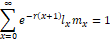
The finite rate of increase (λ), also known as lambda, reflects how quickly a population grows over a given period and is calculated as follows:

The net reproductive rate (R0) denotes the average number of offspring a single female is expected to produce over the course of her lifetime. If (R0) is greater than 1, the population is increasing; if it is less than 1, the population is declining. The value of R0 is calculated as below:

The mean generation time (T) represents the average time it takes for an individual to reproduce and for its offspring to reach reproductive maturity and is calculated as:

Life expectancy (exj)
is calculated according to Chi and Su (2006), assuming 

Similarly, the reproductive value (vxj), introduced by Fisher (1930) was calculated as suggested by Huang and Chi (2011) and Tuan et al. (2014) and) as follows:
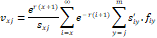
The bootstrap method (100,000 bootstraps) was used to provide more accurate estimates of the variances and standard errors for the population parameters (Efron and Tibshirani 1993; Akköprü et al. 2015; Wei et al. 2020).
Age-stage specific survival rate (sxj) of B. tabaci on different brinjal varieties
The mean developmental durations of different stages of brinjal whitefly on three selected brinjal varieties are shown in Table 1. The data show that the brinjal whitefly had short egg developmental duration when reared on Twinkle star and Shamli as compared to whitefly reared on brinjal variety Black Nagina. The data further show that significantly minimum larval duration (12.19 days) was recorded for whitefly population when reared on Twinkle star variety, this was followed by whitefly reared on Shamli variety (13.31 days), while significantly maximum nymphal developmental duration of whitefly (14.29 days) was recorded when reared on brinjal variety Black Nagina. Table 1 further depicts that there were no significant differences in the adult pre-oviposition period of brinjal whitefly across the three selected varieties. A significantly lower mean adult duration (14.33 days) was recorded for
Table 1: Effect of different brinjal varieties on the developmental time of the different stages of Bemisia tabaci under laboratory condition
|
Parameter |
*n |
Twinkle star |
N |
Shamli |
n |
Black Nagina |
|
(Mean ± S.E) |
(Mean ± S.E) |
(Mean ± S.E) |
||||
|
Egg (days) |
65 |
5.38±0.19b |
65 |
5.69±0.09b |
65 |
6.00±0.05a |
|
Nymph (days) |
51 |
12.19±0.10c |
60 |
13.31±0.11b |
62 |
14.29±0.10a |
|
APOP (days) |
32 |
0.43±0.08 |
39 |
0.48±0.08 |
42 |
0.47±0.07 |
|
Adult (days) |
51 |
14.33±0.19c |
60 |
16.25±0.16b |
62 |
17.70±0.19a |
|
TPOP (days) |
32 |
18.21±0.35c |
39 |
19.46±0.17b |
42 |
21.04±0.14a |
|
Oviposition period (days) |
32 |
12.00±0.67b |
39 |
13.00±0.51b |
42 |
15.00±0.42a |
|
Fecundity (eggs) |
32 |
113.56±2.75c |
39 |
138.87±4.00b |
42 |
167.57±4.24a |
|
Doubling time |
65 |
4.16±0.14 |
65 |
4.03±0.10 |
65 |
4.02±0.08 |
|
Pre adult survival rate (%) |
65 |
78.00±0.05b |
65 |
92.00±0.03a |
65 |
95.00±0.02a |
|
Female total Longevity (days) |
32 |
32.75±0.38c |
39 |
35.74±0.32b |
42 |
39.16±0.20a |
|
Male total Longevity (days) |
19 |
29.36±0.23c |
21 |
34.09±0.50b |
20 |
35.40±0.41a |
*n is the number of B. tabaci at the beginning. Means having different alphabets in rows are significantly different from one another using bootstrap resampling method
whitefly population reared on brinjal variety Twinkle Star, this was followed by whitefly population reared on brinjal variety Shamli (16.25 days), while significantly higher adult duration of whitefly was recorded on brinjal variety Black Nagina (17.70 days). Whitefly population reared on brinjal variety Twinkle Star resulted in significantly lower adult preoviposition period and oviposition as compared to other brinjal varieties. The whitefly population reared on brinjal variety Twinkle Star resulted in significantly reduced mean egg laying (113.56 eggs), this was followed by whitefly population reared on brinjal variety Shamli where mean egg laying of 138.87 were recorded, while the whitefly population reared on brinjal variety Black Nagina show a significantly higher average number of eggs laying per female. A non- significant difference was observed on mean doubling time of whitefly population reared on different varieties. The data further illustrate that the male and female whitefly adults reared on brinjal variety Twinkle Star resulted in significantly lower mean adult longevity (29.36 and 32.75 days) compared to the whitefly populations reared on other two varieties.
The age-stage specific survival rate curves (Sₓj) of Bemisia tabaci reared on the three brinjal varieties (Twinkle Star, Shamli and Black Nagin) displayed notable overlaps in Fig. 1. This overlapping pattern reflects the variation in developmental rates among individual whiteflies when raised on different host varieties. Such variation is expected, as the physiological and nutritional characteristics of each brinjal variety likely influenced the growth and survival patterns of the insect population. The total developmental time (38 days) was shorter, and survival rate was lower when reared on brinjal variety Shamli, this was followed by brinjal variety Twinkle Star where total developmental duration (41 days) was recorded, while significantly longer developmental time (42 days) of the brinjal whitefly were recorded when reared on brinjal variety Black Nagina. The first female and male of the brinjal whitefly emerged on the 14th and 15th day on Twinkle Star while on the 16th day and 20th day on Shamli and Black Nagina, respectively.
Life table parameters of B. tabaci on three different brinjal varieties
The different life table parameters of Bemisia tabaci populations reared on Twinkle Star, Shamli and Black Nagina are illustrated in different curves in Fig. 2. The different curves of the lₓ reveal that whiteflies reared on the Twinkle Star variety exhibited a more rapid decline in survival during the early developmental stages compared to those reared on Shamli and Black Nagina. An early quick decline in the lₓ curve in the brinjal variety Twinkle Star shows a higher early-stage mortality rate in the population, demonstrating that this variety may be least preferred for whitefly population development.
The curves regarding the age-stage specific fecundity curve (fₓ) further demonstrate a peak value of (14.04 offspring) for whiteflies reared on Twinkle Star on day the 29, as compared to the peak fecundity observed on Shamli and Black Nagina. The curve further shows that early egg laying data of the female reared on Twinkle Star on the day 14, whereas the first egg-laying data were on the day 17 and 19, on Shamli and Black Nagina, respectively.
Effects of selected brinjal varieties on the age-stage life expectancy (exj) of B. tabaci
Despite the variation in net reproductive rates, the values for the intrinsic rate of increase (r), gross reproductive rate (GRR) and the finite rate of increase (λ) were found non-significant i.e., P ≥ 0.05. Regarding the mean generation time (T), significant differences were found among the brinjal varieties. The longest generation time was recorded on Black Nagina, where B. tabaci took an average of 27.20 days to complete one generation. This was followed by Shamli with a mean generation time of 25.75 days. The shortest generation time, 24.17 days, was observed in populations reared on Twinkle Star.
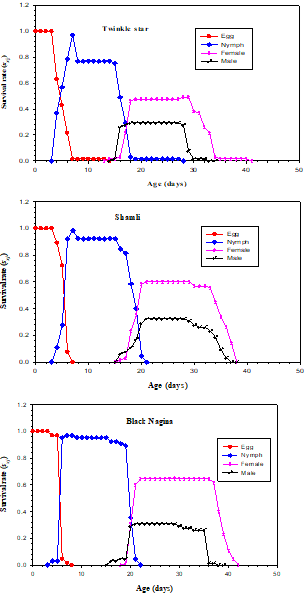
Fig. 1: Age-stage specific survival rate (sxj) of the brinjal whitefly reared on different brinjal varieties
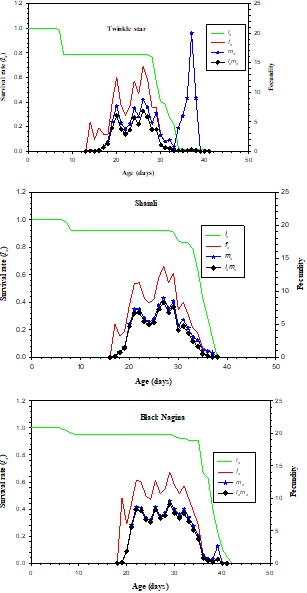
Fig. 2: Effect of different brinjal varieties on the different life table parameters of the brinjal whitefly under laboratory conditions
Age-stage life expectancy (exj) of B. tabaci reared on three brinjal varieties
The age-stage life expectancy (eₓj) of B. tabaci populations reared on different brinjal varieties is presented in Fig. 3. Among the three host varieties, the highest life expectancy at the egg stage was observed in whiteflies reared on Black Nagina, with an average of 36.56 days. Similarly, the total longevity of the whitefly population from age zero (e01) was 41 days on Twinkle Star and Shamli variety which were comparatively shorter than the longevity of whitefly reared on brinjal variety Black Nagina (Fig. 3).
Effect of different brinjal varieties on the age-stage reproductive value (vxj) of B. tabaci
Table 2: Population growth parameters (means ±standard errors) of whitefly reared on different varieties
|
Parameter |
*n |
Twinkle |
Shamli |
Black Nagina |
|
Mean ± SE |
Mean ± SE |
Mean ± SE |
||
|
Ro (offsprings) |
65 |
55.90±7.16b |
83.32±8.76a |
108.27±10.28a |
|
Lambda λ (offsprings) |
65 |
1.18±0.006 |
1.18±0.004 |
1.18±0.005 |
|
R (offsprings) |
65 |
0.16±0.005 |
0.17±0.004 |
0.17±0.003 |
|
GRR (offspring/individuals |
65 |
124.03±25.49 |
94.86±9.22 |
117.90±10.18 |
|
T (days) |
65 |
24.17±0.244c |
25.75±0.218b |
27.20±0.139a |
*n = number of individuals at the beginning
Means values with different alphabets in rows are significantly different using 100000 bootstraps resampling
The age-stage reproductive value (vxj) of brinjal whitefly reared individually on different brinjal varieties in Fig. 4 showed that the reproductive values of the brinjal whitefly population reared on different brinjal varieties at age zero was in the range of 1.18 offspring per day, which was almost similar in all the brinjal varieties. The reproductive value (vxj) of the brinjal whitefly peaked at 66.50 offspring per day on day 22 coinciding with the emergence of female on the brinjal variety Black Nagina, this was followed by whitefly population that was reared on brinjal variety Shamli where peaked value of 57.76 offspring per day on day 21, while significantly lower peak value of 52.45 offspring per day of the whitefly female population on day 19th was recorded when reared on brinjal variety Twinkle Star.
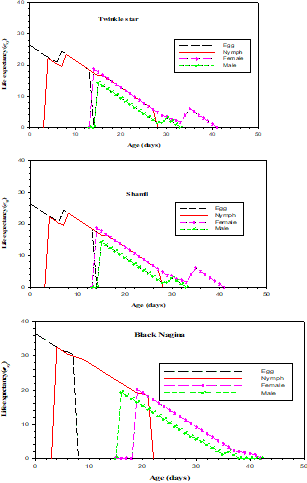
Fig. 3: Effect of different brinjal varieties on the age-stage life expectancy (exj) of brinjal whitefly during 2021
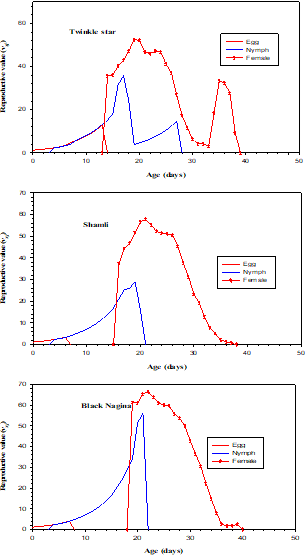
Fig. 4: Effect of different brinjal varieties on the age-stage reproductive value (vxj) of brinjal whitefly under laboratory conditions
Life table serves as an essential tool for understanding and examining the dynamics of a population. The age-stage, two-sex life table has many advantages over traditional life tables, as it considers both stage differentiation and sexes (male and female). This method provides a more accurate picture of the insect’s life history and offers better results of ecological estimations (Chi 1988; Huang and Chi 2012).
The study regarding the lifetable parameters of brinjal whitefly on different varieties demonstrates a detailed overview and interpretation of the current research findings. The main aim was to understand the growth, survival, population size and behavior of the whitefly on selected brinjal varieties. The study revealed that the brinjal whiteflies reared on Twinkle star and Shamli varieties had short egg developmental durations as compared to whitefly reared on brinjal variety Black Nagina. The results further recorded a significantly reduced larval duration of brinjal white flies when reared on Twinkle Star and Shamli varieties as compared to those reared on the brinjal variety Black Nagina. These results show similarities with the work of Abdel-Baky et al. (2004) who reported that the host plants exert a greater influence on determining whitefly life parameters. In comparison to bean crops, cotton exhibited higher rates of egg hatchability and nymphal survival. Our data further demonstrated lower mean adult duration of whitefly when reared on brinjal variety Twinkle Star, this was followed by whitefly population reared on brinjal variety Shamli, while significantly longer adult duration of whitefly was recorded on brinjal variety Black Nagina.
Numerous researchers have reported that the maturation of immature B. tabaci is contingent on factors such as the specific whitefly population, the host plants involved, or the particular biotypes present (Lin and Ren 2005). The affinity of whiteflies for a certain host plant is intricately linked to their biological performance on that specific plant (Nava-Camberos et al. 2001). A high reproductive rate, low mortality, and shorter developmental period of insects on a particular host plant collectively suggest the higher suitability of that host towards insect reproduction and survival (Hasan and Ansari 2011).
In the present study, whitefly documented short life and high percentage of survival on brinjal variety Black Nagina as compared to Twinkle Star and Shamli varieties. The age-specific survival rate (lₓ) curves of B. tabaci populations reared on the three brinjal varieties revealed noticeable differences in early-stage survival. Specifically, the survival curve for the population reared on the Twinkle Star variety showed a steeper decline during the initial developmental stages compared to those on Shamli and Black Nagina. This behavior may have arisen due to the availability of superior nutrition on brinjal variety Black Nagina as compared to the other two varieties. The results exhibited a significant correlation with the work of Abdel-Baky et al. (2004) and Bonato et al. (2007) who stated that the host plant nutrients significantly affect the growth and survival of the insect herbivore.
The current study further illustrated that significantly higher net reproductive rate of brinjal whitefly were recorded when reared on brinjal variety Black Nagina (108.27) compared to other brinjal varieties, while no significant differences among the different brinjal varieties regarding the mean finite rates of increase, intrinsic rate of increase and gross reproductive rate were observed. The findings are in line with the work of Musa and Ren (2005) who reported different values of r, λ, T and DT for the B. tabaci reared on soybean, cowpea and garden bean. The study underscored the significance of developmental rate and reproduction being primarily influenced by factors such as food quality, food quantity and the type of host plants. The elevated values of rm suggested the susceptibility of a host plant to insect attacks and vice versa (Kakimoto et al. 2007).
The age-stage life expectancy (exj) the brinjal whitefly population at egg stage was recorded maximum when reared on Black Nagina variety (36.56 days) as compared to the other two brinjal varieties. Similarly, the total longevity of the whitefly population from age zero (e01) was 41 days on Twinkle Star and Shamli variety which were comparatively shorter than the longevity of white fly reared on brinjal variety Black Nagina. The reproductive value (vₓj) of B. tabaci varied notably depending on the brinjal variety on which the population was reared, as shown in the reproductive performance data. The highest peak in reproductive value was observed in females reared on the Black Nagina variety, reaching 66.50 offspring per day on the 22nd day coinciding with the onset of peak reproductive activity following adult emergence. In contrast, a significantly lower peak reproductive value of 52.45 offspring per day was recorded for females reared on Twinkle Star, occurring earlier on the 19th day. These results correlate the work of Yang and Chi (2006) who examined the life history of B. argentifolii Bellows & Perring on tomato (Lycopersicum spp.) using an age-stage, two-sex life table across various temperatures. Supporting evidence for the influence of host plant quality on the biology of B. tabaci is provided by Azimi et al. (2013), who studied the development of cotton whitefly populations on two cotton varieties (Varamin and Sahel) at the Agricultural Biotechnology Research Institute of Iran. Their findings highlighted that host plant characteristics significantly affected the pest’s life history traits. Among the varieties tested, Varamin was identified as an unfavorable host, leading to poorer whitefly performance compared to Sahel. This reinforces the idea that the nutritional and physiological properties of the host plant play a critical role in shaping whitefly population dynamics. The results contributed to a better understanding of B. tabaci life table parameters aiding that brinjal variety Twinkle Star may serve as a least favorable hosts for B. tabaci and will help in more effective control measures against whitefly infestation in brinjal crops under both greenhouse and field conditions.
Whitefly (B. tabaci Genn.) has shown a stronger preference for the Brinjal variety Black Nagina as compared to Shamli and Twinkle Star, as evidence by shorter life span and relatively lower mortality rate on this variety.
Acknowledgements
The present study was carried out as a component of the doctoral research work of Mr. Muhammad Nadeem, conducted in partial fulfillment of the requirements for the Ph.D. degree.
Authors Contributions
MN and AURS: Conceptualization, methodology, writing and data collection. MS: conceptualization, writing formal analysis and editing.
Conflict of Interest
All the authors declare no competing interests.
Data Availability
All the information regarding the current study is available on reasonable requests from the authors.
Ethics Approval
Not applicable to this study.
References
Abdel-Baky NF, AMAE Naga, MEE Nagar, GAM Heikal (2004). Population density and host preference of the silver leaf whitefly, Bemisia argentifolii Perring & Bellows, among three important summer crops. Egypt J Biol Pest Contr 14:251‒258
Akköprü EP, R Atlıhan, H Okut, H Chi (2015). Demographic assessment of plant cultivar resistance to insect pests: A case study of the dusky-veined walnut aphid (Hemiptera: Callaphididae) on five walnut cultivars. J Econ Entomol 108:378‒387
Azimi S, A Ashouri, M Tohidfar (2013). Two-sex life table of cotton whitefly Bemisia tabaci on two varieties of cotton (Gossypium hirsutum). Intl J Biosci 3:84‒89
Bonato O, A Lurette, C Vidal, J Fargues (2007). Modelling temperature-dependent bionomics of Bemisia tabaci (Q-biotype). Physiol Entomol 32:50‒55
Chi H, H Liu (1985). Two new methods for the study of insect population ecology. Bull Inst Zool Acad Sin 24:225‒240
Chi H (1988). Life-table analysis incorporating both sexes and variable development rate among individuals. Environ Entomol 17:26-34
Chi H, HY Su (2006). Age-stage, two-sex life tables of Aphidius gifuensis (Ashmead) (Hymenoptera: Braconidae) and its host Myzus persicae (Sulzer) (Homoptera: Aphididae) with mathematical proof of the relationship between female fecundity and the net reproductive rate. Environ Entomol 35:10‒21
Collonier C, I Fock, V Kasyhap, GL Rotino, MC Daunay, Y Lian, IK Mariska, MY Rajam, A Servaes, G Ducreux, D Sihachakr (2001). Application of biotechnology in eggplant. Plant Cell Tiss Org Cult 65:91‒107
Efron B, RJ Tibshirani (1993). An Introduction to the Bootstrap. Chapman & Hall, Boca Raton
Fisher RA (1930). The Genetical Theory of Natural Selection: A Complete Variorum Edition. Oxford University Press, Oxford
Hasan F, MS Ansari (2011). Population growth of Pieri brassicacae (L.) (Lepidoptera: Pieridae) on different cole crops under laboratory conditions. J Pest Sci 84:179‒186
Huang YB, H Chi (2012). Age-stage, two-sex life tables of Bactrocera cucurbitae (Coquillett) (Diptera: Tephritidae) with a discussion on the problem of applying female age-specific life tables to insect populations. Ins Sci 19:263‒273
Kakimoto K, H Inoue, T Yamaguchi, S Ueda, K Honda, E Yano (2007). Host plant effect on development and reproduction of Bemisia argentifolii Bellows and Perring (B. tabaci [Gennadius] B-biotype) (Homoptera: Aleyrodidae). Appl Entomol Zool 42:63‒70
Leslie PH (1945). On the use of matrices in certain population mathematics. Biometrika 33:183-212
Lin L, S Ren (2005). Development and reproduction of ‘B’ biotype Bemisia tabaci (Gennadius) (Homoptera: Aleyrodidae) on four ornamentals. Ins Sci 12:137‒142
Li Y, GN Mbata, S Punnuri, AM Simmons, DI Shapiro-Ilan (2021). Bemisia tabaci on vegetables in the Southern United States: Incidence, impact, and management. Insects 12:198-226
Musa PD, SX Ren (2005). Development and reproduction of Bemisia tabaci (Homoptera: Aleyrodidae) on three bean species. Ins Sci 12:25‒30
Nava-Camberos U, DG Riley, MK Harris (2001). Temperature and host plant effects on development, survival, and fecundity of Bemisia argentifolii (Homoptera: Aleyrodidae). Environ Entomol 30:55‒63
Salim M, A Gökçe, A Bakhsh (2022). Demographic study of imidacloprid-resistant Colorado potato beetle, Leptinotarsa decemlineata (Coleoptera: Chrysomelidae) fed on transgenic and commercial potato cultivars. Phytoparasitica 50:201‒221
Salim M, M Kamran, I Khan, AUR Saljoqi, S Ahmad, MH Almutairi, AA Sayed, L Aleya, MM Abdel-Daim, M Shah (2023). Effect of larval diets on the life table parameters of dengue mosquito, Aedes aegypti (L.) (Diptera: Culicidae) using age-stage two sex life table theory. Sci Rep 13:1-10 https://doi.org/10.1038/s41598-023-39270-8
Saljoqi AUR, M Salim, I Ahmad (2021). Management of garlic thrips, Thrips tabaci Lindeman (Thysanoptera: Thripidae) through different pest management techniques in garlic crop. Sarhad J Agric 37:359‒368
Saljoqi AR, S Iqbal, I Khan (2023). Management of brinjal fruit and shoot borer Leucinodes orbonalis (Guenee) (Lepidoptera: Crambidae) through Trichogramma chilonis (Ishii) (Hymenoptera: Trichogrammatidae) and selective use of insecticides. Sarhad J Agric 39:134‒139
Syed TS, MS Khanzada, R Shagufta, SR Khanzada, GH Abro, S Muhammad, SH Dayo, S Anwar, W Su (2016). Population dynamics of thrips, whiteflies and their natural enemies on mustard (Brassica campestris L.) crop in different localities of Sindh. Pak J Entomol Zool 4:7‒16
Thapa RB (2010). Integrated management of brinjal fruit and shoot borer, Leucinodes orbonalis Guen: An overview. J Inst Agric Anim Sci 30/32:1‒16
Tuan SJ, CC Lee, H Chi (2014). Population and damage projection of Spodoptera litura (F.) on peanuts (Arachis hypogaea L.) under different conditions using the age-stage, two-sex life table. Pest Manage Sci 70:805‒813 https://doi.org/10.1002/ps.3618
Wei M, H Chi, Y Guo, X Li, L Zhao, R Ma (2020). Demography of Cacopsylla chinensis (Hemiptera: Psyllidae) reared on four cultivars of Pyrus bretschneideri (Rosales: Rosaceae) and P. communis pears with estimations of confidence intervals of specific life table statistics. J Econ Entomol 113:2343‒2353
Yang TC, H Chi (2006). Life tables and development of Bemisia argentifolii (Homoptera: Aleyrodidae) at different temperatures. J Econ Entomol 99:691‒698
Online : 1814-9596
Print : 1560-8530