


Indexing


Journal Cover

Optimization of Nutritional Requirements for the Mycelial Growth of Trametes cubensis and Lentinus velutinus
Abstract
Trametes cubensis and Lentinus velutinus are wood-rotting macrofungi belonging to the order Polyporales under the family Polyporaceae. These mushrooms are medicinally important and are important decomposers because of the presence of wood-degrading enzymes. This study evaluated the nutrient requirements for the optimum mycelial growth of the two mushroom species in a semi-solid medium. Results revealed that the tested nutrients significantly affected the mycelial growth rate and density of T. cubensis and L. velutinus. T. cubensis exhibited the widest mycelial diameter and very thick mycelial density when cultivated on a medium with 10:1, 5:1 and 2:1 ratios of fructose and malt extract as the primary carbon and nitrogen sources, respectively. The addition of mineral salts, including MgSO4, K2HPO4, NaCl, FeSO4, KH2PO4 and CuSO4, recorded fast mycelial growth, but only MgSO4 produced the very thick mycelial density of T. cubensis. Acetic acid, the five tested vitamins, and the four phytohormones showed favorable mycelial growth of T. cubensis. On the other hand, the 10:1 glucose-to-yeast extract ratio was the best carbon and nitrogen source for L. velutinus. Lactic acid, vitamins such as ascorbate, thiamine, folate, and pyridoxine, and the phytohormone 6-benzylaminopurine promoted the efficient mycelial growth L. velutinus. Taking the data together, both mushrooms require unique culture medium composition for their luxuriant growth, which is necessary for the sustainable production and utilization of these mushrooms in various applications.
Keywords: Mushrooms; Mycelia; Nutritional; Wood-rotting
Optimization of Nutritional Requirements for the Mycelial Growth of Trametes cubensis and Lentinus velutinus
Kristine Grace D Waing1,2,3,4*† and Rich Milton R Dulay1,3,4†
1Department of Biology, College of Science, De La Salle University, Taft Avenue, Manila, Philippines
2Department of Science and Technology – Science Education Institute, Taguig City, Philippines
3Center for Tropical Mushroom Research and Development, Central Luzon State University, Science City of Muñoz, Nueva Ecija 3120, Philippines
4Department of Biological Sciences, College of Science, Central Luzon State University, Science City of Muñoz, Nueva Ecija, 3120 Philippines
*For correspondence: kristine_waing@dlsu.edu.ph
†Contributed equally to this work and are co-first authors
Received 30 May 2025; Accepted 07 August 2025; Published online 22 September 2025
Editor: Arshad Javaid
Abstract
Trametes cubensis and Lentinus velutinus are wood-rotting macrofungi belonging to the order Polyporales under the family Polyporaceae. These mushrooms are medicinally important and are important decomposers because of the presence of wood-degrading enzymes. This study evaluated the nutrient requirements for the optimum mycelial growth of the two mushroom species in a semi-solid medium. Results revealed that the tested nutrients significantly affected the mycelial growth rate and density of T. cubensis and L. velutinus. T. cubensis exhibited the widest mycelial diameter and very thick mycelial density when cultivated on a medium with 10:1, 5:1 and 2:1 ratios of fructose and malt extract as the primary carbon and nitrogen sources, respectively. The addition of mineral salts, including MgSO4, K2HPO4, NaCl, FeSO4, KH2PO4 and CuSO4, recorded fast mycelial growth, but only MgSO4 produced the very thick mycelial density of T. cubensis. Acetic acid, the five tested vitamins, and the four phytohormones showed favorable mycelial growth of T. cubensis. On the other hand, the 10:1 glucose-to-yeast extract ratio was the best carbon and nitrogen source for L. velutinus. Lactic acid, vitamins such as ascorbate, thiamine, folate, and pyridoxine, and the phytohormone 6-benzylaminopurine promoted the efficient mycelial growth L. velutinus. Taking the data together, both mushrooms require unique culture medium composition for their luxuriant growth, which is necessary for the sustainable production and utilization of these mushrooms in various applications.
Keywords: Mushrooms; Mycelia; Nutritional; Wood-rotting
Introduction
Mushrooms are macroscopic fungi that are visible to the naked eye. Growing interest in mushroom cultivation is due to its palatability and rich nutritional attributes (Leon et al. 2023). They also have been found to have antimicrobial, anti-cancer, and antioxidant properties (Dulay et al. 2015, 2022; Aguilar et al. 2023). Most macrofungal species can be found growing on woods, branches, fallen logs, and trees and can degrade the wood components (Vane et al. 2003; Dulay et al. 2020a).
Trametes are wood decomposers found in natural habitats and are traditionally used to treat diseases (Hapuarachchi et al. 2021). It was also found in the study of Muñoz-Castiblanco et al. (2020) that Trametes have chemical compounds that have the potential for treating cancer. Aside from that, they also can degrade wood primarily because of the enzymes present such as cellulase and ligninases (Mswaka and Magan 1998). Several wood-degrading Trametes species were Trametes pubescens, Trametes multicolor, Trametes versicolor, Trametes cubensis and Trametes hirsuta (Couto et al. 2004; Knežević et al. 2013). T. cubensis is a bracket fungus from the order Polyporales belonging to the family Polyporaceae (Chawngthu et al. 2023). T. cubensis is an edible mushroom usually found growing on trees that have anti-inflammatory and medicinal properties (Li et al. 2021). They are also important wood decomposers (Hapuarachchi et al. 2021) and have proven to be effective in cellulose degradation (Parihar et al. 2012). In addition, T. cubensis has laccase which can degrade lignin (Behera et al. 2025) and oxidative enzymes for the degradation of petroleum derivatives (Pereira and Damasceno 2019). Meanwhile, in the study of Advincula et al. (2024), they were able to identify the ideal conditions for the mycelial growth of T. cubensis. This was when grown on coconut water agar at 6-7 pH incubated at room temperature. Also, their results showed the ability of T. cubensis to degrade wood blocks through weight loss. Another wood-rotting mushroom is the Lentinus species from the order Polyporales and family Polyporaceae. They were usually found growing on logs, woods, and the trunk of trees. Lentinus like Trametes has also the ability to degrade wood due to wood-degrading enzymes such as laccase and peroxidase (Dulay et al. 2020b). They also possess antibacterial and antioxidant properties (Singdevsachan et al. 2013) and are a good source of food with nutritional and medicinal attributes (Fabros et al. 2022). A species of Lentinus is Lentinus velutinus which was described as having a brown-colored basidiocarp with velutinous stipe surface (Yemul et al. 2019). L. velutinus has wood-degrading enzymes such as laccase, peroxidase, and tyrosinase (Mossebo et al. 2007). In addition, it also has the polysaccharide LVP, which has cytotoxic activity (Udchumpisai and Bangyeekhun 2019). Fungi need a specific set of conditions for their optimum growth (Rabbani et al. 2011; Siddiqui et al. 2011). Several optimization studies were conducted on the mushroom species including Lentinus tigrinus, Lentinus swartzii, Lentinus strigosus and T. versicolor (Dulay et al. 2020b; Nguyen et al. 2021) and they were able to find the most suitable nutrients and conditions needed to grow the mushrooms. T. versicolor was able to exhibit high mycelial growth with thick mycelial density when grown on media with 3:1 fructose and yeast ratio as their carbon and nitrogen source (Nguyen et al. 2021). Meanwhile, sucrose, fructose and starch and yeast extract, malt extract, and ammonium chloride in 10:1 and 40:1 were able to promote the growth of mycelia for L. tigrinus, L. swartzii and L. strigosus (Dulay et al. 2020b).
Many optimization studies on nutrient requirements of few well-known mushroom species such as Pleurotus, Volvariella, Hericium and Cantharellus (Deshaware et al. 2021; Nguyen et al. 2021; Gonkhom et al. 2022; Kalaw et al. 2022) were conducted leaving a vast number of wild or less-studied edible and medicinal mushrooms specifically T. cubensis and L. velutinus with un-optimized nutritional needs. Wherein, the optimization of different physicochemical parameters plays a crucial role in enhancing the growth and production of secondary metabolites in fungi (Rajitha and Naik 2021) that may lead to enzyme production and other biotechnological applications. To the best of our knowledge, no studies have been conducted on the optimization of the nutrient requirements of L. velutinus and T. cubensis. Therefore, to enhance the mycelial growth and density of L. velutinus and T. cubensis as affected by the different nutrient requirements, different sources of nutrients such as carbon, nitrogen, carbon/nitrogen ratio, phytohormones, organic acids, mineral salts and vitamins were assessed on semi-solid medium.
Materials and Methods
Source of mushroom inoculum
Pure cultures of L. velutinus and T. cubensis were obtained from the culture collections of Center for Tropical Mushroom Research and Development, Central Luzon State University, Science City of Munoz, Province of Nueva Ecija, Philippines. Revival of pure cultures was done by inoculating a 6 mm diameter mycelial disc in a previously plated sterilized Potato Dextrose Agar media. Pure cultures were used as mycelial inoculant in the optimization studies of various nutritional factors.
Evaluation of carbon sources
Eight different sources of carbon, such as glucose, fructose, ribose, sucrose, maltose, lactose, cellulose, and starch supplemented to Mushroom Minimal Media (MMM) were used to determine the most suitable carbon. MMM is composed of 5 g of peptone, 120 μg of thiamine-HCl, 0.46 g of KH2PO4, 1 g of K2HPO4, 0.05 g of MgSO4, 15 g of agar, for every 1000 mL of distilled water supplemented with one-tenth measurement in 2% concentration of the carbon source with pH 6 (Dulay et al. 2020b). The prepared culture medium was sterilized at 121°C, 103.4 kPa for 15 min. A 7-day-old, 12 mm diameter mycelial disc was inoculated at the center of the solidified pour-plated culture media and incubated at room temperature, sealed, and in lighted conditions. Mycelial diameter was measured until full ramification using a digital Vernier caliper. Mycelial density was also assessed if it is very thin, thin, thick, very thick, or no growth (Dulay et al. 2020b). The absence of the carbon source served as the control.
Evaluation of nitrogen sources
Different nitrogen sources namely, yeast extract, malt extract, peptone, urea, ammonium sulphate, ammonium acetate, ammonium chloride and potassium nitrate were used to determine the most suitable nitrogen source. The MMM was used except that peptone was replaced with an alternative source of nitrogen. One-tenth of the nitrogen source at 2% concentration was added to the minimal media. Media were sterilized, pour-plated, inoculated with 12 mm mycelial inoculant, and incubated. After incubation, mycelial density and diameter were assessed and measured (Dulay et al. 2020b). The absence of the nitrogen source served as the control.
Evaluation of carbon/nitrogen ratio
The optimum carbon/nitrogen (C/N) ratio was evaluated by observation of mycelial diameter and density after days of incubation using a 12 mm mycelial disc. The mushroom minimal media was prepared using the most favorable carbon and nitrogen sources. The ratio of 1:1, 2:1, 5:1, 10:1, 20:1, 30:1, 40:1 and 50:1 C/N were assessed. After incubation, mycelial density and diameter were assessed and measured (Dulay et al. 2020b).
Evaluation of mineral salts
Determination of the most suitable mineral salts on mycelial growth was evaluated using the most favorable C/N ratio added with, 120 μg thiamine-HCl and one-ninth of mineral salt (MgSO4·7H2O, KCl, KH2PO4, K2HPO4, NaCl, ZnSO4·7H2O, FeSO4·7H2O and CuSO4·5H2O) at 1% concentration, 15 g of agar for every liter of distilled water. Media were cooked, sterilized, pour-plated, inoculated, and incubated until full ramification. The mycelial diameter was measured and density was evaluated after incubation (Dulay et al. 2020b). The absence of mineral salt served as the control.
Evaluation of organic acids
Mycelial inoculant measuring 12 mm was inoculated on MMM media with the most favorable C/N ratio supplemented with 0.1% of organic acid (acetic acid, citric acid, lactic acid and malic acid). Media were cooked, sterilized, pour-plated, inoculated and incubated. The mycelial diameter was measured and density was evaluated after incubation (Dulay et al. 2020b). The absence of the organic acid served as the control.
Evaluation of vitamins
To assess the most favorable vitamins necessary for mycelial growth, 0.1 mg/L of each vitamin (ascorbate, folate, thiamine-HCl, pyridoxine, nicotinamide) was supplemented in the MMM with the most favorable ratio of carbon and nitrogen, 0.46g of KH2PO4, 1 g of K2HPO4, 0.05 g of MgSO4, 15 g of agar, for every liter of distilled water. Mycelial diameter was measured and density was evaluated after incubation (Dulay et al. 2020b). The absence of the vitamins served as the control.
Evaluation of phytohormones
Mushroom minimal media with the most favorable carbon and nitrogen ratio, 0.1 mg/L concentration of each phytohormone (gibberellic acid [GA], alpha-naphthaleneacetic acid [ANAA], indolebutyric acid [IBA] and 6-benzylaminopurine [6-BAP]) was prepared. Media were cooked, sterilized, pour-plated, inoculated with the mushroom source, and incubated. Mycelial diameter was measured and density was evaluated after incubation (Dulay et al. 2020b). The absence of the phytohormone served as the control.
Statistical analysis
The experiment was laid out in a Completely Randomized Design with three replicates for each treatment. Data were analyzed by One Way Analysis of Variance. Comparison among means was done using Tukey’s Honestly Significant Difference at a 5% level of significance using Minitab® 21 Statistical Software.
Results
Effect of carbon source
Both T. cubensis and L. velutinus showed mycelial growth in all the eight carbon sources tested. However, T. cubensis exhibited the highest mycelial growth on fructose, maltose, and glucose, while L. velutinus showed the most growth in fructose and glucose (Table 1). Mycelial density was thick on the most favorable carbon sources for both species, except fructose for L. velutinus, with thin mycelia (Fig. 1 and 2). The remaining carbon sources yielded very thin to thick mycelial growth. Therefore, fructose for T. cubensis and glucose for L. velutinus were used as the carbon source for the succeeding experiments.
Effect of nitrogen source
Table 2 details the mycelial growth responses of T. cubensis and L. velutinus to various organic and inorganic nitrogen sources. The organic sources peptone, malt extract, and yeast extract generally supported bigger growth in both species. Specifically, malt extract yielded the thickest mycelial mat for T. cubensis, whereas L. velutinus displayed the most robust growth with yeast extract (Fig. 3 and 4).
Effect of carbon/nitrogen ratio
Based on the carbon and nitrogen source evaluation, fructose and malt extract were selected to optimize the C/N ratio for T. cubensis, while glucose and yeast extract were chosen for L. velutinus. For T. cubensis, the mycelial diameter was comparable across all tested C/N ratios, but the 10:1, 5:1 and 2:1 ratios yielded the thickest mycelial density and recorded comparable mycelial diameter (Table 3; Fig. 5). Similarly, L. velutinus exhibited favorable mycelial growth across the 1:1, 2:1, 5:1, 10:1 and 20:1 ratios, but the 10:1 ratio showed the thickest mycelial density (Fig. 6). Consequently, a 10:1 was identified as the optimal C/N ratio for the growth of both mushrooms.
Effect of mineral salts
Supplementation of culture media with various salts revealed that MgSO4 significantly enhanced mycelial growth of T. cubensis, with very thick mycelia compared to other mineral sources (Table 4). In contrast, all evaluated minerals except ZnSO4 promoted substantial mycelial growth with very thick mycelia in L. velutinus. While ZnSO4 promoted a very thick mycelial density, its addition to the culture medium resulted in a smaller mycelial diameter measured.
Table 1: Effect of different carbon sources on mycelial growth of Trametes cubensis and Lentinus velutinus
|
Mycelial Diameter |
Mycelial Density |
|||
|
Carbon Source |
T. cubensis (mm 8 days-1) |
L. velutinus (mm 8 days-1) |
T. cubensis |
L. velutinus |
|
Fructose |
81.73 ± 3.14a |
69.17 ± 2.74a |
+++ |
++ |
|
Glucose |
76.25 ± 1.24a |
63.40 ± 2.98ab |
+++ |
+++ |
|
Ribose |
38.82 ± 1.67c |
31.57 ± 2.97de |
+ |
++ |
|
Lactose |
58.90 ± 1.18b |
42.99 ± 0.81c |
+++ |
++ |
|
Sucrose |
58.70 ± 2.07b |
37.02 ± 1.94cd |
++ |
++ |
|
Maltose |
81.69 ± 2.86a |
61.41 ± 1.32b |
+++ |
++ |
|
Cellulose |
40.71 ± 3.09c |
33.40 ± 2.67de |
+ |
++ |
|
Starch |
37.86 ± 8.86c |
29.36 ± 3.26e |
+ |
+ |
|
Control |
45.43 ± 2.82c |
20.08 ± 1.16e |
+ |
++ |
+a Means with the same letters of superscript in each column are not significantly different at 5% level of significance; Mycelial density: very thin (+), thin (++), thick (+++), very thick (++++)
Table 2: Effect of different nitrogen sources on mycelial growth of Trametes cubensis and Lentinus velutinus
|
Mycelial Diameter |
Mycelial Density |
|||
|
Nitrogen Source |
T. cubensis (mm 6 days-1) |
L. velutinus (mm 6 days-1) |
T. cubensis |
L. velutinus |
|
Peptone |
89.12 ± 0.05a |
77.97 ± 2.56a |
+ |
+++ |
|
Malt extract |
87.70 ± 1.69ab |
71.94 ± 1.85ab |
++++ |
++ |
|
Yeast extract |
84.81 ± 3.57abc |
73.27 ± 1.91ab |
+ |
++++ |
|
Ammonium chloride |
79.78 ± 2.10abcd |
59.61 ± 1.75cd |
++ |
+ |
|
Ammonium sulphate |
71.56 ± 2.55bcd |
51.54 ± 9.78de |
+ |
+ |
|
Ammonium acetate |
52.99 ± 0.63e |
47.62 ± 2.46e |
+ |
++++ |
|
Urea |
27.98 ± 13.85f |
00.00 ± 0.00f |
+ |
No growth |
|
Potassium nitrate |
69.88 ± 10.24cde |
66.75 ± 2.40bc |
+ |
+ |
|
Control |
64.94 ± 2.59de |
69.08 ± 2.46abc |
++ |
+ |
+a Means with the same letters of superscript in each column are not significantly different at 5% level of significance; Mycelial density: very thin (+), thin (++), thick (+++), very thick (++++)
Table 3: Effect of carbon/nitrogen ratio on mycelial growth of Trametes cubensis and Lentinus velutinus
|
Mycelial Diameter |
Mycelial Density |
|||
|
C/N ratio |
T. cubensis (mm 5 days-1) |
L. velutinus (mm 6 days-1) |
T. cubensis |
L. velutinus |
|
1:1 |
78.59 ± 5.90a |
88.99 ± 2.10ab |
+++ |
++ |
|
2:1 |
87.89 ± 2.44a |
89.52 ± 1.35a |
++++ |
+++ |
|
5:1 |
88.73 ± 1.90a |
83.61 ± 9.50ab |
++++ |
+++ |
|
10:1 |
89.92 ± 0.08a |
89.93 ± 0.27a |
++++ |
++++ |
|
20:1 |
87.39 ± 6.65a |
87.00 ± 2.02ab |
+++ |
+++ |
|
30:1 |
86.39 ± 0.96a |
77.65 ± 3.12bc |
+++ |
+++ |
|
40:1 |
84.80 ± 6.18a |
66.19 ± 2.38cd |
+++ |
++++ |
|
50:1 |
85.00 ± 5.07a |
50.75 ± 2.14e |
+++ |
++++ |
|
Control |
63.40 ± 1.82b |
63.67 ± 5.22d |
_+ |
+ |
+a Means with the same letters of superscript in each column are not significantly different at 5% level of significance; Mycelial density: very thin (+), thin (++), thick (+++), very thick (++++)
Effect of organic acids
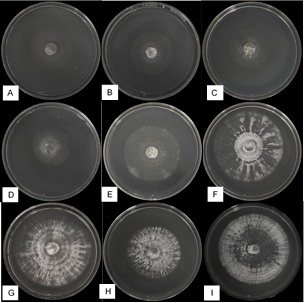
Fig. 1: Mycelial culture of Trametes cubensis as affected by different carbon sources on the 8th day of incubation: Starch (A), control (B), cellulose (C), ribose (D), sucrose (E), glucose (F), fructose (G), lactose (H) and maltose (I)
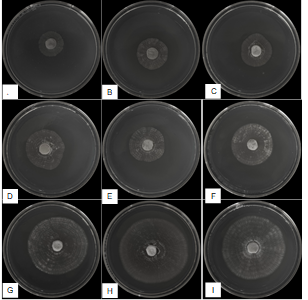
Fig. 2: Mycelial culture of Lentinus velutinus as affected by different carbon sources on the 8th day of incubation: Starch (A), control (B), ribose (C), sucrose (D), cellulose (E), lactose (F), maltose (G), fructose (H) and glucose (I)
In T. cubensis, acetic and lactic acids had the greatest mycelial diameters, but acetic acid uniquely promoted a very dense mycelial structure (Table 5). Conversely, L. velutinus exhibited the highest mycelial growth on a lactic acid-supplemented medium, although all tested organic acids supported substantial growth and a very dense
Table 4: Effect of mineral salts on mycelial growth of Trametes cubensis and Lentinus velutinus
|
Mycelial Diameter |
Mycelial Density |
|||
|
Mineral salts |
T. cubensis (mm 5 days-1) |
L. velutinus (mm 6 days-1) |
T. cubensis |
L. velutinus |
|
MgSO4 |
89.98 ± 0.94a |
89.80 ± 0.60a |
++++ |
++++ |
|
KCl |
87.54 ± 2.62b |
90.00 ± 0.00a |
+ |
++++ |
|
K2HPO4 |
88.90 ± 4.47a |
86.90 ± 1.25a |
++ |
++++ |
|
NaCl |
87.31 ± 2.92ab |
89.11 ± 1.55a |
+++ |
++++ |
|
FeSO4 |
87.12 ± 2.93ab |
90.00 ± 0.00a |
++ |
++++ |
|
KH2PO4 |
87.72 ± 3.57ab |
89.56 ± 0.51a |
+++ |
++++ |
|
ZnSO4 |
80.95 ± 1.28b |
54.44 ± 2.99b |
+++ |
++++ |
|
CuSO4 |
86.59 ± 1.65ab |
90.00 ± 0.00a |
+++ |
++++ |
|
Control |
88.70 ± 2.20ab |
90.00 ± 0.00a |
+++ |
++++ |
+a Means with the same letters of superscript in each column are not significantly different at 5% level of significance; Mycelial density: very thin (+), thin (++), thick (+++), very thick (++++)
Table 5: Effect of organic acids on mycelial growth of Trametes cubensis and Lentinus velutinus
|
Mycelial Diameter |
Mycelial Density |
|||
|
Organic acid |
T. cubensis (mm 5 days-1) |
L. velutinus (mm 6 days-1) |
T. cubensis |
L. velutinus |
|
Acetic acid |
84.33 ± 3.19a |
78.97 ± 4.31b |
++++ |
++++ |
|
Citric acid |
52.67 ± 3.24c |
58.27 ± 1.74d |
+ |
++++ |
|
Lactic acid |
82.19 ± 1.66a |
89.91 ± 1.98a |
+ |
++++ |
|
Malic acid |
64.54 ± 0.83b |
64.92 ± 4.79cd |
+++ |
++++ |
|
Control |
85.37 ± 1.82a |
71.59 ± 1.13bc |
++++ |
++++ |
+a Means with the same letters of superscript in each column are not significantly different at 5% level of significance; Mycelial density: very thin (+), thin (++), thick (+++), very thick (++++)
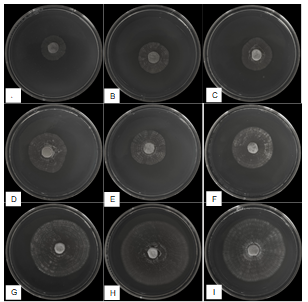
Fig. 3: Mycelial culture of Trametes cubensis affected by different nitrogen sources on the 6th day of incubation: ammonium sulphate (A), peptone (B), ammonium chloride (C), yeast extract (D), potassium nitrate (E), urea (F), control (G), ammonium chloride (H) and malt extract (I)
mycelial density. Despite the very thick mycelial density observed, measurements showed reduced mycelial growth
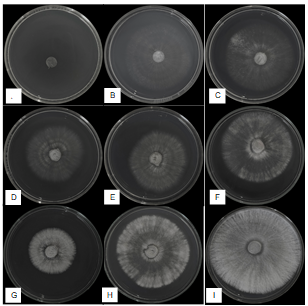
Fig. 4: Mycelial culture of Lentinus velutinus affected by different nitrogen sources on the 6th day of incubation: Urea (A), potassium nitrate (B), control (C), ammonium chloride (D), ammonium sulphate (E), malt extract (F), ammonium acetate (G), peptone (H) and yeast extract (I)
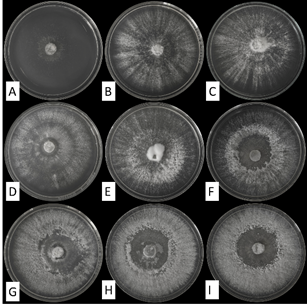
Fig. 5: Mycelial culture of Trametes cubensis affected by different carbon/nitrogen ratio on the 5th day of incubation: Control (A), 50:1 (B), 40:1 (C), 1:1 (D), 30:1 (E), 20:1 (F), 2:1 (G), 5:1 (H) and 10:1 (I)
of both mushroom species upon supplementation of citric acid and malic acid on the culture media.
Effect of vitamin
Vitamins, including nicotinamide (vitamin B3), ascorbate (vitamin C), thiamine (vitamin B1), folate (vitamin B9), and pyridoxine (vitamin B6), showed significant effects on the mycelial growth of the mushroom species (Table 6). All evaluated vitamins stimulated the mycelial growth of T. cubensis and L. velutinus, resulting in thick to very thick mycelial densities. Notably, nicotinamide proved the most effective for T. cubensis, while ascorbate yielded the best results for L. velutinus. However, it is important to note that although there was observed thick mycelial density on nicotinamide, it did not promote the growth in terms of mycelial diameter.
Effect of phytohormones
All tested phytohormones stimulated mycelial growth in T. cubensis, resulting in thick to very thick mycelial densities. However, the 6-BAP and ANAA showed stimulatory effects, showing bigger mycelial diameters with thick to very thick mycelial densities (Table 7). For L. velutinus, 6-BAP yielded the largest mycelial diameter, showing a stimulatory effect, while the other phytohormones also promoted growth with evident very thick mycelial density.
Discussion
Supplementation of various nutrients in the culture media promotes the growth of the mycelia of T. cubensis and L. velutinus. In this study, the monosaccharides fructose and glucose were the best carbon sources for both mushroom species exhibiting the largest mycelial diameter measured with very thick mycelial density observed. The findings of the study are similar to the results of Hur et al. (2008) and Wiriya et al. (2014), in which glucose, fructose, sucrose, and dextrose were the best carbon sources for the growth of Termitomyces and Phellinus species. More so, glucose and sucrose as sources of carbon significantly enhanced the mycelial growth and biomass yield of T. hirsuta and Collelotrichum truncatum (Rongshun et al. 2007; Yang et al. 2013). Concurrent with this, the use of fructose at 15 g/L as a carbon source revealed the best mycelial development for Ganoderma sinense and T. versicolor (Nguyen et al. 2021; Nguyen et al. 2023). Whereas, the most appropriate carbon source for Lentinus species' growth turned out to be starch, fructose, and sucrose (Dulay et al. 2020b). Sugars such as fructose and glucose are made up of one sugar and served as the building blocks for more complex sugars. Thus, these monosaccharides can be easily broken down through the process of glycolysis and digested offering better and more accessible sources of energy like the high energy compound, Adenosine triphosphate (Barakat and El-Wahab 1951; Li et al. 2014; Burnison et al. 2018). Heterotrophic organisms such as mushrooms rely mostly on organic compounds as their main carbon source (Chan 2003), which serves as their primary energy source.
Aside from carbon, another vital macronutrient is nitrogen. Peptone and yeast extract which are both organic
Table 6: Effect of vitamins on mycelial growth of Trametes cubensis and Lentinus velutinus
|
Mycelial Diameter |
Mycelial Density |
|||
|
Vitamins |
T. cubensis (mm 5 days-1) |
L. velutinus (mm 5 days-1) |
T. cubensis |
L. velutinus |
|
Nicotinamide (Vit B3) |
89.16 ± 2.95a |
49.07 ± 4.66b |
+++ |
++++ |
|
Ascorbate (Vit C) |
88.21 ± 4.43a |
83.29 ± 4.17a |
+++ |
++++ |
|
Thiamine (Vit B1) |
88.06 ± 3.89a |
78.06 ± 2.96a |
+++ |
++++ |
|
Folate (Vit B9) |
87.58 ± 1.49a |
77.17 ± 5.23a |
+++ |
++++ |
|
Pyridoxine (Vit B6) |
86.00 ± 1.87a |
76.36 ± 1.94a |
+++ |
++++ |
|
Control |
87.06 ± 4.04a |
85.70 ± 3.66a |
+++ |
++++ |
+a Means with the same letters of superscript in each column are not significantly different at 5% level of significance; Mycelial density: very thin (+), thin (++), thick (+++), very thick (++++)
Table 7: Effect of phytohormones on mycelial growth of Trametes cubensis and Lentinus velutinus
|
Mycelial Diameter |
Mycelial Density |
|||
|
Phytohormone |
T. cubensis (mm 5 days -1) |
L. velutinus (mm 5 days-1) |
T. cubensis |
L. velutinus |
|
6-BAP |
87.89 ± 4.03a |
86.88 ± 0.89a |
+++ |
++++ |
|
ANAA |
87.82 ± 2.94a |
84.33 ± 1.85b |
++++ |
++++ |
|
IBA |
85.38 ± 2.62a |
83.90 ± 2.72b |
+++ |
++++ |
|
GA |
82.38 ± 2.13a |
77.09 ± 1.30b |
+++ |
++++ |
|
Control |
84.89 ± 3.87a |
82.17 ± 6.54b |
++++ |
++++ |
+a Means with the same letters of superscript in each column are not significantly different at 5% level of significance; Mycelial density: very thin (+), thin (++), thick (+++), very thick (++++)
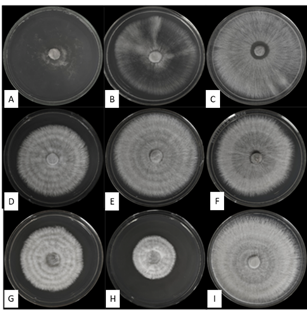
Fig. 6: Mycelial culture of Lentinus velutinus affected by different carbon/nitrogen ratio on the 6th day of incubation: Control (A), 1:1 (B), 2:1 (C), 30:1 (D), 20:1 (E), 5:1 (F), 40:1 (G), 50:1 (H) and 10:1 (I)
sources of nitrogen showed to be the best nitrogen source for the mycelial growth of T. cubensis and L. velutinus. Interestingly, it was observed that L. velutinus failed to utilize urea as a nitrogen source. The result is incongruent with the reports of Dulay et al. (2020b), wherein Lentinus species specifically L. swartzii and L. tigrinus did not grow on the media using urea as source of nitrogen. This exemplifies that the utilization of particular nitrogen sources varies according to the mushroom species. For example, L. swartzii exhibited the highest mycelial growth on media supplemented with ammonium chloride and potassium nitrate, while L. strigosus favored yeast extract and malt extract, and L. tigrinus grew best with malt extract, potassium nitrate, ammonium chloride, and ammonium sulfate (Dulay et al. 2020b). Meanwhile, peptone, yeast extract, and casein showed the highest mycelial growth for T. versicolor (Nguyen et al. 2021). While yeast extract enriched culture media promotes optimal mycelial growth in two species of Hericium (Gonkhom et al. 2022). As such, mushrooms can both utilize organic and inorganic sources of nitrogen. According to Miles and Chang (1997), mushrooms require nitrogen in the synthesis of chitin and nitrogen-containing compounds which is vital for cell proliferation and metabolite synthesis. In growing Tremella mesenterica using submerged cultivation, Elisashvili and Tan (2003) showed that the type and concentration of the nitrogen source greatly affect cell growth and production of polysaccharides such as amino acids and alkaloids. An adequate nitrogen supply can enhance the synthesis of enzymes involved in nutrient uptake and metabolism (Zhang et al. 2023).
Another significant factor affecting mycelial growth is having the right amount of carbon and nitrogen. The optimal 10:1 C/N ratio were observed for T. cubensis and L. velutinus. The observed results align with the findings by Kim et al. (2005) and Dulay et al. (2020b) who reported the same ratio as optimal for the mycelial growth of L. swartzii, L. strigosus and Phellinus linteus. Meanwhile, other studies reported different C/N ratio preferences depending on the mushroom species. For example, T. versicolor favors the 5:1 and 3:1 C/N ratio, the 2:1 and 5:1 C/N ratio for Coriolus versicolor (Jo et al. 2010) and the 1:1 ratio for Ganoderma applanatum (Jo et al. 2009). This indicates that different mushroom species prefer different sources and varying amounts of carbon and nitrogen. The right amount of C/N in the growth medium is important for growing mushrooms (Ashrafi et al. 2014). Wherein, the C/N proportions in a culture medium affect the synthesis of cell wall non-starch polysaccharide in the mycelia of mushroom (Wu et al. 2004).
Another key factor influencing the mycelial growth are the mineral salts. The addition of MgSO4 on the MMM culture media enhanced the mycelial growth of T. cubensis. Meanwhile, although ZnSO4 did not give the best result in terms of mycelial growth of L. velutinus, it can be observed the very thick mycelial density. This shows that the addition of mineral salts to the culture medium enhances mycelial growth (Kang et al. 2024). The addition of MgSO4 on culture media which promotes mycelial growth of T. cubensis is in congruence with the results of Jo et al. (2006, 2009) using Phellinus and G. applanatum species. Moreover, KH2PO4, K2HPO4 and ZnSO4 promoted the mycelial growth of Lentinus species (Dulay et al. 2020b). Aside from carbon and nitrogen sources, mineral salts play an essential role in the growth and development of mushroom species (Dulay et al. 2020b). They are responsible for several biological processes and metabolic reactions. Non-protein cofactors called coenzymes are derived from vitamins and minerals which are necessary for various enzymatic actions (Pelley 2012).
Similarly, the addition of organic acids promoted mycelial growth. Lactic acid and acetic acid when supplemented on the culture medium, promotes mycelial growth of T. cubensis and L. velutinus. Wherein, lactic acid was also excellent in promoting the growth of Phellinus sp. and G. applanatum, in contrast, no growth was observed in the addition of acetic acid (Jo et al. 2006, 2009). The present study's findings are further supported by Dulay et al. (2020b), who also reported media supplemented with lactic acid showed the best mycelial growth of L. swartzii, while acetic and citric acids promoted the most efficient mycelial growth of L. strigosus. The presence of organic acids in the culture media can influence the ability of mushrooms to produce secondary metabolites. For example, the addition of organic acids resulted in the production of various bioactive compounds in mushrooms which may offer potential health benefits (Valentão et al. 2005; Cruz-Moreno et al. 2023). More so, organic acids like fumarate, succinate and malate are intermediates of the Kreb’s cycle that yields energy and are also precursors for the synthesis of other biomolecules such as amino acids and fatty acids (Kwong et al. 2017).
The vitamins, nicotinamide, ascorbate, thiamine, folate and pyridoxine supported the growth of the two mushroom species in this study. Similarly, the growth of Phellinus spp., C. versicolor and G. applanatum was significantly enhanced by the addition of biotin and thiamine-HCl (Jo et al. 2006, 2009, 2010), with Ca-pantothenic acid showing similar benefits for P. linteus (Chi et al. 1996). Further studies have indicated that pantothenic acid and nicotinic acid promote the mycelial growth of both P. linteus (Chi et al. 1996) and Ganoderma lucidum (Cho et al. 1993). Moreover, ascorbate, nicotinamide, folate, pyridoxine, and thiamine-HCl have been found to stimulate the mycelial growth of Lentinus mushrooms (Dulay et al. 2020b). The incorporation of vitamins into mushroom cultivation substrates has been shown to stimulate hyphal growth, boost overall productivity, and enhance biological efficiency (El-Sayed et al. 2013). Vitamin such as biotin is involved in the synthesis of fatty acid by providing essential lipids for cell membrane formation and metabolism of amino acids that will supply building blocks for amino acid synthesis which affects mycelial growth (Zhao et al. 2024).
All the phytohormones supplemented on the culture media enhances the mycelial growth of T. cubensis and L. velutinus with highest observed on the 6-BAP. The observations in this study align with previous research demonstrating that adding phytohormones to the culture media stimulates mycelial growth. Specifically, 2, 4-dichlorophenoxyacetic acid (2, 4-D) and GA have been shown to promote the growth of Lentinus subnudus (Berk.) and Schizophyllum commune (Fr. ex Fr.) (Jonathan and Fasidi 2001), and 1-naphthaleneacetic acid has been found to enhance P. linteus (Guo et al. 2009). Furthermore, GA, indole-3-acetic acid (IAA), furfurylaminopurine, and ANAA have been reported to enhance the growth of Lentinus species (Dulay et al. 2020b). Auxins like ANAA, IAA and IBA stimulates cell elongation by means of cell division while 6-BAP a synthetic cytokinin also promotes cell division and differentiation both are contributory factors for increased mycelial growth (Guo et al. 2009; Grich et al. 2025).
Generally, it was observed that supplementation of vitamins, minerals, organic acids, and phytohormones in the culture media stimulated the mycelial growth of the mushroom species. However, it can be observed that in some evaluated supplements, reduced mycelial growth was noted. The addition of ZnSO4, citric and malic acid, and nicotinamide showed a significantly smaller mycelial growth of L. velutinus. Similarly, the inhibitory effect of citric and malic acid was also observed on the growth of T. cubensis. This can be correlated due to the possible reasons. The concentration of the different supplements is not ideal for the mushroom species tested because different mushroom species have varying nutritional requirements. Inhibitory effects on the mycelial growth of Aspergillus flavus were observed at higher concentrations of vitamins specifically A, C and E when added to the culture media, and decreasing concentrations of the vitamins promoted mycelial growth (Daud et al. 2014). Similarly, substrate supplemented with selenium with more than 25.4 mg∙kg−1 decreased the production of P. ostreatus (Silva et al. 2013). Thus, Silva et al. (2013) stated that Se level can be inhibitory on the fungal growth rate depending on the level of concentration. More so, almost similar results were observed by Jo et al. (2009), on the measured mycelial growth of G. applanatum GBGA-02 when the media was supplemented by nicotinamide, citric acid and malic acid, showing the smallest mycelial growth measured.
Conclusion
The evaluated nutrients were found to have a significant effect on the mycelial growth rate and mycelial density of T. cubensis and L. velutinus. For optimum cultivation of T. cubensis, a 10:1 fructose to malt extract was proven to be the most effective. Inclusion of specific mineral salts, organic acids such as lactic acid and acetic acid, vitamins, and phytohormones significantly enhances its mycelial development. Meanwhile, L. velutinus demonstrates a distinct preference for a 10:1 glucose-to-yeast extract ratio for greater growth. Lactic acid, 6-BAP and the majority of the tested organic acids also positively influenced L. velutinus mycelial growth. These results provide essential information for laboratory culture media, leading to more efficient and cost-effective practices for mushroom cultivation. These will be essential for the production of valuable bioactive compounds with potential applications in bioremediation and biotechnological fields.
Acknowledgements
This research was supported through a scholarship grant from the Department of Science and Technology - Science Education Institute (DOST-SEI), Philippines, awarded to Ms. Kristine Grace D. Waing for her Ph.D. studies in Biology at De La Salle University.
Author Contributions
KGDW and RMRD planned the experiments; KGDW interpreted the results, analyzed the data and made illustrations; KGDW and RMRD made the write-up.
Conflict of Interest
All authors declare no conflict of interest.
Data Availability
Data presented in this study will be available on a fair request to the corresponding author.
Ethics Approval
Not applicable to this paper.
References
Advincula EGC, RMR Dulay, SP Kalaw, K Kimura, K Takenaka, RG Reyes (2024). Optimization of culture conditions and forced wood decay assessment of wood-rotting mushrooms of Central Luzon, Philippines. Asian J Mycol 7:119–131
Aguilar JS, RMR Dulay, SP Kalaw, RG Reyes (2023). Optimal liquid culture conditions and bioactivity of Pycnoporus sanguineus. J Appl Pharm Sci 13: 96–104
Ashrafi R, M Mian, M Rahman, M Jahiruddin (2014). Recycling of spent mushroom substrate for the production of oyster mushroom. Res Biotechnol 5:13–21
Barakat MZ, MEA El-Wahab (1951). The differentiation of monosaccharides from disaccharides and polysaccharides and identification of fructose. J Pharm Pharmacol 3:511–513
Behera B, N Kumari, M Maruthi, RK Singh, JK Saini (2025). Appraisal of malachite green biodegradation and detoxification potential of laccase from Trametes cubensis. Bioresour Technol 417:131869
Burnison H, T Granato, M King, H Peoples, T Hallidayschult (2018). The effect of monosaccharides versus disaccharides on the rate of CO2 production. J Undergrad Biol Lab Invest 1:1–4
Chan ECS (2003). Microbial Nutrition and Basic Metabolism, pp:3–33. Handbook of Water and Wastewater Microbiology
Chawngthu Z, L Tluanga, J Zothanzama, VL Thachunglura, B Lalbiakmawia, L Renthlei (2023). Wood rotting polyporales from the biodiversity reserves within the Indian subtropical habitat. Ind J Microbiol Res 10:140–148
Chi JH, TM Ha, YH Kim, YD Rho (1996). Studies on the main factors affecting the mycelial growth of Phellinus linteus. Kor J Mycol 24:214–222
Cho SM, GS Seo, SH Yu, ID Yoo, GC Shin (1993). Morphological characterization and culture conditions of a white mutant of Ganoderma lucidum. Kor J Appl Microbiol Biotechnol 21:520–526
Couto SR, E Rosales, M Gundın, M Sanromán (2004). Exploitation of a waste from the brewing industry for laccase production by two Trametes species. J Food Eng 64:423–428
Cruz-Moreno BA, AAF Pérez, JF García-Trejo, SA Pérez-García, C Gutiérrez-Antonio (2023). Identification of secondary metabolites of interest in Pleurotus djamor using Agave tequilana bagasse. Molecules 28:1-13
Daud HFC, JR Bautista, FG Teves (2014). Effects of vitamins A, C and E on growth and colonial morphology of Aspergillus flavus. Intl Res J Biol Sci 3:52–59
Deshaware S, SJ Marathe, D Bedade, J Deska, S Shamekh (2021). Investigation on mycelial growth requirements of Cantharellus cibarius under laboratory conditions. Arch Microbiol 203:1539–1545
Dulay RMR, EC Cabrera, SP Kalaw, RG Reyes, JR Undan (2022). Cytotoxicity of Lentinus isolates mycelial extracts on human colorectal carcinoma HCT-116 cells. J Appl Pharm Sci 12:76–85
Dulay RMR, VIJS Carandang, S Kalaw, R Reyes (2020a). Distribution and species listing of wild macrofungi in Sitio Canding, Barangay Maasin, San Clemente, Tarlac Province, Philippines. J Appl Biol Biotechnol 8:7-15
Dulay RMR, EC Cabrera, SP Kalaw, RG Reyes, CT Hou (2020b). Nutritional requirements for mycelial growth of three Lentinus species from the Philippines. Biocatal Agric Biotechnol 23:101506
Dulay RMR, AC Cabalar, MJBD Roxas, JMP Concepcion, NE Cruz, Esmeralda, MN Jimenez, JC Aguilar, EJD Guzman, JQ Santiago, JR Samoy, RG Bustillos, SP Kalaw, RG Reyes (2015). Proximate composition and antioxidant activity of Panaeolus antillarium, a wild coprophilous mushroom. Curr Res Environ Appl Mycol 5:52
Elisashvili VI, KK Tan (2003). Effects of carbon and nitrogen sources in the medium on Tremella mesenterica Retz.: Fr. (Heterobasidiomycetes) growth and polysaccharide production. Intl J Med 5:49–56
El-Sayed H, E El-Gamily, N Hassanine, A Mohammed (2013). Studies on nutrition of mushroom: 1-effect of amino acids and vitamin b complex on growth and productivity of oyster mushroom. J Plant Prod 4:1543–1554
Fabros JA, RMR Dulay, AMD Leon, SP Kalaw, RG Reyes (2022). Distribution, cultivation, nutritional composition, and bioactivities of Lentinus (Polyporaceae, Basidiomycetes): A review. Curr Res Environ Appl Mycol 12:170–219
Gonkhom D, T Luangharn, KD Hyde, M Stadler, N Thongklang (2022). Optimal conditions for mycelial growth of medicinal mushrooms belonging to the genus Hericium. Mycol Prog 21:1-12
Grich N, T Huynh, A Kisiala, D Palberg, RJN Emery (2025). The biosynthesis and impacts of cytokinins on growth of the oyster mushroom, Pleurotus ostreatus. Mycologia 117:76–94
Guo X, X Zou, M Sun (2009). Effects of phytohormones on mycelial growth and exopolysaccharide biosynthesis of medicinal mushroom Pellinus linteus. Bioproc Biosyst Eng 32:701–707
Hapuarachchi KK, SC Karunarathna, XH Xu, AK Dutta, P Phengsintham, KD Hyde, TC Wen (2021). A review on bioactive compounds, beneficial properties and biotechnological approaches of Trametes (Polyporaceae, Polyporales) and a new record from Laos. Chiang Mai J Sci 48:674–698
Hur H, A Imtiaj, MW Lee, TS Lee (2008). Suitable conditions for mycelial growth of Phellinus spp. Mycobiology 36:152–156
Jo WS, MJ Kang, SY Choi, YB Yoo, SJ Seok, HY Jung (2010). Culture conditions for mycelial growth of Coriolus versicolor. Mycobiology 38:195–202
Jo WS, YJ Cho, DH Cho, SD Park, YB Yoo, SJ Seok (2009). Culture conditions for the mycelial growth of Ganoderma applanatum. Mycobiology 37:94–102
Jo WS, YH Rew, SG Choi, GS Seo, JM Sung, JY Uhm (2006). The culture conditions for the mycelial growth of Phellinus spp. Mycobiology 34:200–205
Jonathan SG, IO Fasidi (2001). Studies on phytohormones, vitamins and mineral element requirements of Lentinus subnudus (Berk) and Schizophyllum commune (Fr. Ex. Fr) from Nigeria. Food Chem 75:303–307
Kalaw SP, RMR Dulay, EJDD Jr, JC Ramos, MAGD Rosario, MD Abon, AMD Leon, RG Reyes (2022). Nutritional and physical requirements for mycelial growth and fruiting body production of six strains of Pleurotus djamor from Luzon Island, Philippines. Asian J Agric Biol 2022:1-10
Kang C, X Zheng, W Wang, W Zeng, J Wang, Z Liu, L Yang, F Wang, Y Zhu (2024). Biological characteristics of the mycelium and optimization of the culture medium for Phallus dongsun. Pol Microbiol 73:237–252
Kim SB, SH Kim, KR Lee, JO Shim, MW Lee, MJ Shim, TS Lee (2005). The optimal culture conditions for the mycelial growth of Oudemansiella radicata. Mycobiology 33:230–234
Knežević A, I Milovanović, M Stajić, J Vukojević (2013). Potential of Trametes species to degrade lignin. Intl Biodeterior Biodegrad 85:52–56
Kwong WK, H Zheng, NA Moran (2017). Convergent evolution of a modified, acetate-driven TCA cycle in bacteria. Nat Microbiol 2:1-8
Leon AMD, JJC Balcruz, JRT Matillano, CM Miguel, JPR Orevillo, RMR Dulay (2023). Diversity and Utilization of Medicinal Mushrooms in the Philippines. CRC Press, ISBN 9781003335931
Li, YC, NT Ngan, KC Cheng, TL Hwang, TD Thang, NN Tuan, ML Yang, PC Kuo, TS Wu (2021). Constituents from the fruiting bodies of Trametes cubensis and Trametes suaveolens in Vietnam and their anti-inflammatory bioactivity. Molecules 26:1-14
Li YJ, ZL Liu, XY He, CJ Tian (2014). Metabolism and interaction of C and N in the arbuscular mycorrhizal symbiosis. Chin J Appl Ecol 25:903–910
Miles PG, ST Chang (1997) Mushroom Biology: Concise Basics and Current Developments. In: Mushroom Biology: Concise Basics and Current Developments, p:41. Miles PG (Ed.). World Scientific Publishing Company
Mossebo DC, AL Njouonkou, R Courtecuisse, A Akoa (2007). Enzymatic activities and decay characteristics in some wood-rotting Basidiomycetes from Cameroon and determination of the time-dependent activity of syringaldazine in spot tests. Cryptogam Mycol 28:107–122
Mswaka AY, N Magan (1998). Wood degradation, and cellulase and ligninase production, by Trametes and other wood-inhabiting basidiomycetes from indigenous forests of Zimbabwe. Mycol Res 102:1399–1404
Muñoz-Castiblanco T, JC Mejía-Giraldo, MA Puertas-Mejía (2020). Trametes genus, a source of chemical compounds with anticancer activity in human osteosarcoma: A systematic review. J Appl Pharm Sci 10:121–129
Nguyen BTT, VV Le, HTT Nguyen, LT Nguyen, TTT Tran, NX Ngo (2021). Nutritional requirements for the enhanced mycelial growth and yield performance of Trametes versicolor. J Appl Biol Biotechnol 9:1–7
Nguyen LT, VV Le, BTT Nguyen, HTT Nguyen, AD Tran, NX Ngo (2023). Optimization of mycelial growth and cultivation of wild Ganoderma sinense. BioTechnol J Biotechnol Comput Biol Bionantechnol 104:65-74
Parihar JAGRATI, CK Tiwari, AKHILESH Ayachi, RK Verma (2012). Biodegradation of cellulose by wood decaying fungi. J Appl Sci Environ Sanit 7:209–214
Pelley JW (2012). Enzymes and Energetics, pp:29–37. Elsevier's Integrated Review Biochemistry. Elsevier
Pereira MRS, AA Damasceno (2019). Biodegradação de Derivados de Petróleo (HPAs) por fungo Trametes cubensis. Rev Biotecnol Ciênc 8:17–24
Rabbani N, R Bajwa, A Javaid (2011). Influence of culturing conditions on growth and sporulation of Drechslera hawaiiensis, the foliar blight pathogen of Marsilea minuta L. Afr J Biotechnol 10:1863–1872
Rajitha PB, P Naik (2021). Optimization of growth medium and physicochemical parameters for high-yield biomass production and active metabolites from Aspergillus terreus. Res J Pharm Technol 14:2924–2930
Rongshun Z, G Zhimou, W Tao (2007). Effects of carbon and nitrogen nutriment on the mycelial growth of Colletotrichum truncatum. J Anhui Agric Univ 34:107–110
Siddiqui I, R Bajwa, A Javaid (2011). Optimization of epidemiological conditions to enhance the mycoherbicidal efficacy of Alternaria alternata against Chenopodium album. Afr J Biotechnol 10:2012–2019
Silva MDCSD, MD Nunes, JMRD Luz, MCM Kasuya (2013). Mycelial growth of Pleurotus spp. in Se-enriched culture media. Adv Microb 3:1-8
Singdevsachan SK, JK Patra, H Thatoi (2013). Nutritional and bioactive potential of two wild edible mushrooms (Lentinus sajor-caju and Lentinus torulosus) from Similipal Biosphere Reserve, India. Food Sci Biotechnol 22:137–145
Udchumpisai W, E Bangyeekhun (2019). Purification, structural characterization, and biological activity of polysaccharides from Lentinus velutinus. Mycobiology 48:51–57
Valentão P, G Lopes, M Valente, P Barbosa, PB Andrade, BM Silva, P Baptista, RM Seabra (2005). Quantitation of nine organic acids in wild mushrooms. J Agric Food Chem 53:3626–3630
Vane CH, TC Drage, CE Snape (2003). Biodegradation of oak (Quercus alba) wood during growth of the shiitake mushroom (Lentinula edodes): a molecular approach. J Agric Food Chem 51:947–956
Wiriya J, P Kavinlertvatana, S Lumyong (2014). Effects of different culture media, carbon and nitrogen sources and solid substrates on growth of Termitomyces mushrooms. Chiang Mai J Sci 41:542–556
Wu JZ, PCK Cheung, KH Wong, NL Huang (2004). Studies on submerged fermentation of Pleurotus tuber-regium (Fr.) Singer. Part 2: Effect of carbon-to-nitrogen ratio of the culture medium on the content and composition of the mycelial dietary fibre. Food Chem 85:101‒105
Yang R, X Liu, X Zhao, Y Xu, R Ma (2013). Enhanced mycelial biomass production of the hairy bracket mushroom, Trametes hirsuta (Higher Basidiomycetes), by optimizing medium component with Plackett-Burman design and response surface methodology. Intl J Med Mushr 15:595‒605
Yemul NB, MB Kanade, CV Murumkar (2019). Lentinus velutinus Fr. Linn (Polyporaceae) a new record for Maharashtra State of India. Intl J Life Sci Res 7:236–238
Zhang J, X Zhuo, Q Wang, H Ji, H Chen, H Hao (2023). Effects of different nitrogen levels on lignocellulolytic enzyme production and gene expression under straw-state cultivation in Stropharia rugosoannulata. Intl J Mol Sci 24:1-17
Zhao JR, SQ Zuo, F Xiao, FZ Guo, LY Chen, K Bi, DY Cheng, ZN Xu (2024). Advances in biotin biosynthesis and biotechnological production in microorganisms. World J Microbiol Biotechnol 40:163
Online : 1814-9596
Print : 1560-8530