


Indexing


Journal Cover

Optimization of Extraction Conditions for Phytoconstituents in Citrus aurantifolia Peel: Focus on Hesperidin, Saponins and Flavonoids
Abstract
Citrus aurantifolia peel is rich in phytoconstituents that have varying pharmacological activities. Standardizing extraction methods will affect the consistency of the active compound, hence influencing the consistency of the efficacy of the raw materials in natural medicine preparations. The main purpose of this study was to evaluate the content of flavonoid total, hesperidin, and saponin in aqueous extracts of C. aurantiifolia peel under various extraction method conditions. Aqueous extracts were prepared by maceration at room temperature, digestion, 60°C, boiling water temperature and ultrasonication. All extracts were evaluated for phytoconstituents content, total flavonoid content (using AlCl3 reagent), hesperidin content (by TLC densitometry) and saponin content (using Liebermann-Burchard reagent). Phytochemical screening test results showed that all extracts contained flavonoids, saponins and steroids. Extract 60°C has the highest flavonoid concentration (15.51 ± 1.13 mgQE/g extract). The greatest hesperidin levels were found in boiled water (0.31 ± 0.05%). Both assays found that increased temperatures increase the extractable flavonoid components and hesperidin levels. In contrast, the unheated extract had the greatest saponin concentration (6.60 ± 0.01%). This research indicates that the extraction temperature will affect the concentration of extracted water substances. Hesperidin and saponin can be considered markers of C. aurantiifolia peel in the production of herbal preparations.
Keywords: Key lime; Phytoconstituent; TLC-densitometry; Standardized extract
Optimization of Extraction Conditions for Phytoconstituents in Citrus aurantifolia Peel: Focus on Hesperidin, Saponins and Flavonoids
Yesi Desmiaty1*†, Ni Made Dwi Sandhiutami1, Azira Tri Febriana1, Yuslia Noviani1, Gumilar Adhi Nugroho1, Mira Andam Dewi2 and Wiwi Winarti1
1Faculty of Pharmacy, Universitas Pancasila, Jakarta 12630, Indonesia
2Faculty of Pharmacy, University of Jenderal Achmad Yani, Cimahi, Indonesia
*For correspondence: yesi.desmiaty@univpancasila.ac.id
†Contributed equally to this work and are co-first authors
Received 04 December 2024; Accepted 18 August 2025; Published online 22 September 2025
Editor: Noreen Zahra
Abstract
Citrus aurantifolia peel is rich in phytoconstituents that have varying pharmacological activities. Standardizing extraction methods will affect the consistency of the active compound, hence influencing the consistency of the efficacy of the raw materials in natural medicine preparations. The main purpose of this study was to evaluate the content of flavonoid total, hesperidin, and saponin in aqueous extracts of C. aurantiifolia peel under various extraction method conditions. Aqueous extracts were prepared by maceration at room temperature, digestion, 60°C, boiling water temperature and ultrasonication. All extracts were evaluated for phytoconstituents content, total flavonoid content (using AlCl3 reagent), hesperidin content (by TLC densitometry) and saponin content (using Liebermann-Burchard reagent). Phytochemical screening test results showed that all extracts contained flavonoids, saponins and steroids. Extract 60°C has the highest flavonoid concentration (15.51 ± 1.13 mgQE/g extract). The greatest hesperidin levels were found in boiled water (0.31 ± 0.05%). Both assays found that increased temperatures increase the extractable flavonoid components and hesperidin levels. In contrast, the unheated extract had the greatest saponin concentration (6.60 ± 0.01%). This research indicates that the extraction temperature will affect the concentration of extracted water substances. Hesperidin and saponin can be considered markers of C. aurantiifolia peel in the production of herbal preparations.
Keywords: Key lime; Phytoconstituent; TLC-densitometry; Standardized extract
Introduction
Citrus aurantiifolia, commonly known in Indonesia as “jeruk nipis”, is a citrus revered not only for its culinary uses but also for its therapeutic properties derived from various parts of the plant. This plant holds significant horticultural importance. Indonesia's tropical climate is very conducive for the planting of this lime as it will grow well in fertile, well-drained soil, abundant sunlight, and evenly distributed rainfall throughout the year. C. aurantiifolia begins to produce fruit after about 2-3 years of planting. Fruit harvesting can take place throughout the year, with peak production usually occurring during the dry season (Sari et al. 2020; Indriyani et al. 2023).
Generally, C. aurantiifolia peel and seed are by-products that amount to over 50% of the total weight of the citrus fruit. On the other hand, C. aurantiifolia peels contain many polyphenolic compounds, essential oils, and flavonoids, such as naringin, hesperidin, naringenin, hesperitin, rutin, nobiletin, tangeretin, which have bioactivity as antioxidants, nephroprotectors, inhibit breast cancer, insecticidal, inhibit the growth of bacteria, viruses and fungi (Fouad and Camara 2017; Ko et al. 2020; Koolaji et al. 2020; Liu et al. 2021; Oyinloye et al. 2024; Sandhiutami et al. 2024).
Saponins are secondary metabolite organic compounds in the form of glycosides that have at least one glycosidic bond at C-3 between the aglycone and the sugar chain. Hydrolysis of saponins yields two parts, a non-saccharide and a sugar group. The aglycone part (the part of the hydrocarbon skeleton without the sugar chain) is called genin or sapogenin. Saponins can be divided into three main classes based on their sapogenin type: Triterpenoid glycosides (mainly found in dicotyledons), steroids (mainly found in monocotyledons) and alkaloids (Aziz et al. 2019). Saponins possess the effects of inhibiting glucose absorption, lowering cholesterol, being anticancer, insecticide, antihelminthic, molluscicide, anti-bacterial, anti-fungal and anti-viral. Triterpenoid aglycone compounds in Citrus sp. are limonoids that cause bitterness in citrus peels and seeds (Netala et al. 2015; Indriyani et al. 2023). Flavonoids are a group of naturally occurring compounds that are frequently present in foods of plant origin. Flavonoids have a variety of biological effects on numerous mammalian cell systems, in vitro as well as in vivo. They have been shown to exert anti-inflammatory, antiallergic, antiviral, antibacterial, antioxidant and anticancer activities (Musumeci et al. 2019; Wang et al. 2019; Koolaji et al. 2020; Zaim et al. 2023). Hesperidin or 5,7,3′-trihydroxy-4′-methoxyflavanone-7-rhamnoglucoside is one of the most abundant natural flavonoids and is present in a large number of fruits and vegetables, especially in peel and pith of Citrus sp. such as C. aurantium and C. aurantiifolia, etc. Some authors reported that hesperidin has bioactivity such as antioxidant activity and radical scavenging, nephroprotector, anti-inflammatory, antiallergic, antihypertensive, antimicrobial, hypolipidemic, anticarcinogenic, skin care and vasodilatory properties that prevent oxidant injury and cell death by several mechanisms (Foudah et al. 2021; Choi et al. 2022; Pyrzynska 2022; Rodrigues and Pintado 2024).
Medicinal herbs from natural products contain various compounds and have varying bioactivities. Despite the different indications and purposes of the preparations, the method of manufacturing is generally the same. Preparation techniques for natural medicinal raw materials include the selection of appropriate solvents, extraction methods, phytochemical screening procedures, fractionation methods, and identification techniques. It is expected that the proper preparation method will produce products with good quality efficacy. Establishing a roadmap and research design is important before producing natural medicine preparations (Abubakar and Haque 2020). A number of studies have shown that extraction methods that have been carried out on C. aurantiifolia peel, for instance, soaked in aqueous methanol (80% v/v) for 72 h at room temperature, produce extracts that attenuate nephrotoxicity (Oyinloye et al. 2024). Methanol extract has strong activity as an antioxidant and anticholinesterase (Loizzo et al. 2012). Ethanol-water extract (60%) has strong antioxidant activity (Zaim et al. 2023). In Indonesia, most manufacturers of natural medicines and nutraceuticals favor water as a menstruum due to various considerations such as cost, safety, etc.
Based on the explanation above, this study reveals the content of C. aurantiifolia peel aqueous extract including phytoconstituent content, total flavonoid content, hesperidin, and total saponin from 5 variations of extraction methods including room temperature maceration (ERT), digestion (E40), 60°C temperature (E60), water boiling point (Ebt) and Ultrasound Extraction (Eu). It is also important to investigate this before commercially producing it. C. aurantiifolia has great development potential and wide application in the future for this economically important crop worldwide, and its demand is huge as a fresh product or formula for food, health care products, or pharmaceuticals.
Materials and Methods
Experimental material
Fresh fruits of C. aurantiifolia (aged ±4 months) were harvested from Bogor, Indonesia, GPS coordinates: latitude 6°41’ S, longitude 106°47’ E, identified at Herbarium Depokensis (UIDEP), Biology Department, Universitas Indonesia (No. 1024/UN2.F3.11/PDP.02.00/2024). The fruits were washed and peeled. The peels were chopped and dried using a food dehydrator (Wirastar FDH16, Indonesia) at 45°C, then ground and called CaP.
Production of aqueous extracts at different temperatures
Extraction was carried out using 200 g of CaP dry powder with water as the menstruum. Methods included kinetic maceration at room temperature (Ert) using a shaker at 450 rpm for 3 h; extraction at 40°C (E40), 60°C (E60) and water boiling point (Ebt) using a water bath; and ultrasonication (Eu) at 30°C, 40 kHz frequency and 100% power (Hielscher UP 200St, Germany). All extractions were repeated twice. Each extract was dried using a food dehydrator at 45°C for ± 48 h.
Phytochemical screening of CaP aqueous extracts
Qualitative tests of phytoconstituents in all CaP extracts included the identification of alkaloids, flavonoids, saponins, and triterpenoids/steroids using standard laboratory procedures (Yunitasari et al. 2022).
Determination of compound content of CaP aqueous extracts
a. Determination of Total Flavonoid Content/TFC (Desmiaty et al. 2024). A solution of the CaP extract in ethanol (1500 ppm) was pipetted (Finnpipette™, Thermo Scientific, Finland) in 50 μL aliquots and added with 50 μL of 2% AlCl3 reagent. The solution was then allowed to stand for 15 min in a light-protected area, and the absorbance was measured at a wavelength of 435 nm using a 96-well microplate reader (Thermo Scientific Multiskan™ GO, Finlandia). The absorbance data were compared with the absorbance curve of quercetin (final concentration 15-90 ppm). Total flavonoid content was expressed as mg quercetin equivalent (QE)/g dry powder.
b. Determination of Total Saponin Content TSC (Mora-Ocación et al. 2022).
A solution of CaP extract in methanol:water 1:1 (3000 ppm) was pipetted as 1 mL and Liebermann Burchard reagent (16.7% acetic anhydride in concentrated sulfuric acid) was added as 3.5 mL. The solution was allowed to stand for 30 min at room temperature, and the absorbance was measured with a UV-Vis spectrophotometer (Shimadzu UV-1800, Japan) at a maximum wavelength of 438 nm. The actual absorption data was compared with the absorption curve of saponin (25-45 ppm) tested in the same way. The real absorption values were calculated by the formula: AR = AM - ARC - AP; which AR = actual absorption; AM = measured sample absorption; ARC = reagent sample absorption and AP = blank absorption.
c. Determination of Hesperidin quantity (HC) by TLC densitometry (Alam et al. 2014).
A concentration series of hesperidin solution in methanol (37.5-187.5 ppm) was prepared. A solution of CaP extract in methanol 25000 ppm, was also prepared. Quantitative TLC was performed using pre-coated aluminum sheets, TLC-Silica gel 60 GF254 (Merck, Darmstadt, Germany), and developed using mobile phase ethyl acetate:methanol:water (15:3:2). The spectrodensitograms were observed under a UV lamp 366 nm (Camag, Muttenz, Switzerland), then were recorded, and the maximum chromatography response was carried out at 288 nm using a TLC densitometer (Camag TLC Scanner 3, Switzerland). The % hesperidin content in CaP extract was calculated by comparing the area of the chromatogram at the same retention time to the reference calibration curve.
Statistical analysis
Regression linear analysis and comparison between assay values were calculated using one-way ANOVA with Tukey post-hoc comparison test and Pearson’s correlation using GraphPad Prism software. A probability value < 0.05 was considered statistically significant. The standard deviation was calculated for each data point.
Results
The yields of CaP extracts obtained based on different extraction temperatures were Ebt > E40 > E60 > Ert > Eu (Fig. 1). The screening of phytochemicals was conducted to identify the phytoconstituents contained in the dry powder and aqueous extract of CaP and showed the presence of flavonoids, saponins, and triterpenoids/steroids (Table 1).
Table 1: Phytochemical screening in the dry powder and aqueous extract of CaP
|
Sr. No. |
Phytochemical screening |
Dry powder |
Ert |
E40 |
E60 |
Ebt |
Eu |
|
1 |
Alkaloid |
- |
- |
- |
- |
- |
- |
|
2 |
Flavonoid |
+ |
+ |
+ |
+ |
+ |
+ |
|
3 |
Saponin |
+ |
+ |
+ |
+ |
+ |
+ |
|
4 |
Steroid/Triterpenoid |
+ |
+ |
+ |
+ |
+ |
+ |
(+) detected compound; (-) undetected compound. Ert = Extraction at room temperature, E40 = digestion, E60 = 60°C, Ebt = water boiling temperature and Eu = ultrasonication
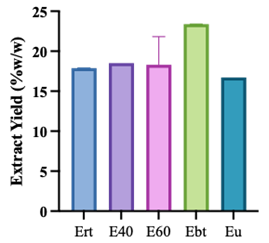
Fig. 1: Yield of aqueous extract of CaP
Ert=Extraction at room temperature, E40 = digestion, E60 = 60°C, Ebt = water boiling temperature and Eu = ultrasonication
In this current research, the calibration curve of quercetin in the determination of total flavonoid content showed R2 = 0.9859. The water extract with the highest flavonoid content was E60 (15.5096 ± 1.13 mg QE/g) (Fig. 2). There is a significant difference in total flavonoid content in E60 with other extraction methods.
The saponin calibration curve (Fig. 3), obtained the regression equation y = 0.0213x - 0.2677 where the x value shows the saponin concentration of the extract and the y value of the absorbance of the extract with a correlation coefficient value of 0.9809 which shows that there is a relationship between the concentration of saponin standard solution and the absorbance so that it can be used to determine the total saponin content of lime peel extract. The saponin assay demonstrated that the saponin content was Ert > E60 > Eu > E40 > Ebt and the saponin value in Ert is significantly different from other methods
Before the determination of hesperidin levels by TLC densitometry, mobile phase optimization was carried out and the best mobile phase obtained was ethyl acetate: methanol: water (15:3:2). Maximum absorption wavelength optimization was also performed using a densitometer and the lmax of 288 nm was obtained, which was then used in the following analysis. The standard hesperidin calibration curve obtained a regression equation y = 54.488x + 1733.3, where the x value was the hesperidin content, and the y value shows the area of the extract with a correlation coefficient value of R = 0.9699. The determination principle of hesperidin content by densitometry is to compare the area of the concentration series of the hesperidin reference standard and extract at the same Rf. The quantity of hesperidin showed a different pattern from the contents of total flavonoids and saponins, i.e., Ebt = E60 = Eu > E40 > Ert (Fig. 4). The analysis showed that the levels of hesperidin in Ebt were not significantly different from those in E60 and Eu. This indicates that there is a dose-dependent temperature for the hesperidin extraction procedure.
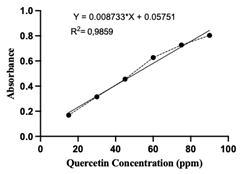
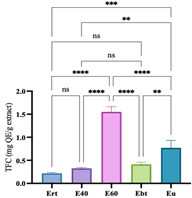
Fig. 2: Determination of Flavonoid Content in CaP aqueous extract
*Significantly different using one-way ANOVA followed by the Tukey test for multiple comparisons test at P < 0.05, performed using GraphPad Prism version 9.5.1; Ert = Extraction at room temperature, E40 = digestion, E60 = 60°C, Ebt = water boiling temperature and Eu = ultrasonication
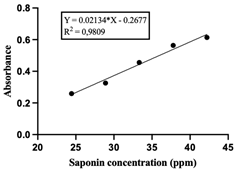
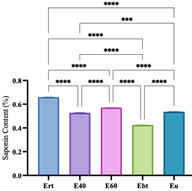
Fig. 3: Determination of Saponin Content in CaP aqueous extract
*Significantly different using one-way ANOVA followed by the Tukey test for multiple comparisons at P < 0.05, performed using GraphPad Prism version 9.5.1. Ert = Extraction at room temperature, E40 = digestion, E60 = 60°C, Ebt = water boiling temperature and Eu = ultrasonication
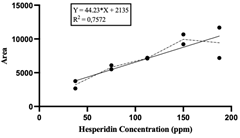
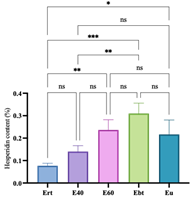
Fig. 4: Hesperidin content in CaP aqueous extract
*Significantly different using one-way ANOVA followed by the Tukey test for multiple comparisons at P < 0.05, performed using GraphPad Prism version 9.5.1. Ert = Extraction at room temperature, E40 = digestion, E60 = 60°C, Ebt = water boiling temperature and Eu = ultrasonication
Discussion
To obtain medicinal plant products, the raw material preparation process is the first and key step in achieving optimum and expected conditions. This preparation process includes determining the appropriate extraction method and determining the quality and quantity of bioactive compounds (Abubakar and Haque 2020; Milenković et al. 2025). The yield of each extraction indicates that the boiling point of water produces the best rendement and is also in accordance with traditional usage. Temperature affects the yield and the bioactive compounds contained therein. Increasing the temperature will give effective extraction, which is also reported by several other studies (Dar et al. 2015; Sulaiman et al. 2017; Desmiaty et al. 2025).
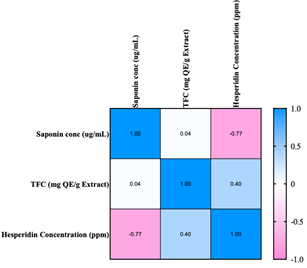
Fig. 5: Heatmap correlation between Saponin, Flavonoid, and Hesperidin content
Pearson’s correlation analysis, two-tailed, P < 0.05
Measurement of total flavonoid concentration was performed by the colorimetric method using aluminum chloride reagent and quercetin as reference. The reaction principle is the formation of an aluminum chloride ion complex with the keto group at the C-4 atom and the -OH group at the C-3/C-5 atom of the flavone or flavonol compound. This complex will shift the wavelength of maximum absorption (yellow solution) and measure the absorption at 435 nm (Sari et al. 2023). Based on previous research, it is known that the total flavonoid content in the 70% ethanol extract of C. aurantiifolia fruit peel is higher than flesh extract (Desmiaty et al. 2024). Fig. 2 indicates that flavonoids are more water soluble at high temperatures. Several studies have also stated that flavonoids increase in content with increasing temperature up to the boiling point of water (Luna et al. 2020; Serea et al. 2022).
Saponins have many beneficial medicinal uses, such as antidiabetic, antihypercholesterolemia, antioxidant, antifungal, and anti-inflammatory. Saponins have also been reported to have insecticidal effects, giving them potential as natural insecticides. High concentrations of saponins can serve as a good source for a variety of commercial uses (Ezeabara et al. 2013; Yusoff et al. 2022). The total saponin content in this study was assessed utilizing a colorimetric method using Liebermann-Burchard reagent and saponin as a reference. Experimental principle for the formation of acetyl derivatives of acetylation reactions of OH groups producing colorful rings in steroid and triterpenoid group compounds using Liebermann-Burchard reagent with noticeable brownish color changes. The absorbance of this color alteration is then measured using a UV-Vis spectrophotometer with a wavelength of 438 nm (Mora-Ocación et al. 2022). This study shows that extraction methods with lower temperatures can increase saponin levels, so that if saponin compounds will be used as bioactive compounds from this lime peel, extraction methods recommended at room temperature can be used and avoid heating in the production process of herbal preparations.
Flavanones are the dominant flavonoids found in citrus fruits, especially the compounds hesperidin and naringin. Hesperidin is a flavonoid glycoside of hesperetin with rutinose sugar, widely found in citrus peel and also found in CaP. Hesperidin has several health benefits, such as anti-inflammatory, anticholesterol, nephroprotector, and antihypertensive, and has cytotoxic properties on cancer cells (Samota et al. 2023; Desmiaty et al. 2024).
The Pearson’s correlation heatmap (Fig. 5) reveals a strong negative correlation between saponin and hesperidin content (r = –0.77, P < 0.05), suggesting an inverse relationship possibly due to differences in polarity or solubility during aqueous extraction. This finding indicates that extraction temperature and solvent polarity significantly influence the recovery of specific phytochemicals. A moderate positive correlation was observed between total flavonoid content (TFC) and hesperidin (r = 0.40), indicating that hesperidin may contribute partially to the overall flavonoid content, though other flavonoid compounds are also likely present. In contrast, saponin and TFC showed a negligible correlation (r = 0.04), implying independent extraction behavior under the tested conditions. These results emphasize the importance of optimizing extraction parameters to selectively enrich desired phytochemicals, which may exhibit differential solubility profiles and thermal stability.
Conclusion
The experiment found that higher temperatures are better for extracting hesperidin and total flavonoids, while saponins are more effective at room temperature. The nitty-gritty of this study is that the temperature of extraction affects the extracted water substance concentration. Depending on the targeted bioactive compounds, the extraction method needs to be adjusted. When the target compounds are total flavonoids, extraction at 60°C is selected, whereas when hesperidin compounds are expected, extraction at boiling temperature is used. In the case that the activity is generated by saponins from CaP, maceration at room temperature is chosen.
Acknowledgments
We would like to thank all the referees whose contributions have been very fruitful for the perfection of this manuscript. Our research was funded by a research grant from the Ministry of Education, Culture, Research and Technology (Kemendikbudristek) of the Republic of Indonesia in the scheme “Penelitian Fundamental No. SP DIPA-023.171.690523/2024”.
Author Contributions
Yesi Desmiaty and Ni Made Dwi Sandhiutami planned the experiments. Azira Tri Febriana, Wiwi Winarti, Mira Andam Dewi, and Yuslia Noviani carried out the experiment, collecting and verifying the analyzed data. Yesi Desmiaty supervised this study and prepared the draft of the manuscript. All authors approved the final manuscript.
Conflict of Interest
All authors declare no conflict of interest.
Data Availability
Data presented in this study will be available on a fair request to the corresponding author.
Ethics Approval
Not applicable to this paper.
Funding Source
Our research was funded by a research grant from the Ministry of Education, Culture, Research, and Technology (Kemendikbudristek) of the Republic of Indonesia in the scheme “Penelitian Fundamental No. SP DIPA-023.171.690523/2024”.
References
Abubakar AR, M Haque (2020). Preparation of medicinal plants: Basic extraction and fractionation procedures for experimental purposes. J Pharm Bioallied Sci 12:1-10 https://doi.org/10.4103/jpbs.JPBS_175_19
Alam P, A Alam, MK Anwer, SI Alqasoumi (2014). Quantitative estimation of hesperidin by HPTLC in different varieties of citrus peels. Asian Pac J Trop Biomed 4:262–266 https://doi.org/10.12980/APJTB.4.2014C1007
Aziz MMAE, AS Ashour, ASG Melad (2019). A review on saponins from medicinal plants: chemistry, isolation, and determination. J Nanomed Res 8:6–12 https://doi.org/10.15406/jnmr.2019.08.00199
Choi SS, SH Lee, KA Lee (2022). A comparative study of hesperetin, hesperidin, and hesperidin glucoside: Antioxidant, anti-inflammatory, and antibacterial activities in vitro. Antioxidants 11:1-18 https://doi.org/10.3390/antiox11081618
Dar NG, A Hussain, GM Paracha, S Akhter (2015). Evaluation of different techniques for extraction of antioxidants as bioactive compounds from citrus peels (industrial by products). Amer-Euras J Agric Environ Sci 15:676–682 https://doi.org/10.5829/idosi.aejaes.2015.15.4.12604
Desmiaty Y, NMD Sandhiutami, F Fahleni, SN Hamidah, ADA Shafira (2025). Temperature-dependent variations in antioxidant activities and phytochemical profiles of Passiflora edulis leaf extracts. Trend Sci 22:1-12 https://doi.org/10.48048/tis.2025.9772
Desmiaty Y, NMD Sandhiutami, E Mulatsari, FA Maziyah, K Rahmadhani, HOZ Algifari, FA Jantuna (2024). Antioxidant and anti-inflammatory activity through inhibition of NF-κB and sEH of some citrus peel and phytoconstituent characteristics. Saud Pharm J 32:101959. https://doi.org/10.1016/j.jsps.2024.101959
Ezeabara AC, UC Okeke, OB Aziagba, VC Ilodibia, NA Emeka (2013). Determination of saponin content of various parts of six citrus species. Intl Res J Pure Appl Chem 4:137–143
Fouad HA, CAGD Camara (2017). Chemical composition and bioactivity of peel oils from Citrus aurantiifolia and Citrus reticulata and enantiomers of their major constituent against Sitophilus zeamais (Coleoptera: Curculionidae). J Stored Prod Res 73:30–36 https://doi.org/10.1016/j.jspr.2017.06.001
Foudah AI, F Shakeel, P Alam, MH Alqarni, MS Abdel-Kader, S Alshehri (2021). A sustainable reversed-phase hptlc method for the quantitative estimation of hesperidin in traditional and ultrasound-assisted extracts of different varieties of citrus fruit peels and commercial tablets. Agronomy 11:30–36 https://doi.org/10.3390/agronomy11091744
Indriyani NN, JA Anshori, N Permadi, S Nurjanah, E Julaeha (2023). Bioactive components and their activities from different parts of Citrus aurantifolia (Christm.) swingle for food development. Foods 12:1-23 https://doi.org/10.3390/foods12102036
Ko Y, H Choi, R Liu, J Kim, S Kim, BY Molecules (2020). Inhibitory effects of tangeretin, a citrus peel-derived flavonoid, on breast cancer stem cell formation through suppression of Stat3 signaling. Molecules 25:1–13 https://www.mdpi.com/733670
Koolaji N, B Shammugasamy, A Schindeler, Q Dong, F Dehghani, P Valtchev (2020). Citrus peel flavonoids as potential cancer prevention agents. Curr Dev Nutr 4:1–20 https://academic.oup.com/cdn/article-abstract/4/5/nzaa025/5804723
Liu N, X Li, P Zhao, X Zhang, O Qiao, L Huang, LGF Chemistry (2021). A review of chemical constituents and health-promoting effects of citrus peels. Food Chem 365:130585 https://doi.org/10.1016/j.foodchem.2021.130585
Loizzo MR, R Tundis, M Bonesi, F Menichini, DD Luca, C Colica, F Menichini (2012). Evaluation of Citrus aurantifolia peel and leaves extracts for their chemical composition, antioxidant and anti-cholinesterase activities. J Sci Food Agric 92:2960–2967 https://doi.org/https://doi.org/10.1002/jsfa.5708
Luna SLRD, RE Ramírez-Garza, SOS Saldívar (2020). Environmentally friendly methods for flavonoid extraction from plant material: impact of their operating conditions on yield and antioxidant properties. Sci World J 2020:1–38 https://doi.org/10.1155/2020/6792069
Milenković A, S Aleksovski, K Miteva, L Milenković, J Stanojević, G Nikolić, ZS Ilić, L Stanojević (2025). The effect of extraction technique on the yield, extraction kinetics and antioxidant activity of black pepper (Piper nigrum L.) ethanolic extracts. Horticulturae 11:1-19 https://doi.org/10.3390/horticulturae11020125
Mora-Ocación MS, AC Morillo-Coronado, EH Manjarres-Hernández (2022). Extraction and quantification of saponins in Quinoa (Chenopodium quinoa Willd.) genotypes from Colombia. Intl J Food Sci 2022:1–7 https://doi.org/10.1155/2022/7287487
Musumeci L, A Maugeri, S Cirmi, GE Lombardo, C Russo, S Gangemi, G Calapai, M Navarra (2019). Citrus fruits and their flavonoids in inflammatory bowel disease: An overview. Nat Prod Res 34:122–136 Https://Doi.Org/10.1080/14786419.2019.1601196, https://doi.org/10.1080/14786419.2019.1601196
Netala VR, SB Ghosh, P Bobbu, D Anitha, V Tartte, VR Netala, SB Ghosh, P Bobbu, D Anitha, V Tartte, O Article, VR Netala, SB Ghosh, P Bobbu, D Anitha, V Tartte (2015). Triterpenoid saponins: A review on biosynthesis, Applications and mechanism of their action. Intl J Pharm Pharm Sci 7:24–28 https://innovareacademics.in/journals/index.php/ijpps/article/view/2807/7596
Oyinloye EO, AA Murtala, FA Oladoja, AA Aderinola, LO Okunye, SA Saka, JA Abolarinwa, OE Kasumu, LE Osipitan (2024). Citrus aurantifolia (Chrism.) swingle peel extract attenuate nephrotoxicity induced by doxorubicin. Pharmacol Res Modern Chin Med 11:100412 https://doi.org/10.1016/j.prmcm.2024.100412
Pyrzynska K (2022). Hesperidin: A review on extraction methods, stability and biological activities. Nutrients 14:1-11
Rodrigues CV, M Pintado (2024). Hesperidin from orange peel as a promising skincare bioactive: An overview. Intl J Mol Sci 25:1-31
Samota MK, M Kaur, M Sharma, Sarita, V Krishnan, J Thakur, M Rawat, B Phogat, PN Guru (2023). Hesperidin from citrus peel waste: extraction and its health implications. In: Quality Assurance and Safety of Crops and Foods, Vol. 15, pp:71–99. Codon Publications https://doi.org/10.15586/qas.v15i2.1256
Sandhiutami NMD, Y Desmiaty, PDU Pitaloka, S Salsabila (2024). The protective effect of hydroalcoholic Citrus aurantifolia peel extract against doxorubicin-induced nephrotoxicity. Res Pharm Sci 19:591–605 https://doi.org/10.4103/RPS.RPS_99_23
Sari KRP, Z Ikawati, R Danarti, T Hertiani (2023). Micro-titer plate assay for measurement of total phenolic and total flavonoid contents in medicinal plant extracts. Arab J Chem 16:105003 https://doi.org/10.1016/j.arabjc.2023.105003
Sari R, Nofialdi, A Putri (2020). Financial feasibility of lime (Citrus aurantifolia) farming in Tanah Datar District, West Sumatra. In: IOP Conference Series: Earth and Environmental Science, Vol. 583, pp:012016. IOP Publishing https://doi.org/10.1088/1755-1315/583/1/012016
Serea D, NN Condurache, I Aprodu, OE Constantin, GE Bahrim, N Stănciuc, S Stanciu, G Rapeanu (2022). Thermal stability and inhibitory action of red grape skin phytochemicals against enzymes associated with metabolic syndrome. J Antioxid 11:1–18 https://doi.org/10.3390/antiox11010118
Sulaiman ISC, M Basri, HRF Masoumi, WJ Chee, SE Ashari, M Ismail (2017). Effects of temperature, time, and solvent ratio on the extraction of phenolic compounds and the anti-radical activity of Clinacanthus nutans Lindau leaves by response surface methodology. Chem Centr J 11:1–11 https://doi.org/10.1186/s13065-017-0285-1
Wang F, L Chen, H Chen, S Chen, YL Molecules (2019). Analysis of flavonoid metabolites in citrus peels (Citrus reticulata “Dahongpao”) Using UPLC-ESI-MS/MS. Molecule 24:1–12 https://doi.org/10.3390/molecules24152680
Yunitasari N, RT Swasono, HD Pranowo, TJ Raharjo (2022). Phytochemical screening and metabolomic approach based on Fourier transform infrared (FTIR): Identification of α-amylase inhibitor metabolites in Vernonia amygdalina leaves. J Saud Chem Soc 26:101540 https://doi.org/10.1016/j.jscs.2022.101540
Yusoff IM, ZM Taher, Z Rahmat, LS Chua (2022). A review of ultrasound-assisted extraction for plant bioactive compounds: Phenolics, flavonoids, thymols, saponins and proteins. Food Res Intl 157:111268. https://doi.org/10.1016/J.FOODRES.2022.111268
Zaim INR, M Wahab, HF Ismail, N Othman, H Hara, FNM Akhir (2023). Extraction and determination of flavonoid compounds in citrus fruit waste. In: IOP Conference Series: Earth and Environmental Science, Vol. 1144, pp:012005. IOP Publishing https://doi.org/10.1088/1755-1315/1144/1/012005
Online : 1814-9596
Print : 1560-8530