


Indexing


Journal Cover

Entomofauna Variation of Three Okra (Abelmoschus esculentus) Varieties in Maraoua, Cameroon
Abstract
Okra [Abelmoschus esculentus (L.) Moench], a vegetable cultivated globally for its culinary qualities and commercial worth, is susceptible to various insect pests in the field. Consequently, the quest for ecological strategies to manage this challenge is paramount. A study was conducted in Maroua to ascertain the effect of okra variety on the entomofauna in okra fields. The insects were captured using various methods, including mowing nets, colored traps and manual collection, during both the rainy and dry seasons. A total of 69 species across 12 orders were recorded during the rainy season, in contrast to the 44 species across 11 orders noted in the dry season. The location of Kirikou had the highest insect abundance, with 49.86% species recorded in the rainy season and 41.16% species in the dry season. This was followed by red Nino, with 31.03% species recorded in the dry season and 34.44% species in the rainy season. The Clemson spineless variety, with an abundance of 27.81% and 15.71% in the dry and rainy seasons, respectively, had the greatest effect on the associated entomofauna. Noctuidae and Vespidae were consistently the most prevalent families. The presence of auxiliary insects, such as Polistes sp. and Vespula sp., underscores the potential for managing okra pests without the utilization of chemical products under agricultural conditions in Maroua, Cameroon. This observation emphasizes the necessity for a more profound comprehension of the bioecology of the diverse populations present.
Keywords: Entomofauna; Okra; Varieties; Maroua
Entomofauna Variation of Three Okra (Abelmoschus esculentus) Varieties in Maraoua, Cameroon
Rabsa Nguildakaï1†*, Kouninki Habiba2†, Jacques Djodda1† and Elias Nchiwan Nukenine3†
1Department of Biological Sciences, University of Maroua, PO BOX 814, Maroua, Cameroon
2Department of Earth and Life Sciences, Higher Teacher’s Training College, University of Maroua, PO BOX 46, Maroua, Cameroon
3Department of Biological Sciences, University of Ngaoundere, PO BOX 454, Ngaoundere, Cameroon
*For correspondence: rabsanguildakai91@gmail.com
†Contributed equally to this work and are co-first authors
Received 25 February 2025; Accepted 02 August 2025; Published online 22 September 2025
Editor: Javaid Iqbal
Abstract
Okra [Abelmoschus esculentus (L.) Moench], a vegetable cultivated globally for its culinary qualities and commercial worth, is susceptible to various insect pests in the field. Consequently, the quest for ecological strategies to manage this challenge is paramount. A study was conducted in Maroua to ascertain the effect of okra variety on the entomofauna in okra fields. The insects were captured using various methods, including mowing nets, colored traps and manual collection, during both the rainy and dry seasons. A total of 69 species across 12 orders were recorded during the rainy season, in contrast to the 44 species across 11 orders noted in the dry season. The location of Kirikou had the highest insect abundance, with 49.86% species recorded in the rainy season and 41.16% species in the dry season. This was followed by red Nino, with 31.03% species recorded in the dry season and 34.44% species in the rainy season. The Clemson spineless variety, with an abundance of 27.81% and 15.71% in the dry and rainy seasons, respectively, had the greatest effect on the associated entomofauna. Noctuidae and Vespidae were consistently the most prevalent families. The presence of auxiliary insects, such as Polistes sp. and Vespula sp., underscores the potential for managing okra pests without the utilization of chemical products under agricultural conditions in Maroua, Cameroon. This observation emphasizes the necessity for a more profound comprehension of the bioecology of the diverse populations present.
Keywords: Entomofauna; Okra; Varieties; Maroua
Introduction
Okra [Abelmoschus esculentus (L.) Moench] is a plant that is native to Africa and cultivated in tropical, subtropical and warm temperate regions worldwide (Siddartha et al. 2017). It is primarily grown for the purpose of harvesting its fruits, which are consumed as a vegetable in a variety of ways (Nair et al. 2017). Okra is a significant source of carbohydrates, proteins, lipids, vitamins and minerals (Halder et al. 2015). Annual global production is estimated to be approximately 9.95 million tons, with a yield of 7.67 tons per ha (FAOSTAT 2020). In Africa, annual production was 1.84 million tons with a yield of 3.61 tons per ha (FAOSTAT 2015). In Cameroon, the world's 8th largest producer of okra, production was estimated at 104.21 tons in 2019 (FAOSTAT 2021).
Despite the efforts made, okra production is limited by several constraints, including entomological constraints (Tesfay et al. 2015; Ekoja et al. 2023). The presence of these insect pests has been shown to have a detrimental effect on the quality of harvested fruit and on okra yield (Ekoja et al. 2023). Dinesh et al. (2017) have identified Helicoverpa armigera (Noctuidae, Lepidoptera) as one of the most significant pests affecting okra. The larval stage of this pest has been shown to cause direct damage to buds and fruit, resulting in severe yield losses in crops. The insect pests attack various parts of the plant, including leaves, buds, flowers and fruit, resulting in an estimated yield loss in excess of 69% of total harvests (Adja et al. 2019).
The okra crop is attacked by a number of insect pests from germination to harvest. Several insect pests, such as leafhoppers (Amrasca biguttula biguttula), leaf beetles (Podagrica sp.), Blister beetle (Mylabris pustulata Olivier), Leaf folder (Syllepte derogate Fabricius), Aphis (Aphis gossypii Glover), Whitefly (Bemisia tabaci Gennadius), shoot and fruit borers (Earias insulana and Earias vittella Fabricius), green semilope (Anomis flava Fabricius) and Dysdercus cingulatus (Fabricius), were found to be more abundant in okra fields (Kedar et al. 2014; Nair et al. 2017; Priyanka et al. 2020). Different studies have documented a range of insect pest species attacking okra. Bhatt et al. (2018) reported 17 species as pests of okra in India; Mallick et al. (2016) observed 72 insect species as pests of okra. In Ivory Coast, Able et al. (2024) and Yao et al. (2022) recorded 21 and 61 insect species respectively on okra crops. While Rivers et al. (2024) reported that a total of 15 insect species attacked okra in Nigeria. In Cameroon, Djidjonri et al. (2019) reported that 15 species attacked okra plant at Dang and Gouna.
The specific insect pests are, therefore, major constraint on okra production, with synthetic pesticides playing a key role (Mondedji et al. 2015). However, these pesticides also cause environmental pollution (Agboyi et al. 2016) and pesticide resistance (Sène et al. 2020). Alternative approaches are, therefore, essential to reduce these side effects. Ranjit et al. (2018) and Subbireddy et al. (2018), evaluated 20 and 10 okra cultivars, respectively, and were able to identify genotypes resistant to pests such as H. armigera and Earias vitella. The utilization of resistant varieties in host plants has been emphasized and proposed by Shahzaman et al. (2015) and Rahoo et al. (2017), as a component of an integrated pest management program against associated crop pests. Several authors have endorsed the role and place of host plant resistance in the management of okra insect pests (Nagar et al. 2017; Kasi and Tayde 2018; Bhalu et al. 2019; Tanni et al. 2019; Priyanka et al. 2020).
In Cameroon, several control trials using resistant host plants have given satisfactory results on Aphis gossypii in the field and greenhouse in Yaoundé (Abang et al. 2014, 2016, 2018, 2020, 2024). A significant number of studies on okra have concentrated on the role of insect pollinators or foraging entomofauna during the flowering period (Amada et al. 2018; Pando et al. 2020; Otiobo et al. 2021). However, the problem of insect pests in the okra field in Maroua, where several varieties are produced, remains less well known. The objective of this study was to present an inventory of the entomofauna associated with three okra varieties during the rainy and dry seasons in the Far North region of Cameroon, with a view to facilitating the choice of sustainable management strategies against these pests.
Materials and Methods
Study site
The present study was carried out at Meskine (N10.555264 E14.255401 and 600 m) located in the town of Maroua, Far North Region, Cameroon during the 2022-2023 agricultural season, both in the rainy and dry seasons. The region's climate is of the Sudano-Sahelian type, with two distinct seasons: a rainy season (June to October) with maximum rainfall in August and a dry season (November to May) characterized by the onset of cold weather from December to February (Fita et al. 2015).
Experimental design
The Kirikou and Clemson spineless seeds were purchased from an approved seed distributor (Semagri Sarl Cameroon) and the red Nino seed was obtained from the Loulou farmers. The experimental design was a complete randomized block with four (04) replications, divided into blocks spaced 2 m apart (Fig. 1). Each block was split into three sub-plots of equal size (3.9 m x 2.8 m) spaced 1 m apart and composed of four rows of plants of one of three okra varieties: red Nino, Kirikou and Clemson spineless (Fig. 1-2). During the sowing process, three to ten seeds were sown in pots spaced 50 cm between rows and 80 cm between pots. Fourteen (14) days after sowing (DAS), the seedlings were thinned to one plant per stake to obtain 128 plants per variety. Weeding was executed manually on a fortnightly basis, while watering during the dry season was conducted using a motorized pump on a biweekly basis. The plots were kept unsprayed with any insecticide throughout the experimentation.
Insect capture and identification
Weekly insect sampling was carried out from 30th to the 65th days after sowing (DAS) on all plants per plot between approximately 6 a.m. and 5 p.m. Mowing net, colored traps and manual collection (Obodji et al. 2016; Yao et al. 2022) are the three methods used to collect insects. Flying insects were captured using the mowing net, which was turned to enclose them. The colored traps used to capture gregarious insects consisted of twelve yellow basins 20 cm in diameter and 8 cm deep, placed on supports (cinder blocks) and laid on the ground. The basins were filled to two-thirds of their height with soapy water. The traps in each yellow basin were placed in the plots. The soapy water in the colored basins was renewed at each survey. Manual capture was carried out by hand, protected by gloves, for aggressive and less mobile non-aggressive insects.
Non-gregarious insects were counted by direct observation on the plants per plot. Gregarious insects were sampled through visual observation and using a modified scoring scale (Abang et al. 2018). This scale ranged from 0 to 5, with 0 representing a plot devoid of gregarious insects and 5 representing a high population. 0 = no aphids/aleurodes present; 1 = 1 to 10 aphids/aleurodes per plot; 2 = 11 to 100 aphids/aleurodes per plot; 3 = 101 to 500 aphids/aleurodes per plot; and 4 = >500 aphids/aleurodes per plot.
All insects collected per block and plot were preserved in well-labeled boxes containing 70% alcohol, with the exception of Lepidoptera and Odonata species preserved in papillotes, then brought to the laboratory for identification.
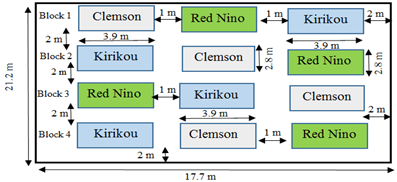
Fig. 1: Schematic diagram of the experimental design
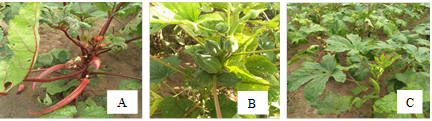
Fig. 2: Different varieties of okra: (A) Red Nino, (B) Kirikou and (C) Clemson spineless
The identification was carried out based on their morphology and the identification key of Mignon et al. (2016). Some works such as those of Borror and White (1991), Miranda et al. (2013) and Gourmel (2014) served as a guide. Our identification was therefore confirmed by the identification service of the Laboratory of Advanced and Applied Zoology of the University of Maroua.
Collection and data analysis
The data collected were processed using Excel (version 2016) and then analyzed using Past software (version 4.09-32). Subsequently, relative abundances and diversity indices were calculated (Nair et al. 2017; Bakroune 2021). The diversity indices comprised the Relative Abundance (Ar), the Simpson Index (D), the Shannon-Wiener Index (H'), the Equity Index (E) and the Sorenson Index (S).
Results
General assessment of entomofauna
Total number of insects collected during the rainy season was 114908, whereas during the dry season this figure was 132319. The classification of these insects revealed 12 orders and 41 families during the rainy season, and 11 orders and 25 families during the dry season. The most abundant orders were Coleoptera, Lepidoptera, Hymenoptera and Heteroptera, followed by Homoptera, Orthoptera and Diptera. In contrast, the orders with the lowest number of species included Odonata, Thysanoptera, Dermoptera, Dictyoptera and Neuroptera, with only one species each recorded. Total number of species identified across both seasons was 69, significantly higher than the 44 species recorded in the two seasons separately (Table 1). The diversity of species observed in the various okra varieties was significantly variable, with the number of species ranging from one to six. Mantidae, Forficulidae, Thripidae, Chrysopidae, Libellulidae, Coenagrionidae and Lestidae families were underrepresented, with each family containing only one species (Table 2).
Evaluation of entomofauna according to type of varieties
Relative abundance of the various insect species obtained from three distinct varieties (red Nino, Kirikou and Clemson spineless) was presented in Table 2. Kirikou variety exhibited the greatest abundance, with a total of 57284 individuals. The Kirikou variety exhibited the highest insect abundance, with 49.86% individuals collected in the wet season and 41.16% individuals collected in the dry season. The red Nino variety followed, with 31.03% individuals collected in the dry season and 34.44% individuals collected in the wet season. The Clemson spineless variety exhibited the lowest insect abundance, with 27.81% individuals collected in the dry season and 15.71% individuals collected in the rainy season (Fig. 3).
Table 1: General presentation of the entomofauna
|
Orders |
Families |
Species |
Rainy Season |
Dry Season |
|
Coleoptera |
Chrysomelidae |
Podagrica decolorata |
+ |
+ |
|
Nisotra dilecta |
+ |
- |
||
|
Aulacophora foveicollis |
+ |
- |
||
|
Coccinellidae |
Hippodamia variegata |
+ |
+ |
|
|
Cheilomenes sulphurea |
+ |
+ |
||
|
Cheilomenes sp. |
+ |
+ |
||
|
Harmonia sp. |
+ |
+ |
||
|
Exochomus sp. |
+ |
+ |
||
|
Cetoniidae |
Pachnoda interrupta |
+ |
- |
|
|
Meloidae |
Hycleus senegalensis |
+ |
- |
|
|
Mylabris variabilis |
+ |
- |
||
|
Lagriidae |
Lagria vilosa |
+ |
- |
|
|
Homoptera |
Aphididae |
Aphis gossypii |
+ |
+ |
|
Aleyrodidae |
Bemisia tabaci |
+ |
+ |
|
|
Cicadellidae |
Jacobiella fascialis |
+ |
+ |
|
|
Amrasca biguttula b. |
+ |
+ |
||
|
Pseudococcidae |
Dysmicoccus sp. |
+ |
+ |
|
|
Pyrrhocoridae |
Dysdercus sp. |
+ |
- |
|
|
Heteroptera |
Coreidae |
Anoplocnemis curvipes |
+ |
- |
|
Cletus sp. |
+ |
+ |
||
|
Pentatomidae |
Pentoma rufipes |
+ |
- |
|
|
Nezara viridula |
+ |
+ |
||
|
Lygaeidae |
Oxycarenus hyalinipennis |
+ |
- |
|
|
Reduviidae |
Cosmolestes pictus |
+ |
- |
|
|
Rhynocoris rapax |
+ |
- |
||
|
Meridae |
Creontiades pallidus |
+ |
- |
|
|
Hymenoptera |
Vespidae |
Polistes sp. |
+ |
+ |
|
Vespula sp. |
+ |
+ |
||
|
Polybia sp. |
+ |
+ |
||
|
Sphecidae |
Sphex sp. |
+ |
+ |
|
|
Formicidae |
Camponatus sp. |
+ |
+ |
|
|
Polyrachis sp. |
+ |
+ |
||
|
Lasius niger |
+ |
+ |
||
|
Halictidae |
Lasioglossum sp. |
+ |
- |
|
|
Pompilidae |
Dipogon sp. |
+ |
- |
|
|
Braconidae |
Lathrolestes sp. |
+ |
- |
|
|
Apidae |
Apis mellifera |
+ |
+ |
|
|
Diptera |
Syrphidae |
Episyrphus balteatus |
+ |
+ |
|
Cheilosia sp. |
+ |
- |
||
|
Paragus borbonicus |
+ |
+ |
||
|
Sarcophagidae |
Sarcophaga haemorrhoidalis |
+ |
+ |
|
|
Asilidae |
Tolmerus cingulatus |
+ |
- |
|
|
Muscidae |
Musca domestica |
+ |
+ |
|
|
Calliphoridae |
Calliphora sp. |
+ |
+ |
|
|
Orthoptera |
Acrididae |
Acrida bicolor |
+ |
+ |
|
Catantops spissus |
+ |
+ |
||
|
Catantops sp. |
+ |
+ |
||
|
Pyrgomorphidae |
Chrotogonus senegalensis |
+ |
+ |
|
|
Phyrgomorpha rignaudii |
+ |
+ |
||
|
Tettigoniidae |
Tettigonia viridissima |
+ |
- |
|
|
Grillidae |
Gryllus sp. |
+ |
- |
|
|
Lepidoptera |
Noctuidae |
Anomis flava |
+ |
+ |
|
Helicoverpa armigera |
+ |
+ |
||
|
Spodoptera litoralis |
+ |
- |
||
|
Xanthodes sp. |
+ |
+ |
||
|
Earias insulana |
+ |
+ |
||
|
Earias vittella |
+ |
+ |
||
|
Earias sp. |
+ |
+ |
||
|
Cosmophila flava |
+ |
- |
||
|
Pyralidae |
Sylleptera derogota |
+ |
+ |
|
|
Papilionidae |
Papilio demodocus |
+ |
- |
|
|
Crambidae |
Spoladea recurvalis |
+ |
- |
|
|
Dictyoptera |
Mantidae |
Mantis religiosa |
+ |
+ |
|
Dermoptera |
Forficulidae |
Forficula auricularia |
+ |
- |
|
Thysanoptera |
Thripidae |
Thrips tabaci |
+ |
+ |
|
Nevroptera |
Chrysopidae |
Chrysoperla sp. |
+ |
+ |
|
Odonates |
Libellulidae |
Indothemis carnatica |
+ |
+ |
|
Coenagrionidae |
Pseudagrion punctum |
+ |
+ |
|
|
Lestidae |
Lestes sponsa |
+ |
+ |
|
|
12 Orders |
41 Families |
- |
69 species |
44 species |
+: presence; -: absence
Table 2: Species distribution based on okra varieties
|
Relative abundance (%) according to variety |
||||||||
|
Red Nino |
Kirikou |
Clemson |
||||||
|
Orders |
Familles |
Species |
Rainy season |
Dry season |
Rainy season |
Dry season |
Rainy season |
Dry season |
|
Coleoptera
|
Chrysomelidae |
Podagrica decolorata |
18.92 |
11.94 |
18.81 |
11.44 |
14.19 |
15.46 |
|
Nisotra dilecta |
2.12 |
- |
2.48 |
- |
1.93 |
- |
||
|
Aulacophora foveicollis |
0.05 |
- |
0.02 |
- |
0.06 |
- |
||
|
Coccinellidae
|
Hippodamia variegata |
0.02 |
- |
- |
0.01 |
- |
- |
|
|
Cheilomenes sulphurea |
0.01 |
0.01 |
- |
0.01 |
0.01 |
- |
||
|
Cheilomenes sp. |
0.11 |
1.44 |
0.01 |
1.96 |
0.12 |
1.52 |
||
|
Harmonia sp. |
0.36 |
2.87 |
0.06 |
3.76 |
0.31 |
2.72 |
||
|
Exochomus sp. |
0.04 |
0.7 |
- |
0.73 |
0.02 |
0.74 |
||
|
Cetoniidae |
Pachnoda interrupta |
0.01 |
- |
- |
- |
- |
- |
|
|
Meloidae |
Hycleus senegalensis |
0.06 |
- |
0.03 |
- |
0.06 |
- |
|
|
Mylabris variabilis |
0.06 |
- |
0.02 |
- |
0.02 |
- |
||
|
Lagriidae |
Lagria vilosa |
0.08 |
- |
0.02 |
- |
0.11 |
- |
|
|
Homoptera
|
Aphididae |
Aphis gossypii |
28.55 |
37.18 |
25.64 |
33.05 |
14.82 |
34.87 |
|
Aleyrodidae |
Bemisia tabaci |
15.71 |
28.62 |
21.88 |
28.93 |
16.69 |
18.24 |
|
|
Cicadellidae |
Jacobiella fascialis |
15.78 |
7.44 |
13.51 |
9.39 |
23.13 |
12.83 |
|
|
Amrasca biguttula b. |
8.48 |
6.64 |
11.21 |
7.33 |
18.36 |
9.31 |
||
|
Pseudococcidae |
Dysmicoccus sp. |
1.34 |
0.07 |
0.72 |
0.04 |
1.8 |
- |
|
|
Pyrrhocoridae |
Dysdercus sp. |
0.03 |
- |
0.01 |
- |
0.03 |
- |
|
|
Heteroptera
|
Coreidae |
Anoplocnemis curvipes |
0.01 |
- |
- |
0.01 |
0.01 |
- |
|
Cletus sp. |
0.02 |
0.01 |
0.01 |
- |
0.02 |
0.01 |
||
|
Pentatomidae |
Pentoma rufipes |
0.03 |
- |
0.01 |
- |
- |
- |
|
|
Nezara viridula |
0.01 |
- |
- |
- |
0.03 |
- |
||
|
Lygaeidae |
Oxycarenus hyalinipennis |
0.17 |
- |
0.02 |
- |
0.03 |
- |
|
|
Reduviidae |
Cosmolestes pictus |
0.01 |
- |
0.01 |
- |
0.01 |
- |
|
|
Rhynocoris rapax |
0.02 |
- |
- |
- |
- |
- |
||
|
Meridae |
Creontiades pallidus |
0.08 |
- |
0.13 |
- |
0.16 |
- |
|
|
Hymenoptera
|
Vespidae |
Polistes sp. |
0.04 |
0.01 |
0.02 |
0.01 |
0.04 |
0.01 |
|
Vespula sp. |
0.03 |
0.01 |
0.03 |
0.01 |
0.04 |
0.01 |
||
|
Polybia sp. |
0.04 |
0.01 |
0.02 |
0.01 |
0.03 |
0.01 |
||
|
Sphecidae |
Sphex sp. |
0.02 |
- |
0.01 |
- |
0.01 |
0.01 |
|
|
Formicidae |
Camponatus sp. |
0.31 |
0.14 |
0.14 |
0.14 |
0.44 |
0.43 |
|
|
Polyrachis sp. |
0.59 |
0.17 |
0.16 |
0.17 |
0.34 |
0.38 |
||
|
Lasius niger |
0.59 |
0.29 |
0.3 |
0.24 |
0.57 |
0.8 |
||
|
Halictidae |
Lasioglossum sp. |
0.01 |
- |
0.01 |
- |
- |
- |
|
|
Pompilidae |
Dipogon sp. |
0.05 |
- |
0.01 |
- |
- |
- |
|
|
Braconidae |
Lathrolestes sp. |
0.01 |
- |
- |
- |
- |
- |
|
|
Apidae |
Apis mellifera |
0.03 |
0.02 |
0.03 |
0.01 |
0.03 |
- |
|
|
Diptera
|
Syrphidae
|
Episyrphus balteatus |
0.2 |
0.06 |
0.07 |
0.03 |
0.22 |
0.04 |
|
Cheilosia sp. |
0.05 |
- |
- |
- |
- |
- |
||
|
Allograpta sp. |
0.67 |
1.44 |
0.33 |
1.59 |
1.1 |
1.51 |
||
|
Sarcophagidae |
Sarcophaga haemorrhoidalis |
0.18 |
0.06 |
0.12 |
0.04 |
0.25 |
0.07 |
|
|
Asilidae |
Tolmerus cingulatus |
0.06 |
- |
0.03 |
- |
0.04 |
- |
|
|
Muscidae |
Musca domestica |
0.03 |
0.08 |
0.2 |
0.06 |
0.6 |
0.04 |
|
|
Calliphoridae |
Calliphora sp. |
0.01 |
0.02 |
0.04 |
0.01 |
0.08 |
0.02 |
|
|
Orthoptera
|
Acrididae |
Acrida bicolor |
0.03 |
0.02 |
0.01 |
0.01 |
0.02 |
- |
|
Catantops spissus |
0.3 |
- |
0.04 |
- |
0.39 |
0.02 |
||
|
Catantops sp. |
0.62 |
0.13 |
0.1 |
0.12 |
0.6 |
0.21 |
||
|
Pyrgomorphidae |
Chrotogonus senegalensis |
0.03 |
0.02 |
0.09 |
0.02 |
0.18 |
0.02 |
|
|
Phyrgomorpha rignaudii |
0.21 |
0.06 |
0.05 |
0.1 |
0.16 |
0.12 |
||
|
Tettigoniidae |
Tettigonia viridissima |
0.04 |
- |
0.01 |
- |
0.02 |
- |
|
|
Grillidae |
Gryllus sp. |
0.01 |
- |
0.01 |
- |
0.01 |
- |
|
|
Lepidoptera
|
Noctuidae
|
Anomis flava |
0.19 |
0.02 |
0.16 |
0.01 |
0.24 |
0.02 |
|
Helicoverpa armigera |
0.06 |
0.03 |
0.07 |
0.01 |
0.07 |
0.04 |
||
|
Spodoptera litoralis |
0.18 |
- |
0.11 |
- |
0.13 |
- |
||
|
Xanthodes sp. |
0.1 |
0.01 |
0.12 |
0.01 |
0.15 |
0.03 |
||
|
Earias insulana |
0.14 |
0.04 |
0.2 |
0.08 |
0.2 |
0.07 |
||
|
Earias vittella |
0.11 |
0.04 |
0.21 |
0.06 |
0.22 |
0.09 |
||
|
Earias sp. |
0.13 |
0.06 |
0.35 |
0.08 |
0.32 |
0.14 |
||
|
Cosmophila flava |
0.06 |
- |
0.1 |
- |
0.13 |
- |
||
|
Pyralidae |
Sylleptera derogota |
0.05 |
0.01 |
0.1 |
0.01 |
0.14 |
0.02 |
|
|
Papilionidae |
Papilio demodocus |
0.03 |
- |
0.04 |
- |
0.04 |
- |
|
|
Crambidae |
Spoladea recurvalis |
0.04 |
- |
0.08 |
- |
0.11 |
- |
|
Table 2: Continued
Table 2: Continued
|
Dictyoptera |
Mantidae |
Mantis religiosa |
0.01 |
0.01 |
0.02 |
- |
0.02 |
- |
|
Dermoptera |
Forficulidae |
Forficula auricularia |
0.09 |
- |
0.06 |
- |
0.02 |
- |
|
Thysanoptera |
Thripidae |
Thrips tabaci |
2.41 |
0.25 |
1.88 |
0.47 |
1.08 |
0.14 |
|
Nevroptera |
Chrysopidae |
Chrysoperla sp. |
0.14 |
0.01 |
0.06 |
0 |
0.03 |
0.02 |
|
Odonata |
Libellulidae |
Indothemis carnatica |
0.01 |
0.01 |
0.01 |
0.01 |
0.02 |
- |
|
Coenagrionidae |
Pseudagrion punctum |
0.01 |
- |
0.01 |
0.01 |
0.02 |
0.01 |
|
|
Lestidae |
Lestes sponsa |
0.01 |
- |
0.01 |
- |
0.02 |
0.01 |
|
|
12 Orders |
41 Families |
69 Species |
34.44 |
31.03 |
49.85 |
41,16 |
15.71 |
27.81 |
-: abscence
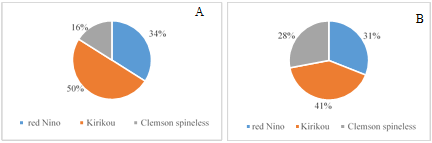
Fig. 3: Total distribution of entomofauna by variety: A: rainy season; B: dry season
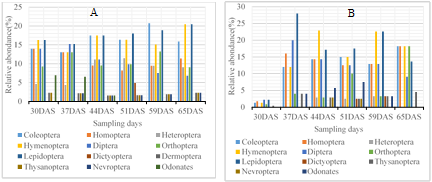
Fig. 4: Population trends of different orders of insects on the red Nino variety: A: rainy season, B: dry season
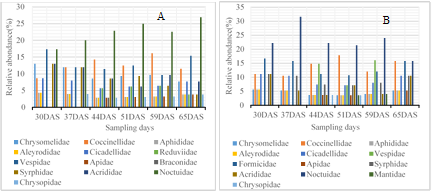
Fig. 5: Population trends of various insect families on the red Nino variety: A: rainy season, B: dry season
The subsequent figures (Fig. 4-5) illustrated the distribution of insects during the two seasons according to the Orders recorded and the varieties. It was evident that during the rainy season, the red Nino variety exhibited a higher abundance of insects, specifically Coleoptera (20.75%), Lepidoptera (20.45%) and Hymenoptera (20.45%) throughout its development cycle. The Chrysomelidae family, which belongs to the Coleoptera Order, was notabled for its representation by Podagrica decolorata, accounting for 18.92% of the total abundance.
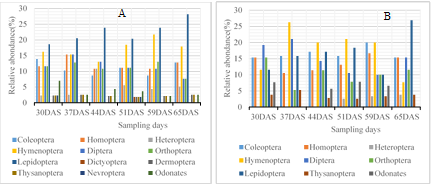
Fig. 6: Population trends of different insect orders on the Kirikou variety: A: rainy season, B: dry season
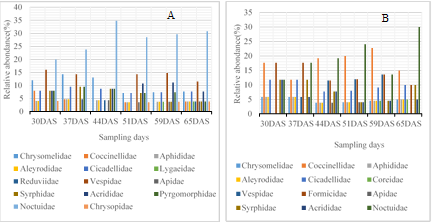
Fig. 7: Population trends of the different insect families on the Kirikou variety: A: rainy season, B: dry season
Conversely, during the dry season, the Orders Lepidoptera (28%), Hymenoptera (22.86%) and Coleoptera (18.18%) were observed to be more prevalent. Regardless of the season, there was a consistent underrepresentation of the Dermoptera (2.33%), Thysanoptera (4.55%) and Neuroptera (2.86%) orders. Conversely, the Orders Odonata, Heteroptera, Dictyoptera and Neuroptera were absent during the initial phase of development in the dry season. Conversely, the Order Lepidoptera, which is abundant throughout the plant cycle, exhibits a preponderance of individuals from the Family Noctuidae (31.58%) in both the dry and rainy seasons. The Order Coleoptera was characterised by the Family Coccinellidae (17.86%) as a dominant element. The Order Hymenoptera, which includes several auxiliary species such as Polistes sp., Vespula sp., Polybia sp. and Lathrolestes sp. (Fig. 10), was represented on the red Nino variety by the Families Vespidae and Braconidae from the beginning of the cycle in the rainy season and at 44DAS in the dry season. This family was only represented after 65 DAS. The Apidae emerge from 44DAS and persist until the conclusion of the cycle (Fig. 4-5).
The entomofauna of the Kirikou variety was dominated by the following orders: Lepidoptera (28.21%), Hymenoptera (26.32%) and Coleoptera (20%). This predominance was observed throughout the plant cycle in both the rainy and dry seasons. The Order of Orthoptera, which exhibited lower levels of constancy on red Nino in the dry season, was always present and constant on the Kirikou variety in both seasons. In contrast, the Dictyoptera, Neuroptera and Dermoptera were absent during the Kirikou variety cycle in the dry season. Conversely, the Lepidoptera and Hymenoptera, which demonstrate consistent and robust presence throughout the plant cycle in both seasons, were more represented by the family Noctuidae (34.78%), particularly the highly abundant Earias sp. and the Vespidae (16%) including Vespula sp. during the rainy season. In contrast, in the dry season, the Lepidoptera order remains predominantly dominated by the Noctuidae (30%). During the dry season, the Formicidae family emerges during the development of Kirikou, and the Vespidae appear at the onset of flowering. In both dry and rainy seasons, the Coleoptera Order was predominantly comprised of the Coccinellidae (22.73%) (Fig. 6-7).
The Clemson spineless species, which was precocious in the rainy season and delayed in the dry season, has an entomofauna dominated by Lepidoptera (36.67%), Hymenoptera (22.58%) and Coleoptera (20.69%) in both seasons, thus exhibited characteristic features of the Lepidoptera, Hymenoptera and Coleoptera Orders. The Chrysomelidae family, which was more abundant, represented by Podagrica decolorata (15.46%). The Dermoptera and Dictyoptera were absent during the dry season. The Noctuidae family, with Earias sp. and Anomis flava being the most abundant, and the Vespidae family, including Vespula sp., constitute the respective abundance of Lepidoptera and Hymenoptera, with 40% of Noctuidae and 18.18% of Vespidae in the rainy season. During the dry season, the Noctuidae family accounted for more than 33% of Lepidoptera, while all insect families were represented in both seasons (Fig. 8-9).
Table 3: Simpson, Shannon-Wiener and Equitability indexes for insects on okra over two seasons
|
Year 2022 |
Red Nino |
Kirikou |
Clemson |
|||
|
Rainy season |
Dry season |
Rainy season |
Dry season |
Rainy season |
Dry season |
|
|
Individuals |
22176 |
14042 |
30177 |
20746 |
12389 |
17257 |
|
Dominance_D |
0.17 |
0.22 |
0.18 |
0.22 |
0.24 |
0.23 |
|
Simpson_1-D |
0.83 |
0.78 |
0.82 |
0.78 |
0.76 |
0.77 |
|
Shannon_H |
1.79 |
1.63 |
1.77 |
1.62 |
1.49 |
1.61 |
|
Equitability_J |
0.99 |
0.91 |
0.98 |
0.90 |
0.93 |
0.90 |
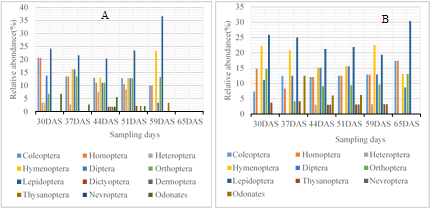
Fig. 8: Population trends of the different orders of insects on the Clemson variety: A: rainy season, B: dry season
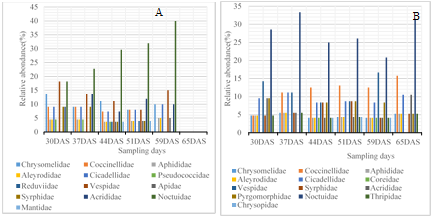
Fig. 9: Evolution of populations of different insect families on the Clemson variety: A: rainy season, B: dry season
The Reduviidae family, comprising Rhynocoris rapax and Cosmolestes pictus, was observed consuming Podagrica decolorata (Fig. 10A). Polistes sp. and Vespula sp. were documented foraging for prey, specifically locusts
Table 4: Sorenson similarity index and Bray-Curt distance of okra insect pests over two seasons
|
Year 2022 |
Rainy Season |
Dry Season |
|||||
|
Varieties |
Red Nino |
Kirikou |
Clemson |
Red Nino |
Kirikou |
Clemson |
|
|
Rainy Season |
red Nino |
1 |
|||||
|
Kirikou |
0.95 |
1 |
|||||
|
Clemson |
0.94 |
0.97 |
1 |
||||
|
Dry Season |
red Nino |
0.77 |
0.74 |
0.71 |
1 |
||
|
Kirikou |
0.70 |
0.74 |
0.78 |
0.94 |
1 |
||
|
Clemson |
0.70 |
0.74 |
0.76 |
0.93 |
0.86 |
1 |
|
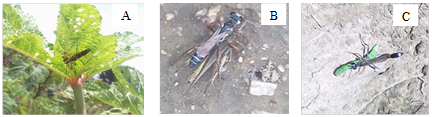
Fig. 10: Some predatory insects observed in the okra field: A: naturel enemies; B and C: parasitoids
(Fig. 10B) and caterpillar larvae (Fig. 10C).
The Shannon-Wiener diversity index (H') was computed for each variety during both the rainy and dry seasons. The varieties recorded during these periods were as follows: red Nino (1.79 and 1.63); Kirikou (1.77 and 1.62); and Clemson spineless (1.49 and 1.61), respectively indicating almost similar diversification during the two seasons (Table 3). The Simpson's diversity index (D) during the rainy and dry seasons was calculated as follows: red Nino 0.83 and 0.78; Kirikou 0.82 and 0.78; and Clemson spineless 0.76 and 0.77, respectively. These values were found to be more or less equal, indicating a high diversity of insects on all varieties of the ecosystem during both seasons (Table 3). In a similar manner, the Sorenson similarity index (S) was calculated, respectively: red Nino 1 and 0.77; Kirikou 1 and 0.74 and Clemson spineless 1 and 0.76 (Table 4). The species equitability index was also calculated. Red Nino 0.99 and 0.91; Kirikou 0.98 and 0.90; and Clemson spineless 0.93 and 0.90, during the wet and dry seasons were more or less equal (Table 3).
Discussion
This study furnished information on the entomofauna of okra in Maroua, with a total of 114908 insect individuals belonging to 12 orders and 41 families recorded during the rainy season, in comparison with 132319 individuals belonging to 11 orders and 25 families during the dry season. Furthermore, 69 species were inventoried in the rainy season, in contrast to 44 species in the dry season. The analysis of insect populations over the two growing seasons revealed a high diversity of species. This abundance can be attributed to the fact that the insect species colonizing okra crops are highly numerous and diverse. Among the species we found, several have also been reported by Adja et al. (2019) and Djidjonri et al. (2019), working in Ivory Coast and Cameroon respectively. This high entomological diversity of okra has also been reported in Ivory Coast (Yao et al. 2022). Specifically, the authors conducted an inventory that identified 61 species belonging to 36 families, categorized into 10 Orders within the okra field. This included 37 species of harmful insects, 23 species of predatory insects, and a single species of pollinating insect. Able et al. (2024) collected a total of 493 specimens, divided into 21 species, 18 families and 6 orders of insects, working under the same conditions as the present study. Whereas a total of 2613 specimens belonging to six orders and 19 species, were recorded by Maqbool et al. (2024), working under the different conditions to ours. In a similar vein, N'guettia et al. (2017) collected 3422 individuals throughout the okra cycle, divided into 9 orders, 38 families and 53 species. The observed differences between the results of the various authors can be attributed to the study period, the abiotic parameters of the sites, and most significantly, the agro-ecological zone. The results obtained may vary between zones due to the direct impact of climate on the control and distribution of living beings and the dynamics of ecosystems (Krechemer and Foerster 2017). Furthermore, numerous factors regulate the size of insect populations, including abiotic environmental conditions (microclimate), plant structure and the diversity of host plants around crops (Tendeng et al. 2022). These findings highlight a diverse and abundant entomofauna associated with okra cultivation that can be exploited in an integrated pest management strategy (Rahoo et al. 2017).
The variation in the relative abundance of insect species between the three varieties during the dry and rainy seasons can be attributed to the influence of the varieties on insect diversity through the emission of chemical attractants or repellents (Dussourd 2017). This phenomenon elucidates the absence of certain pests, contingent on the plant cycle of the okra plants. Among the volatile compounds tested, linalool has been shown to repel the cotton aphid (A. gossypii Glover) (Jiang et al. 2016). It is also known to repel other insects (Zhang et al. 2014a). Genotypes with constitutive allelochemical components, such as elevated levels of gossypol or condensed tannins, also showed a significant negative relationship with thrips population development (Khan et al. 2014). The host plant exerts a significant influence on the presence of a pest within an environment. Some crops have been observed to attract certain pest species, while others have been found to repel them (Midega et al. 2018).
The Orders of Lepidoptera, Hymenoptera, Coleoptera, Heteroptera and Diptera contain a multitude of phytophagous and predatory species, with the Noctuidae family of the Lepidoptera order exhibiting the highest population density during both the dry and rainy seasons. This phenomenon can be attributed to the fact that the okra field serves as a preferred habitat and feeding area for the caterpillars throughout the plant cycle. The defoliator caterpillars, Anomis flava, Sopodoptera litoralis and Xanthodes sp. (Noctuidae, Lepidoptera), feed primarily on the tender leaves of okra, and their life cycle extends from germination to the end of the plant cycle. The perforations of pods, flower buds and stems recorded during the production phase are those caused by many species of Earias (Noctuidae, Lepidoptera), which feed on the leaves after hatching before migrating to the other organs of the host plant. This justifies the presence of different spikes recorded at each stage of plant development in all cultivars. This high presence of these pests confirms their status as the most important pests of okra (Bhatt et al. 2018).
The order Coleoptera is dominated by the family Coccinellidae in the dry season on all three varieties. This can be explained by the fact that aphids and their natural enemies are more abundant in the dry season than in the wet season as a result of aphid colonies being washed away by the rains. For example, the insect species Cheilomenes sp., C. sulphurea and Hippodamia variegata of the family Coccinellidae are predators of aphids and whiteflies. These results were also reported by Mrosso et al. (2013) and Adja et al. (2019), who showed that C. sulphurea is a major predator of aphids. Similarly, Kurnia et al. (2020) concluded that the presence of predatory insects facilitates non-chemical pest control, which can help reduce environmental harm.
The order of Hymenoptera, represented by the Vespidae, consists of predators and parasitoids of Lepidoptera larvae; however, the Noctuidae are more abundant. Indeed, among the insects collected, Polistes sp. and Vespula sp. were observed searching for their prey, grasshoppers (Catantops sp.) and caterpillars (Anomis flava) (Fig. 10). This would justify their abundance during the developmental stages of the plants. The relatively high population of natural enemies is likely due to habitat structure and environmental factors influencing the diversity of natural enemies (Allifah et al. 2019).
Parasitoid insects, mainly from the order Hymenoptera, typically live as parasites within the bodies of their insect hosts (Martuti and Anjarwati 2022).
The species Aphis gossypii, Bemisia tabaci, Jacobiella fascialis, Amrasca biguttula and Podagrica decolorata exhibited a high abundance on the three varieties during the developmental stages. This phenomenon can be attributed to the fact that these insects are the primary pests of okra. This finding aligns with the observations reported by N'guettia et al. (2017), who identified Podagrica sp., Lagria vilosa and Jacobiasca lybica in all stages of okra development. Ossey et al. (2017) reported during their work that O. mutabilis was present at all phenological stages of cowpea crop.
In the order Heteroptera, represented by the family Reduviidae, the species Rhynocoris rapax and Cosmolestes pictus were identified as predators of P. decolorata. These results are similar to those of Ossey et al. (2017), who showed that R. albopilosus, R. bicolor and R. rapax are predatory species of Ootheca mutabilis.
The values of the Shannon index are significant and vary between 1.49 and 1.79 bits in the rainy season and between 1.61 and 1.63 bits in the dry season, indicating that the species caught are diverse. The equitability (E) value was significantly similar in both the dry season (0.9 and 0.91) and the rainy season (0.93 and 0.99). These results are consistent with those obtained in India, where Nair et al. (2017) found that the Shannon and Wiener diversity indices (H') in the summer and winter seasons for the okra insect pest complex were 1.01 and 0.91, respectively. Simpson's diversity index (D) was 0.14 and 0.19 in the summer and winter seasons, respectively. Similarly, species richness (7.31 and 7.49) and species evenness (0.71 and 0.64) were similar in the summer and winter seasons. The relatively high insect diversity is likely related to the surrounding ecosystem, which includes various cultivated plants that provide abundant food resources. Habitat conditions also influence insect diversity (Taurislina et al. 2015; Zereg et al. 2025). Knowledge of natural enemies in the agricultural environment is recognized as playing a role in regulating herbivorous insects and promoting a balance in arthropod communities, helping to reduce dependence on pesticides (Drolet 2018).
Conclusion
This study showed a high diversity of entomofauna associated with the okra field in Maroua. We counted more insects in the rainy season than in the dry season on all three varieties. In both the rainy and dry seasons, the Kirikou variety recorded a high number of insect species, while the Clemson spineless variety always had the lowest abundance. The most abundant insects on all varieties are A. gossypii, B. tabaci, J. fascialis, A. biguttula and P. decolorata. Okra cultivars and phenological stages have been shown to influence insect distribution. The availability of natural biocontrol agents in relation to pests observed on okra could be an alternate option or integration with chemical control for the management of insect pests. Among the natural enemies, Rhynocoris rapax and Cheilomenes sp. were identified as formidable predators of P. decolorata and A. gossypii respectively; Polistes sp. and Vespula sp. were identified as formidable parasitoids of Catantops sp. and Anomis flava. The richness of species of agricultural interest in okra may be a viable strategy for pest management and enhancing yields.
Acknowledgements
The authors are very grateful to the administration and lecturers of the UFD-SF Doctoral School of the University of Maroua for accepting this research. They are also very grateful to the entire team of the Laboratory of Advanced and Applied Zoology of the University of Maroua for the identification of the insect specimens.
Author Contributions
RN performed the experiment and wrote the report. KH, JD and ENN designed the experiments, supervised the work, revised the documents and participated in all aspects of the study.
Conflicts of Interest
The authors report no conflicts of interest.
Data Availability
Data presented in this study will be available on a fair request to the corresponding author.
Ethical Approval
No ethical approval was required for this study.
Funding Source
This research was funded by my parents.
References
Abang AF, R Srinivasan, R Hanna, S Kekeunou, AF Kuate, A Tenkouano, KKM Fiaboe, CFB Bilong (2024). New okra genotypes for the management of aphids (Hemiptera: Aphididae) in the diverse ecological landscapes of Central Africa. J Econ Entomol 20:1–12 https://doi.org/10.1093/jee/toae165
Abang AF, R Srinivasan, R Hanna (2020). Productivity and resistance of okra (Abelmoschus spp.) to the cotton aphid Aphis gossypii Glover (Hemiptera: Aphididae) under tropical conditions. Intl J Trop Ins Sci 41:197–208. https://doi.org/10.1007/s42690-020-00193-w
Abang AF, R Srinivasan, S Kekeunou (2018). Influence of okra (Abelmoschus spp.) accessions on colonization by Aphis gossypii (Hemiptera: Aphididae) and their effects on aphid biological parameters. Florid Entomol 101:549–558 https://doi.org/10.1653/024.101.0415
Abang AF, R Srinivasan, S Kekeunou, M Yeboah, R Hanna, MY Lin (2016). Relationship of phenotypic structures and allelochemical compounds of okra (Abelmoschus spp.) to resistance against Aphis gossypii glover. Intl J Pest Manage 62:55‒63
Abang AF, R Srinivasan, S Kekeunou (2014). Identification of okra (Abelmoschus spp.) accessions resistant to aphid (Aphis gossypii Glover) in Cameroon. Afr Entomol 22:273–284
Able MCG, M Kone, S Konare, CJM Niamien, ANB Kouame (2024). Diversity of the entomofauna associated with two varieties of okra (Abelmoschus esculentus L) during the dry season in the town of Korhogo (North, Ivory Coast). Afr Agron 36:23‒32
Adja NA, J Nandjui, GH Sadia, T Adingra, F Akamou, M Danho (2019). Are Bioinsecticides able to effectively substitute chemicals in the control of insect pests of okra (Abelmoschus esculentus L. Moench) in Ivory Coast. J Appl Biosci 142:14435‒14447
Agboyi LK, KM Djade, DKM Ahadji, GK Ketoh, Y Nuto, IA Glitho (2016). Pesticide resistance in Plutella xylostella (Lepidoptera: Plutellid populations from Togo and Benin. Intl J Trop Ins Sci 36:204‒210
Allifah AN, NA Natsir, M Rijal, S Samputri (2019). Pengaruh faktor lingkungan terhadap pola distribusi spasial dan temporal musuh alami di lahan pertanian. J Biol Sci Educ 8:111–121 https://doi.org/10.33477/bs.v8i2.1139
Amada B, Dounia, D Chantal, C Ningatoloum, GAA Guiffo, BS Angoula, JP Ngonaïna, JL Tamesse, FFN Tchuenguem (2018). Diversity of flowering insects and their Impact on yields of Abelmoschus esculentus(L.) Moench, 1794 (Malvaceae) in Yaoundé (Cameroon). J Entomol Zool Stud 6:945‒949
Bakroune N (2021). The entomofauna of cereals in the Biskra region. Ecology of the populations of the main. Ph.D. Thesis, p:200. Mohamed Khider Biskra University, Algerie
Bhalu A, YH Ghelani, BV Patoliya, MK Ghelani, VB Bhalu (2019). Varietal screening of okra against whitefly, Bemisia tabaci (Gennadius). J Pharm Phytochem 8:50‒53
Bhatt B, S Joshi, AK Karnatak (2018). Biodiversity of insect pests and their predators on okra agroecosystem. J Pharm Phytochem 7:84‒86
Borror DJ, RE White (1991). Les Insectes de l’Amérique du Nord (au nord du Mexique), p:408. Broquet, Laprairie
Dinesh K, S Anusha, RB Singh, NL Dangi (2017). Estimation of avoidable yield losses caused by Helicoverpa armigera (Hubner) on chickpea. J Entomol Zool Stud 5:1476‒1478
Djidjonri FP, EN Nukenine, H Koehler (2019). Abundance and diversity of insect pests on Maize, Cowpea and Okra in a comparative experiment testing effects of intercropping and insecticide in the Cameroonian Guinean Savannah and Sudano- Sahelian Agro-ecological Zones. J Exp Agric Intl 29:1‒20
Drolet S (2018). Biodiversité des ravageurs lépidoptères et de leurs parasitoïdes en cannebergières biologiques et conventionnelles au Centre-du-Québec, p:107. Mémoire, Université LAVAL Québec, Canada
Dussourd DE (2017). Behavioral sabotage of plant defenses by insect folivores. Annu Rev Entomol 62:15‒34
Ekoja EE, OG Adanu, TA Utag (2023). Variations in insect-induced fruit damage and yield of okra Abelmoschus esculentus after insecticide treatments at different phenological growth stages. J Crop Prot 12:79‒91
FAOSTAT (2021). FaoStat Database. Available at: http://www.fao.org/faostat (Accessed: November 1, 2022)
FAOSTAT (2020). FAO Production Year Book. Food and Agriculture Organization of the United Nations, Rome, Italaly database. Available at: https://www.fao.org/faostat/fr/#data/QCL (Accessed: August 26, 2021)
FAOSTAT (2015). Food and Agriculture Organization. FAO’s corporate database. Available at:http://faostat3.fao.org/browse/Q/QC (Accessed: March 11, 2016)
Fita DE, A Ombolo, GE Mboudou, S Chouto, EB Ambomo, JMA Essi (2015). Spatial and temporal variability of rainfall in the soudano-sahelian area of Cameroon during the last five decades. Afr Sci 11:331‒348
Gourmel C (2014). Catalogue illustré des principaux insectes ravageurs et auxiliaires des cultures de Guyane, p:78. Coopérative Biosavane, Guyana, France https://ecophytopic.fr/sites/default/files/actualites_doc/Catalogue_ravageurs_auxiliaires_Guyane_leger.pdf
Halder J, SK Sanwal, AK Rai, AB Rai, B Singh, BK Singh (2015). Role of physico-morphic and biochemical characters of different okra genotypes in relation to population of okra shoot and fruit borer, Earias vittella Fabricius (Noctuidae: Lepidoptera). Ind J Agric Sci 85:278‒282
Jiang Y, J Ye, S Li, Ü Niinemets (2016). Regulation of Floral Terpenoid Emission and Biosynthesis in Sweet Basil (Ocimum basilicum). J Plant Growth Regul 35:921‒935
Kasi IK, AR Tayde (2018). Screening of okra genotypes against shoot and fruit borer (Earias vittella Fab.) under field conditions in Allahabad. J Pharm Phytochem 7:657‒659
Kedar S, M Kumaranag, S Bhujbal, H Thodsare (2014). Insect pests of okra and their management. Pop Kheti 2:112‒119
Khan MA, A Ali, M Aslam, Z Tahir, MM Khan, I Nadeem (2014). The role of morphological and chemical plant traits imparting resistance in Bt cotton genotypes against thrips, Thrips tabaci (Lind.). Pak J Agric Sci 51:725–731
Krechemer FS, LA Foerster (2017). Development, Reproduction, Survival, and Demographic Patterns of Tuta absoluta (Meyrick) (Lepidoptera : Gelechiidae) on different commercial tomato cultivars. Neotrop Entomol 46:694‒700
Kurnia A, ES Harsanti, MT Sutraidi, S Hartini (2020). Keanekaragaman serangga pada pertanaman Jagung di lahan tadah hujan Kabupaten Pati-Jawa Tengah. J Agric 31:157‒165 https://doi.org/10.24198/agrikultura.v31i 3.28138
Mallick S, P Chand, SK Mandal (2016). Tolfenpyrad 15% EC, a new pyrazole insecticide, against sucking pests of okra and its impact on natural enemies. Ind J Entomol 78:51‒55
Maqbool ME, M Mushtaq, Tamathues, KT Kubra, A Zulfiqar, MS Sarwar, Z Yousaf, M Yaseen, F Nosheen (2024). Assessing the impact of insect pest biodiversity on the ecological footprint of okra (Abelmoschus esculentus L.) cultivation in Faisalabad, Punjab, Pakistan. Punj Univ J Zool 39:169‒175 https://dx.doi.org/10.17582/journal.pujz/2024/39.2.169.175
Martuti NKT, R Anjarwati (2022). Keanekaragaman serangga parasitoid (Hymenoptera) di perkebunan Jambu biji Desa Kalipakis Sukorejo Kendal. Indo J Math Nat Sci 45:1‒8 https://doi.org/10.15294/ijmns.v45i1.36
Midega CAO, JO Pittchar, JA Pickett, GW Hailu, ZR Khan (2018). A climate adapted push-pull system effectively controls fall armyworm, Spodoptera frugiperda (J E Smith), in maize in East Africa. Crop Prot 105:10‒15
Mignon J, E Haubruge, F Francis (2016). Clé d’Identification des Principales Familles d’Insectes d’Europe, p:87. Presses Agronomiques de Gembloux, Gembloux, Belgique https://doi.org/10.7202/007815ar
Miranda JE, SMR Maria, CADS Silva, T Mamoutou (2013). Reconnaissance de ravageurs et ennemies naturels pour les pays C-4(Échange d’expériences sur le cotonnier), p:70. Embrapa Brasília, Information Technologique, Brésil
Mondedji AD, GK Ketoh, K Amévoin, A Améline, P Giordanengo, IA Glitho (2015). Analyse de quelques aspects du système de production légumière et perception des producteurs de l’utilisation d’extraits botaniques dans la gestion des insectes ravageurs des cultures maraichères au Sud du Togo. Intl J Biol Chem Sci 9:98‒107
Mrosso F, M Mwatawala, G Rwegasira (2013). Functional responses of Cheilomene propinga, C. lunata and C. sulphurea (Coleoptera: Coccinallidae) to predation on Aphis gossypii (Homoptera: Aphididae) in Eastern Tanzania. J Entomol 10:76‒85
N’guettia CA, M Ouali-N’goran, S Fatogoman, D Kone (2017). Distribution of insects according to the phenological Stages of okra (Abelmoschus esculentus) and phytosanitary Practices in anna (bingerville), Ivory Coast. J Agric Biol Sci 5:174‒181
Nagar J, SK Khinchi, KC Kumawat, A Sharma (2017). Screening different varieties of okra [Abelmoschus esculentus (L.) Moench] against sucking insect pests. J Pharmacogn Phytochem 6:30‒34
Nair N, U Giri, B Thangjam, MR Debnath, P Das, B Dey (2017). Biodiversity of insect pest complex infesting okra [Abelmoschus esculentus] in Tripura, N.E. Ind J Entomol Zool Stud 5:765‒771
Obodji A, LRN Aboua, DKC Tano, BPH Seri-Kouassi (2016). Inventory of entomofauna associated with African eggplant (Solanum aethiopicum) according to the phenological stages and assessment of damages caused by insect pests. J Adv Stud Agric Biol Environ Sci 3:12‒21
Ossey CL, LRN Aboua, A Obodji, DKC Tano (2017). Entomofauna associated with cowpea Vigna unguiculata (L.) Walp., assessment damages caused by insect pests and predators of Ootheca mutabilis Sahlberg (Coleoptera: Chrysomelidae) in south of Ivory Coast. J Appl Sci 3:56-72
Otiobo AEN, MTM Njoya, D Dounia, CL Djieto, FFN Tchuenguem (2021). The role of a non-Apis bee in the fructification of Abelmoschus esculentus (L.) Moench 1794 (Malvales: Malvaceae) flowers in Bambili (Cameroon). Faunis Entomol 74:73‒81
Pando BJ, D Djonwangwé, FFN Tchuenguem, JLTamesse (2020). Diversity of floricultural insects of Abelmoschus esculentus (Malvaceae) and their impact on fruit and grain yields in Maroua (Cameroon). J Anim Plant Sci 43:7350‒7365
Priyanka, A Hussain, S Kumari, YS Ranawat (2020). Screening of okra varieties resistance against sucking pests. J Entomol Zool Stud 8:1458‒1462
Rahoo AM, T Mukhtar, SR Gowen, RK Rahoo, SI Abro (2017). Reproductive potential and host searching ability of entomopathogenic nematode, Steinernema feltiae. Pak J Zool 49:229‒234
Ranjit VK, RK Santosh, VP Pankaj, KP Sanjay (2018). Screening of different genotypes of okra [Abelmoschus esculentus (L.) Moench] against leafhopper, Amrasca biguttula biguttula Ishida. J Entomol Zool Stud 6:1960‒1963
Rivers EU, UC Nwune, EE Micah, P Okoroafor (2024). Survey on the Diversity of Field Insect Pests of Okro (Abelmoschus Esculentus) within the Six ADP Zones in Akwaibom State. Intl J Life Sci Agric Res 3:467–472
Sène SO, E Tendeng, M Diatte, S Sylla, B Labou, AW Diallo, K Diarra (2020). Insecticide resistance in field populations of the tomato fruitworm, Helicoverpa armigera, from Senegal. Intl J Biol Chem Sci 14:181‒191
Shahzaman S, M Inam-ul-Haq, T Mukhtar, M Naeem (2015). Isolation, identiication of antagonistic rhizobacterial strains obtained from chickpea (Cicer arietinum L.) yield and their invitro evaluation against fungal root pathogens. Pak J Bot 47:1553‒1558
Siddartha D, YK Kotikal, Venkateshalu, D Sanjiv (2017). Seasonal incidence of sucking pests on okra. Glob J Biosci Biotechnol 6:245‒250
Subbireddy KB, HP Patel, NB Patel, TM Bharpoda (2018). Screening of okra cultivars and genotypes for their resistance to fruit borers in middle Gujarat. Pest Manage Hortic Ecosyst 24:36‒43
Tanni AS, MA Maleque, MAR Choudhury, AU Khan, UHS Khan (2019). Screening of exotic okra genotypes. Bangl J Entomol 29:17‒26
Taurislina AE, Y Trizelia, H Hamid (2015). Analisis Keanekaragaman Hayati Musuh Alami pada Ekosistem Padi Sawah di Daerah Endemic dan Non Endemic Wereng Batang Coklat Nilaparvata lugens di Sumatera Barat. In : Prosiding Seminar Nasional Masyarakat Biodiversitas Indonesia, Vol. 1, pp:581–589 https://doi.org/10.13057/psnmbi/m010334
Tendeng E, B Labou, EHS Sylla, A Balde, M Diatte, O Seydi, IA Ndiaye, P Diop, SO Sene, K Diarra, S Djiba (2022). Diversity and Occurrence of pests in market gardening agroecosystems in Lower Casamance, Senegal. Eur Sci J 18:104‒120
Tesfay A, M Amin, N Mulugeta, S Frehiwot (2015). Effect of weeds control methods on weeds density and maize (Zea mays) wielded in West Shena Orimia Ethiopia. Afr J Plant Sci 9:8‒12
Yao N, S Soro, A Obodji, CL Ossey (2022). Inventory of entomofauna associated with crop of okra (Abelmoschus esculentus) and assessment of damage caused by insect pests in Man, west of Ivory Coast. Biol Pharm Sci 13:105‒115
Zereg S, A Mouane, A Aouadi (2025). Diversity and spatio-temporal distribution of arthropods in the Atlas cedar (Cedrus atlantica Manetti) forest in Belezma National Park (Batna, Algeria). J Ins Biodivers Syst 11:97–115 https://doi.org/10.61186/jibs.11.1.97
Zhang Z, L Bian, X Sun, Z Luo, Z Xin, F Luo, Z Chen (2014a). Electrophysiological and behavioural responses of the tea geometrid Ectropis obliqua (Lepidoptera: Geometridae) to volatiles from a non-host plant, rosemary, Rosmarinus officinalis (Lamiaceae). Pest Manage Sci 71:96–104
Online : 1814-9596
Print : 1560-8530