


Indexing


Journal Cover

Environmental Enrichment for Equines: Advances in the Last Decade
Abstract
For horses, environmental enrichment (EE) can make the environment healthier and more pleasant, reducing stress, idleness, aggression, and stereotypies. This study aimed to perform a qualitative and quantitative analysis of scientific publications on the topic of environmental enrichment for horses in the last decade. An analysis of scientific publications in journals indexed in Google Scholar was carried out, using the descriptors environmental enrichment for horses, mares, equine, and foals. Nineteen scientific articles published between 2013 and 2024 were selected, from which the following information was collected: year of publication, thematic axis, country of origin of the research, and the main journals that published the topic and their respective classifications. The data were analyzed descriptively. The evaluation revealed stability of publications over the years. The studies addressed topics such as literature reviews (31.58%), studies that evaluated the use of different foods and objects as a form of EE (21.05%), EE with sound stimulation (10.53%), EE and stereotypies (10.53%), EE and biochemical and physiological studies (10.53%), EE with visual stimulation (5.26%) and social stimulation (5.26%) and EE in a clinical environment (5.26%). The origin of the research revealed that most of the publications came from the European continent (63.12%). The journal with the highest concentration of publications related to the topic was “Journal of Veterinary Behaviour” (21.05%). The analysis demonstrated the importance of studies that investigate the needs and behavior of horses and that publish their results to increase awareness among horse breeders.
Keywords: Animal welfare; Animal behavior; Environmental enrichment; Horses scientometrics
Environmental Enrichment for Equines: Advances in the Last Decade
Beatriz Khadija Dahrouge Rosa1†, Márcia Aparecida Andreazzi2†*, Gabriela Rosa de Souza1, Kauana De Souza Santos Simões3 and Fábio Luiz Bim Cavalieri2
1Department of Veterinary Medicine, Cesumar University, Maringá, PR, Brazil
2Postgraduate Program in Clean Technologies, Cesumar University, Maringá, PR, Brazil
3Master in Clean Technologies, Cesumar University. Maringá, PR, Brazil
*For correspondence: marcia.andreazzi@unicesumar.edu.br
†Contributed equally to this work and are co-first authors
Received 10 June 2025; Accepted 11 July 2025; Published online 22 September 2025
Editor: Zafar Iqbal
Abstract
For horses, environmental enrichment (EE) can make the environment healthier and more pleasant, reducing stress, idleness, aggression, and stereotypies. This study aimed to perform a qualitative and quantitative analysis of scientific publications on the topic of environmental enrichment for horses in the last decade. An analysis of scientific publications in journals indexed in Google Scholar was carried out, using the descriptors environmental enrichment for horses, mares, equine, and foals. Nineteen scientific articles published between 2013 and 2024 were selected, from which the following information was collected: year of publication, thematic axis, country of origin of the research, and the main journals that published the topic and their respective classifications. The data were analyzed descriptively. The evaluation revealed stability of publications over the years. The studies addressed topics such as literature reviews (31.58%), studies that evaluated the use of different foods and objects as a form of EE (21.05%), EE with sound stimulation (10.53%), EE and stereotypies (10.53%), EE and biochemical and physiological studies (10.53%), EE with visual stimulation (5.26%) and social stimulation (5.26%) and EE in a clinical environment (5.26%). The origin of the research revealed that most of the publications came from the European continent (63.12%). The journal with the highest concentration of publications related to the topic was “Journal of Veterinary Behaviour” (21.05%). The analysis demonstrated the importance of studies that investigate the needs and behavior of horses and that publish their results to increase awareness among horse breeders.
Keywords: Animal welfare; Animal behavior; Environmental enrichment; Horses scientometrics
Introduction
Environmental enrichment (EE) is a form of animal husbandry that seeks to improve the quality of care for animals in captivity by identifying and providing environmental stimuli necessary for psychological and physiological well-being (Shepherdson 2003), making the captive environment more pleasant and interesting for the animals.
EE involves additions and changes made to the environment of a domesticated animal to improve well-being (Coleman and Novak 2017), as it arouses curiosity, offers new challenges, simulates events that would occur in the natural habitat and provides the opportunity for choice (Almeida et al. 2008), improving the quality of life and well-being of animals (Pizzutto et al. 2009) and, in the case of production animals, it can also improve zootechnical indices (Luz et al. 2017).
Several captivity and zoos use EE techniques to simulate natural situations and reduce animal idleness and situations of aggression, depression, stereotypes, apathy, mutilation, and even death (Almeida et al. 2008). There are two types of environmental enrichment: natural and behavioral (Nicholls 2018a). The natural approach aims to provide the animal with a natural environment in a domesticated environment, mimicking the space, company, sources of forage, water sources, and the environment in general. The behavioral approach suggests the use of devices, such as balls, mirrors, and ropes, which encourage play and curiosity in the enclosures (Young 2013).
In addition to these types, we can categorize various EE techniques, which vary according to the species and category of the animal, and which depend on knowledge of the animal's habits. Thus, there is the enrichment of the physical environment, which consists of introducing objects into the animal's enclosure, such as logs, ropes, ladders, balls, mirrors, and platforms, among others, so that the animal can interact (Netto et al. 2015). Another way to promote enrichment is to offer food in a different way, such as hiding and letting the animal look for its food, hanging the food, placing the food in bottles or objects with holes, or encouraging the use of creativity to obtain its food. Stimulation of the senses can also be part of EE actions, such as smell, using essences, urine, or feces from other animals; sight and touch through the provision of toys; hearing, through the use of sounds; and taste, through the provision of snacks and food. Finally, there is also social enrichment, which consists of promoting interaction between individuals of the same species or different species (Almeida et al. 2008).
With regard to horses, it is known that these animals are sociable, require contact with other animals, and must be kept in conditions that meet not only their social needs but also their nutritional and locomotor needs (Budzyńska et al. 2022).
Among how horses are raised, these animals can be kept in various systems, for example, in individual stalls or collective spaces, with or without access to pasture (Löckener et al. 2016). However, keeping animals housed in stalls and restricting time for feeding and grazing can promote physiological changes, such as in the animals' digestive system, such as colic, in addition to generating stereotypies, such as the habit of biting wood and aerophagia (Dittrich et al. 2010; Konieczniak et al. 2014). These changes show behavioral signs of unnatural life stress. Thus, horses, which are naturally sociable, lack, in some situations, an adequate way of raising them, especially when deprived of expressing their natural behavior. For these animals, EE can make the environment healthier and more pleasant, reducing stress, idleness, aggression, and stereotypies (Budzyńska et al. 2022). Thus, to better understand the subject and evaluate the direction of research in recent years, this study's objective was to carry out an analytical, qualitative, and quantitative approach to scientific publications on the topic of environmental enrichment for horses.
Materials and Methods
A scientometric analysis was performed, a methodology that allows the evaluation of the evolution and directions of scientific research on a given area of knowledge, allowing the identification of trends and the mapping of the growth of academic production (Macias-Chapula 1998).
The research was structured in three stages: (1) survey of scientific production; (2) collection of information; and (3) analysis of the information collected. In the first stage, a search was carried out for scientific publications in journals indexed in Google Scholar (https://scholar.google.com.br/?hl=pt), according to the methodological procedures recommended by Schubert et al. (1989).
The first stage - survey of scientific production - was performed using the descriptors “environmental enrichment for horses”, “environmental enrichment for mares”, “environmental enrichment for equine”, and “environmental enrichment for foals”. After refining the material, considering criteria such as adherence to the research scope, 19 scientific articles published between 2013 and 2024 were selected which comprised the corpus of the analysis.
In the second stage, a qualitative analysis of the publications was carried out by reading the titles and abstracts, with the collection of the following variables: year of publication of the scientific article, which allowed the evaluation of the number of articles published according to the years; central thematic axis of the research; country of origin of the research; and the main journals that published on the topic and their respective classifications.
In the third stage, the data were organized in an electronic spreadsheet (Microsoft Excel 2016) and subjected to descriptive analysis.
Results
The analysis of the number of publications on environmental enrichment (EE) for horses between 2013 and 2024 revealed few articles on the subject, as well as demonstrated stability over the years (Fig. 1).
Regarding the thematic axes of the publications, it was possible to perceive a wide variety of researched content, with emphasis on literature reviews on the subject (31.58%), followed by works that evaluated the use of different foods and objects as a form of EE (21.05%), which together totaled more than half of the publications (Table 1).
Analysis of the region of origin of the research revealed that most publications come from countries on the European continent (63.12%) (Table 2; Fig. 2). Followed by the countries of the American continent, Brazil and the United States, with 10.52% each, and, finally, Asia, with Thailand, with 10.52% of the articles, and Japan with 5.26%.
The evaluation of the journals with the highest concentration of publications related to the topic “environmental enrichment for horses” showed that the journal “Journal of Veterinary Behaviour” concentrated 21.05% of the publications, followed by the journals “Animals”, “IAABC Foundation Journal” and “Veterinary Integrative Sciences”, with 10.52% each. Journals that published only one article on the topic totaled 47.34% (Table 3).
Discussion
Regarding the stability of publications on the subject, it is observed that despite recognizing that the use of EA has grown in popularity over the decades, particularly because EA is known to promote cognitive functions and well-being for horses (Lansade et al. 2014), this fact is not reflected in the number of scientific publications (Fig. 1).
Table 1: Number and percentage of articles published on the topic of environmental enrichment (EE) for horses, according to the central axis of the research
|
Central axis |
Published articles (N) |
Percentage (%) |
|
Literature review on EE |
6 |
31.58 |
|
EE with food and various objects |
4 |
21.05 |
|
EE with sound stimulus |
2 |
10.53 |
|
EE and stereotypies |
2 |
10.53 |
|
EE, biochemical, and physiological studies |
2 |
10.53 |
|
EE with visual stimulus |
1 |
5.26 |
|
EE with social stimulus |
1 |
5.26 |
|
EE in a clinical setting |
1 |
5.26 |
|
Total |
19 |
100 |
Table 2: Number and percentage of articles published on environmental enrichment for horses, according to the origin of the research
|
Country |
Published articles (N) |
Percentage (%) |
|
Europe |
|
63.12 |
|
United Kingdom |
3 |
15.78 |
|
Belgium |
2 |
10.52 |
|
France |
2 |
10.52 |
|
Poland |
2 |
10.52 |
|
Germany |
1 |
5.26 |
|
Sweden |
1 |
5.26 |
|
Netherlands |
1 |
5.26 |
|
America |
|
21.04 |
|
Brazil |
2 |
10.52 |
|
United States |
2 |
10.52 |
|
Asia |
|
15.78 |
|
Thailand |
2 |
10.52 |
|
Japan |
1 |
5.26 |
|
Total |
19 |
100 |
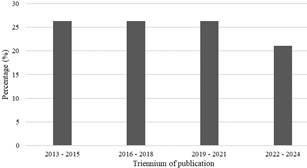
Fig. 1: Percentage of articles published on environmental enrichment for horses, from 2013 to 2024, by triennium
Concerning the thematic axes (Table 1), there were a greater number of reviews on the subject. Andrade (2021) stated that literature review studies are among the most relevant bibliographic sources for the construction and dissemination of scientific knowledge. By identifying and synthesizing the main contributions to literature on a given subject, this type of publication provides readers with a true report on the state of the art or advances in their field of knowledge (Ribeiro 2014), justifying this finding.
The topics covered in the reviews included different aspects of EE, such as reviews on the causes, occurrences and prevention of stereotypical behaviors in horses (Sarrafchi and Blokhuis 2013); management methods to improve the welfare of horses used in research (Jonckheer-Sheehy and Houpt 2015); environmental enrichment for the horse, considering the animal's need to forage (Nicholls 2018a) and the need for companionship (Nicholls 2018b); a review on olfactory stimulation as environmental enrichment for domestic horses (Lima et. al. 2023); and the possibilities of reducing fear and stress in horses through prophylactic methods and behavioral therapies (Budzyńska et al. 2023).
Among the articles that published research results related to the use of different foods and objects (21.05%), there were studies related to the benefits to the welfare of stabled horses after the implementation of hay bags for slow feeding (Correa et al. 2020) and investigations on the enriching effect of non-commercial items, such as plastic bottles filled with sand and ropes for stabled horses (Bulens et al. 2013) or ropes and balls (Bulens et al. 2015).
Encouraging foraging behavior, which includes smelling, handling, biting, chewing or ingesting food, is indicated for domesticated horses, since they spend more time eating, approaching the time spent on this activity in the wild. However, offering more than one source of forage to stabled horses results in a significantly greater time spent foraging, increasing this benefit (Goodwin et al. 2002; Dumbell and Tackley 2007). Regarding the use of devices, it is known that there are many non-edible types for equestrian enrichment, commercial or otherwise, such as balls, mirrors, ropes, ribbons, bottles, among others. Although they are artificial resources, the behavior presented by the horse can be the same as in natural circumstances, allowing the animal to express its natural behavior, stimulating interaction, play and curiosity in the enclosures, promoting its well-being (Young 2013; Nicholls 2018b).
Regarding the use of sound stimuli as EE (10.53%), Hartman and Greening (2019) observed a positive impact on the sleep-related behavior of horses subjected to auditory stimuli (Beethoven's Ninth Symphony) for five days. Huo et al. (2021a) investigated the effects of playing classical music on the general behavior of stabled horses. The authors concluded that classical music kept the horses more relaxed, and the total number of stereotypies was reduced. Regarding stereotypies and EE (10.53%), a study on the effects of EE, based on the use of hay nets, straw bedding, and yoga balls, for stereotypical and non-stereotypical stabled horses was conducted by Huo et al. (2021b). The researchers observed differences in general behaviors and reactions to enrichment items between stereotypical and non-stereotypical animals. Recognizing that undesirable and stereotypical behaviors may indicate abnormalities in the animals' living environment and that they harm animal welfare and make their management and use difficult, Budzyńska et al. (2022) evaluated the dependence between animal and environmental factors and behavioral problems in horses and inferred that horses should be kept in conditions that meet their nutritional, social, and locomotor needs.
Table 3: Number, percentage, h5 index and Scopus percentile of journals that published on the topic of environmental enrichment for horses
|
Journal |
Number (N) |
Percentage (%) |
Index h5 |
Scopus Percentile (%) |
|
1. Journal of Veterinary Behavior |
4 |
21.05 |
24 |
81 |
|
2. Animals |
2 |
10.52 |
97 |
93 |
|
3. IAABC Foundation Journal |
2 |
10.52 |
- |
- |
|
4. Veterinary Integrative Sciences |
2 |
10.52 |
11 |
39 |
|
5. Animal Science and Genetics |
1 |
5.26 |
6 |
6 |
|
6. Animal Welfare |
1 |
5.26 |
20 |
63 |
|
7. Applied Animal Behaviour Science |
1 |
5.26 |
37 |
82 |
|
8. Equine Health |
1 |
5.26 |
- |
- |
|
9. Journal of Equine Veterinary Science |
1 |
5.26 |
26 |
77 |
|
10. Lab Animal |
1 |
5.26 |
16 |
18 |
|
11. Medycyna Weterynaryjna |
1 |
5.26 |
13 |
22 |
|
12. PLoS One |
1 |
5.26 |
225 |
89 |
|
13. Proceedings of the British Society of Animal Science |
1 |
5.26 |
- |
- |
|
Total |
19 |
100 |
|
|
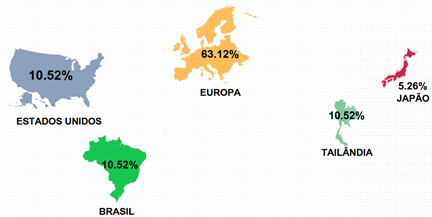
Fig. 2: Percentage of articles published on environmental enrichment for horses, according to the place of origin of the research
About the biochemical and physiological aspects of EA (10.53%), Lansade et al. (2014) investigated the effects of EA on the personality and gene expression of horses. The researchers stated that EA modified three dimensions of personality: fear, reactivity to humans, and sensory sensitivity, and reduced stress indicators, improving welfare, and, through transcriptomic analysis of whole blood, they verified effects on cortisol levels and induction of the expression of genes involved in cell growth and proliferation. The authors concluded that changes in behavior and gene expression may constitute a psychobiological signature of the effects of EE and result in improved welfare.
Mendonça et al. (2019) investigated the physiological and behavioral responses of horses in contact with humans through different equine activities, such as dressage, jumping, eventing, and equine-assisted activity/therapy. The researchers stated that the type of activity that adult horses practice influences the behavioral and physiological responses to different stimuli, impacting equine welfare.
Seeking to evaluate the use of EE through visual stimulation (5.26%), Ninomiya et al. (2008) evaluated the effect of open windows in the stall, which allowed or did not allow the view of other horses, on the welfare of stabled horses. The results suggested that the treatments suppressed the frustration of stabled horses, which did not exhibit any abnormal behavior, but may not have increased the animals' behavioral satisfaction.
In a study on EE and social stimulation (5.26%), Löckener et al. (2016) stated that, after a period of individual stay in stalls, horses showed positive cognitive behavior when they had access to pastures and other members of the herd. The authors emphasized that horses need to express behaviors such as exploration, social interaction, play, or hygiene to meet their needs.
Concerning the use of EE in a clinical setting (5.26%), Clarke (2017) stated that in cases of illness or injury, horses face periods of forced rest to maximize recovery and, in these situations, EE should be considered to promote relaxation and minimize stress in the animal.
Regarding the region of origin of the research (Table 2; Fig. 2), the data show that the distribution of the research partially follows the distribution of the global equine population, since, according to data from the Food and Agriculture Organization of the United Nations (FAO 2021), the largest equine populations in the world are in the USA, China, Mexico, Brazil, Mongolia, Kazakhstan, Argentina, Ethiopia, Colombia and Chad. The horse population in these countries ranges from approximately 2 million to 10 million animals, amid a total estimate of more than 61 million head of horses worldwide.
The journal with the highest concentration of publications on the topic was the Journal of Veterinary Behavior (JVEB) (Table 3). The high-quality JVEB journal (h5: 24; 81% Scopus) is an important journal that publishes aspects of veterinary behavioral medicine. Its articles cover topics such as social behaviors, welfare, and/or housing issues, and applied behavioral issues that may have implications for clinical evaluation, justifying this finding.
Conclusion
This study provided an overview of the state of the art and the evolution and trends of research around environmental enrichment for horses. The conclusions revealed stability in publications on the subject, with a wide diversification in research topics, with emphasis on literature reviews, followed by studies that evaluated the use of different foods and objects as a form of EE, use of sound, visual and social stimuli, EE associated with the occurrence of stereotypies, effects of EE on biochemical and physiological parameters of animals, and the need for EE for animals kept in clinical environments.
The analysis of the origin of the research revealed that most of the publications came from countries on the European continent, especially the United Kingdom. The journals with the highest concentration of publications related to the subject were the Journal of Veterinary Behaviour.
Finally, the analysis demonstrated that the proposed methodology is relevant and revealed the need for further studies investigating the demands and behavior of horses about EE. It is expected that these results will be disseminated both to the scientific community and to horse breeders, who will be able to adapt their management practices to better meet the social and behavioral needs of their animals.
Acknowledgements
The authors would like to thank the Cesumar Institute of Science, Technology and Innovation – ICETI/UNICESUMAR.
Author Contributions
MAA and BKDR designed the study. BKDR and GRS collected the data. BKDR, MAA and FLBC interpreted the results. BKDR and KSSS made the tables and illustrations. MAA and BKDR did the writing while FLBC and KSSS translated into English.
Conflict of Interest
All authors declare no conflict of interest.
Data Availability
Data presented in this study will be available on a fair request to the corresponding author.
Ethics Approval
Not applicable to this paper.
References
Almeida AMR, TCC Margarido, ELAM Filho (2008). Influence of environmental enrichment on the behavior of primates of the genus Ateles in captivity. UNIPAR Vet Sci Zoo Arch 11:97‒102
Andrade MCR (2021). The role of literature reviews in the production and synthesis of scientific knowledge in Psychology. Gen Intl J Psyc 14:1‒5
Budzyńska M, M Jarosz, JK Kapustka (2023). Possibilities of reducing fearfulness and stress in horses by prophylactic methods and behavioural therapies. Med Weter 79:65‒71
Budzyńska M, W Janicka, M Michalska, J Kapustka (2022). Dependencies between animal and environmental factors and behavioral problems in horses: A survey- based analysis. Anim Sci Genet 18:15‒31
Bulens A, A Dams, SV Beirendonck, JV Thielen, B Driessen (2015). A preliminary study on the long-term interest of horses in ropes and Jolly Balls. J Vet Behav 10:83‒86
Bulens A, SV Beirendonck, JV Thielen, B Driessen (2013). The enriching effect of non-commercial items in stabled horses. Appl Anim Behav Sci 143:46‒51
Clarke A (2017). Environmental enrichment for the resting horse. Equine Health 34:22‒25
Coleman K, MA Novak (2017). Environmental Enrichment in the 21st Century. ILAR J 58:295‒307
Correa MG, CF Silva, LA Dias, SSR Junior, FR Thomes, LAD Lago, AM Carvalho, RR Faleiros (2020). Welfare benefits after the implementation of slow-feeder hay bags for stabled horses. J Vet Behav 38:61‒66
Dittrich JR, HA Melo, AMCF Afonso, RL Dittrich (2010). Ingestive behavior of horses and its relationship with forage utilization and animal welfare. Braz J Zoot 39:130‒137
Dumbell LC, A Tackley (2007). Multiple forages as behavioural enrichment for individually stabled horses. In: Proceedings of the British Society of Animal Science, Vol. 1, pp:175. Cambridge University Press
FAO (2021). FAOSTAT: Agricultural statistics database. Available at: https://www.fao.org/faostat/ (Accessed: March 12, 2025)
Goodwin D, HPB Davidson, P Harris (2002). Foraging enrichment for stabled horses: Effects on behaviour and selection. Equine Vet J 34:686‒691
Hartman N, LM Greening (2019). A preliminary study investigating the influence of auditory stimulation on the occurrence of nocturnal equine sleep-related behavior in stabled horses. J Equine Vet Sci 82:1-12
Huo X, M Wongkwanklom, T Phonraksa, P Na-Lampang (2021a). Effects of playing classical music on behavior of stabled horses. Vet Integr Sci 19:259‒267
Huo X, S Yaemklang, P Pimmai, P Kupittayanant, P Na-Lampang (2021b). A preliminary study of the effects of enrichment on stereotypic and non-stereotypic stabled horses. Vet Integr Sci 19:581-590
Jonckheer-Sheeh VSM, KA Houpt (2015). Management methods to improve the welfare of horses used in research. Lab Anim 44:350‒358
Konieczniak P, IFT Dias, T Caleffo, WA Sinhorini, ECBDP Guirro (2014). Stereotypies in horses. Vet Focus 11:126‒136
Lansade L, M Valenchon, A Foury, C Neveux, SW Cole, S Layé, B Cardinaud, F Lévy, MP Moisan (2014). Behavioral and transcriptomic fingerprints of an enriched environment in horses (Equus caballus). PLoS One 10:1-19
Lima ACBD, VCSD Fé, MSP Hernandes, VMOD Santos (2023). Olfactory stimulation as environmental enrichment for domestic horses - A review. Animals 13:3180‒3194
Löckener S, S Reese, M Erhard, AC Wöhr (2016). Pasturing in herds after housing in horseboxes induces a positive cognitive bias in horses. J Vet Behav 11:50‒55
Luz CSM, LA Farias, JLLA Pimenta, J Santos, R Sousa, L Machado, L Dourado, G Carvalho, SS Júnior (2017). Physiological parameters of pigs raised with and without environmental enrichment. J Agric Sci 9:176‒185
Macias-Chapula C (1998). The role of informetrics and scientometrics and their national and international perspective. Inform Sci 27:1‒10
Mendonça T, C Bienboire-Frosini, I Kowalczyk, J Leclercq, S Arroub, P Pageat (2019). Equine activities influence horses’ responses to different stimuli: Could this have an impact on equine welfare? Animals 9:290‒310
Netto AG, MDLL Bragion, DM Silva (2015). Effect of environmental enrichment with mirror on the behavior and welfare of horses. J Estat UFOP 3:1‒10
Nicholls L (2018a). Environmental enrichment for the horse: The need to forage. IAABC Found J 10:10
Nicholls L (2018b). Environmental enrichment for the horse: The need for companionship. IAABC Found J 10:20
Ninomiya S, R Kusunose, Y Obara, S Sato (2008). Effect of an open window and conspecifics within view on the welfare of stabled horses, estimated on the basis of positive and negative behavioural indicators. Anim Welfare 17:351‒354
Pizzutto CS, MGFG Sgai, MABV Guimarães (2009). Environmental enrichment as a tool to improve reproduction and welfare in captive animals. Rev Bras Reprod Anim 33:129‒138
Ribeiro JLP (2014). Revisão de investigação e evidência científica. Psicol Saúde Doenças 15:672‒683
Sarrafchi A, HJ Blokhuis (2013). Equine stereotypic behaviors: Causation, occurrence, and prevention. J Vet Behav 8:386‒394
Schubert A, W Glanzel, T Braun (1989). Scientometric data files: A comprehensive set of indicators on 2649 journals and 96 countries in all major science fields and subfields 1981-1985. Scientometrics 16:473‒478
Shepherdson DJ (2003). Environmental enrichment: Past, present and future. Intl Zoo Yearbook 38:118‒124
Young R (2013). Environmental Enrichment for Captive Animals. The universities federation for animal welfare & Wiley-blackwell, Oxford, UK
Online : 1814-9596
Print : 1560-8530